

Romesco sauce has subtly taken on the role of the condiment that the British table was unaware it was lacking when the barbecue is served for the first time in late spring, and someone invariably brings out a bowl of something smoky and rust-colored, cutting off the conversation. Like most good things, it arrived gradually. There was no fanfare, no viral moment, just a steady accumulation of dinner parties, recipe columns, and food bloggers who insisted it went well with everything from a bowl of crisps at midnight to chargrilled chicken.
Romesco originated in Tarragona, a seaside town south of Barcelona, where fishermen first produced it to serve with their catch. Roasted red peppers, nuts (usually almonds, occasionally hazelnuts), tomatoes, garlic, olive oil, and a dash of vinegar are the main ingredients of the sauce. That’s about it. However, the final product tastes far more complex than the sum of those components. Smoke, depth, and a subtle nuttiness that lingers without being overpowering are all present. It might be precisely this simplicity that has contributed to its success in travel.
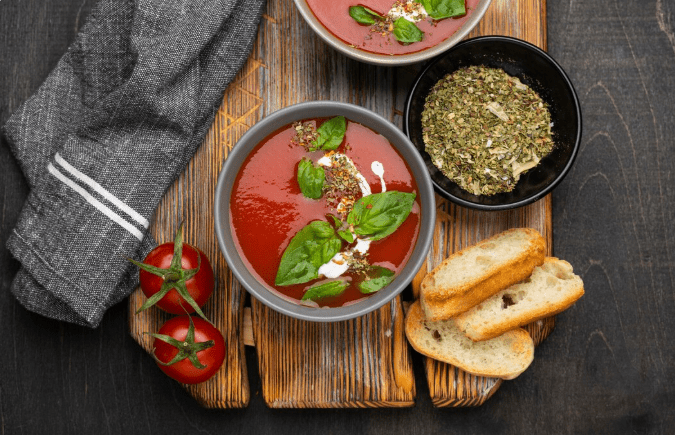
It takes very little work to make in a UK kitchen. To be honest, using jarred roasted red peppers is not a compromise but rather a sensible option that most Spanish home cooks would recognize. Almonds that have been blanched, sun-dried tomatoes in oil, smoked paprika, a clove of garlic, a dash of sherry or red wine vinegar, and good olive oil. In less than five minutes, everything is combined in a food processor. In certain recipes, a piece of stale bread is added for body, giving the sauce a hummus-like texture that is slightly thicker, more substantial, and easier to spread. Both versions are worth trying.
When you use this sauce for the first time, you are struck by how quickly it establishes itself. It doesn’t require explanation or dressing up. When paired with grilled white fish, it competes without being overpowering. It disappears more quickly than nearly anything else on the table when served as a dip with raw vegetables or flatbread. The smoked paprika does a lot of heavy lifting; it’s the component that gives Romesco its distinct warmth and flavor note that, even if you’ve never made the sauce before, seems somewhat familiar.
The vinegar cuts through the richness of the oil and nuts just enough to keep things feeling light, while the cayenne adds a subtle heat that builds rather than shouts. One grated or roughly chopped clove of garlic is sufficient; it’s not overpowering. If you go beyond that, the balance will change. Although it takes a lot longer to prepare, a version that uses the entire bulb of confit garlic is also delicious, mellower, and sweeter.
Perhaps its most underappreciated feature is that it keeps for several days in the refrigerator. Romesco retains its color and flavor remarkably well, in contrast to fresh herb sauces that oxidize and dull quickly. After a day, when everything has had time to settle and deepen, it might even get a little better. If you make a batch on Sunday, it will still be worthy by Wednesday, whether it is spooned cold onto a piece of sourdough or stirred through pasta.
Watching Romesco establish itself in British kitchens is somewhat satisfying for a nation that has always had a complex relationship with condiments other than ketchup and mayonnaise. It’s not attempting to be fashionable. It’s simply delicious, in the straightforward manner that products made with a few genuine ingredients usually are.
