

An assembled burger that has been refrigerated overnight has a certain melancholy. The lettuce appears resigned to its fate, the bun has absorbed the condiments, and the patty, which was once something to look forward to, is now sitting in a cold, congealed state that feels almost accusing. The natural tendency of most people is to microwave everything and deal with the fallout. This seems to be very concerning to chefs.
Disassembly is the first rule, and perhaps the most crucial. The burger must be disassembled before it comes into contact with heat. Bun, toppings, and patty—all kept apart. ButcherBox’s chef-in-residence, Ashley Lonsdale, is adamant that the patty should always be reheated on its own before fresh toppings are added again. When everything is heated together, the result is a soggy bun, wilted greens, and condiments that have gone bad in the heat. It’s a small annoyance that has a big impact.
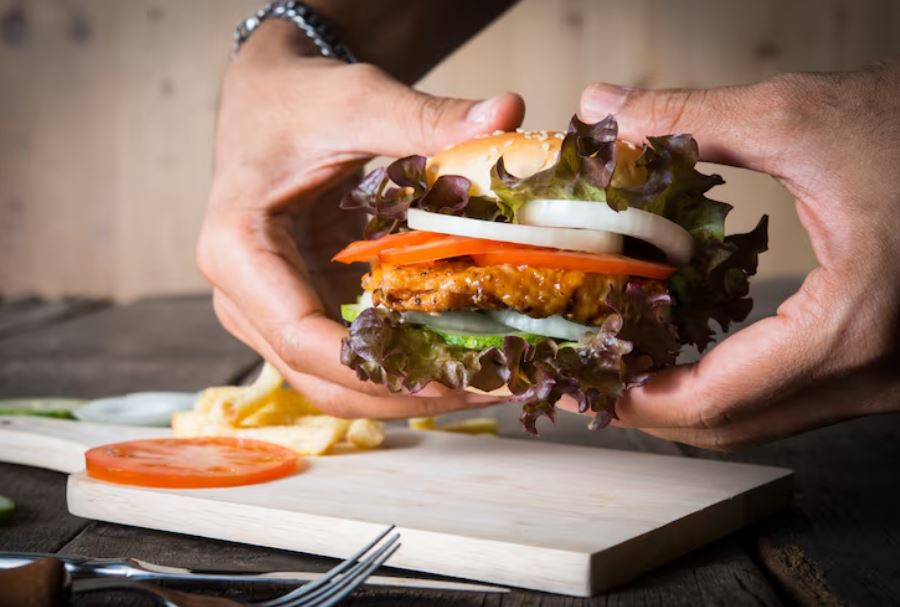
When asked about their favorite technique, the majority of chefs seem to end up on the stovetop. Omaha Steaks executive chef Mark Trimble suggests putting the patty in a pan over medium-low heat with a little beef stock or water, then covering it with a lid. Instead of forcing the meat to sit in dry heat and tighten up, the steam that builds up inside does silent, efficient work that keeps the meat moist while it heats through. The patty truly resembles what it was the day before after three to four minutes on each side. Although the results are difficult to dispute, it’s possible that this method feels more complicated than it sounds.
The oven provides consistency that a single pan can’t quite match for anyone feeding a small group of people off the same batch of leftovers. Depending on thickness, Trimble advises starting at a lower temperature of about 250°F for five to fifteen minutes. At high heat, thinner patties are harsher and dry out before they can evenly warm up. It is more forgiving to start slowly and modestly. If cheese is being cooked, it should only be added in the last three to four minutes; if it is added earlier, it will either burn or vanish into the foil.
Cosme Cavazos Jr., the chef at Ranch 616 in Austin, believes that the air fryer has earned a spot in this discussion. It creates something with a hot center and a slightly crispy exterior when cooked at 350°F for three to four minutes with a flip halfway through. To be honest, some people might prefer this to the original. It’s the approach for those who care about the result but find the stovetop inconvenient.
Observing seasoned chefs discuss something as unglamorous as leftover burgers is striking because of how seriously they take it. This is not a question to be dismissed. Trimble’s comment that the stovetop strikes “the best balance between convenience and performance” sounds more like he’s talking about a piece of machinery than the refrigerator situation on Tuesday night. A professional mind approaches problems differently, not with resignation but with method, as evidenced by the level of precision applied to second-day food.
When the patty is finished and the water has evaporated, the bun is toasted separately in the same pan. 30 seconds on each side. The difference between a reheated burger that someone truly enjoys and one they eat while standing over the sink, slightly regretting, usually comes down to that one detail.
