

When you take a black pudding out of the refrigerator and truly pause, it usually happens early on a Saturday morning while you’re standing in a slightly chilly kitchen. Do you grab the frying pan or cut it up and eat it right away? It seems like a minor choice. It’s not small at all, though, as anyone who grew up eating it will tell you.
For centuries, black pudding has been a staple of Irish and British cuisine, to the point where opinions about it have solidified into something akin to personal identity. People’s emotions about this are genuine. The kind of emotions that appear surprisingly frequently on Reddit threads and at breakfast tables.
At least the technical solution is simple. In the UK, the majority of black pudding is cooked through during production. It is therefore completely safe to eat it cold, right out of the pack. On their website, Bury Black Pudding Company makes it clear that there is no need for reheating and no health risks. It is a manufactured, heat-treated product that is more akin to a delicious salami or a piece of cooked ham than something you would need to handle carefully. Therefore, safety isn’t really at issue when it comes to hot versus cold. It has to do with something more personal.
Black pudding has a firm, dense texture when it’s cold. The cereal grains maintain their structure, the fat is a little waxy, and the flavor is subtle, earthy, and mineral with hardly any herbs. You can eat it. This is how some people actually like it, especially when it’s thinly sliced on bread and resembles a charcuterie element. There is a version of this that works, particularly if the seasoning is confident and the pudding is of high quality.
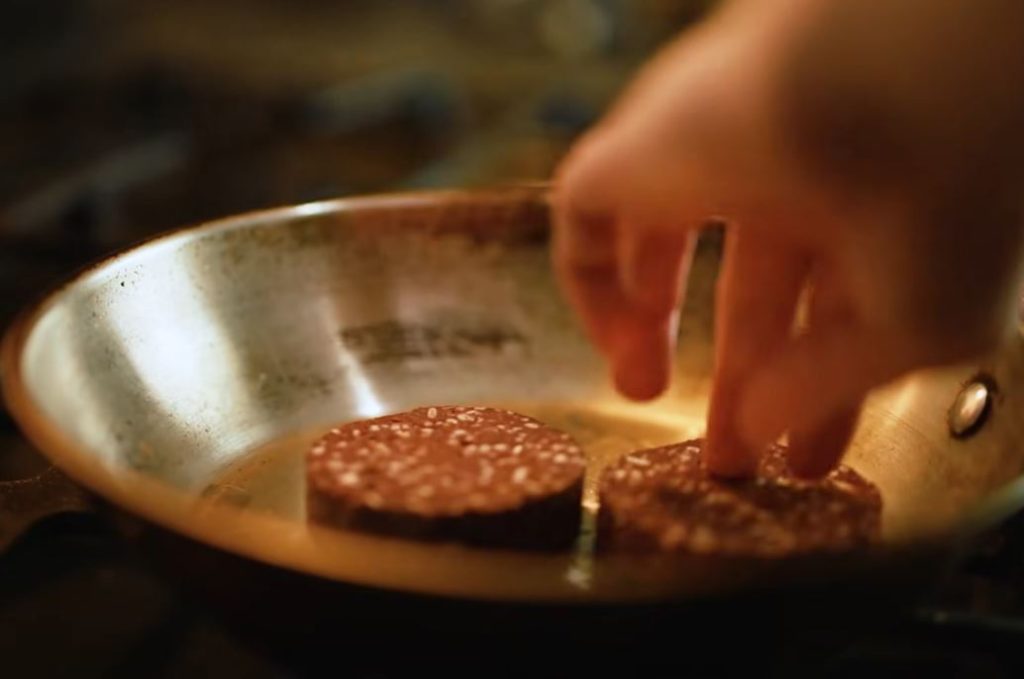
Then you fry it, though. Something changes after three or four minutes on each side in a dry, nonstick pan or with only a thin layer of oil. Where the fat renders against the hot surface, the exterior crisps up into something that is almost caramelized, creating a slightly smoky edge. The inside maintains a richness that cold serving just cannot match, and it remains soft and nearly yielding. It’s difficult to ignore the difference. The herbs that are used in the recipe, such as thyme and mint, appear out of nowhere. Everything tastes more deliberate.
Similar results can be obtained by grilling, though some people prefer the slightly drier texture. When preparing a large breakfast for multiple people and you don’t want to stand over a pan, baking works well. Even the microwave, which purists reject, has its supporters, especially for the classic horseshoe-shaped puddings that are more difficult to cut and cook evenly. In fact, the Real Lancashire Black Pudding Co. suggests using clingfilm for two minutes on high power as a perfectly reasonable method.
More than most people realize, this is influenced by regional tradition. Black pudding was traditionally served whole, boiled, and consumed with bread or vinegar in some parts of Lancashire. This was a full meal as opposed to a breakfast side dish. It ends up deep-fried in batter at chip shops in Scotland, which is a whole other story. There has never been a single proper serving technique.
What you’re eating it with is another issue. Hot black pudding next to fried eggs and grilled tomato is a completely different setting than a cold slice with some pickle and strong cheese. Although they are doing different things, both are legitimate. Eating cold black pudding as a snack necessitates a certain level of trust in the ingredient—a readiness to interact with its dense, somewhat peculiar nature without the calming influence of heat. Not everyone arrives right away.
The cold-versus-hot controversy is still up for debate, and to be honest, it probably shouldn’t. Black pudding, which is made of blood, cereal, and fat and has survived for centuries on reputation alone, has always existed somewhat outside of rational explanation. Food preferences are rarely rational. For most people, it’s obvious that cooking it changes it. It becomes something you would actively seek out instead of just tolerate as the texture opens up and the flavor intensifies.
So it’s hot. For the most part. But cold, at least sometimes, if only to remind yourself of the importance of the pan.
FAQs
FAQs: Do You Eat Black Pudding Hot or Cold?
Q1: Is it safe to eat black pudding straight from the pack without cooking it?
Yes — most UK black pudding is fully cooked during production.
Q2: What is the best method for cooking black pudding?
Pan-frying for 3–4 minutes each side produces the crispiest, most flavourful result.
Q3: Does heating black pudding actually change the flavour?
Yes — heat activates the herbs and deepens the overall richness significantly.
Q4: Can black pudding be eaten cold as part of a meal?
Cold black pudding works well sliced thin alongside cheese and pickle.
Q5: Why do cooking methods vary so much across different regions of the UK?
Regional traditions — from Lancashire boiling to Scottish deep-frying — each reflect local food culture.
