

At every summer cookout, there is a persistent myth that is passed around like the potato salad itself: coleslaw goes bad because of the mayo. After a few days, take that bowl out of the refrigerator and begin to sniff the creamy dressing suspiciously. That seems natural. It’s also largely incorrect.
The cabbage is the true offender. Although food scientists have known this for years, it hasn’t quite permeated everyday kitchen thinking. As a low-acid food, cabbage provides very little resistance to bacteria on its own. When you shred it, the surface area is greatly increased, and each cut edge becomes a tiny, moist invitation for microbial activity. In actuality, mayo is fairly stable, especially the store-bought pasteurized variety. The vegetable beneath it is the source of the issue.
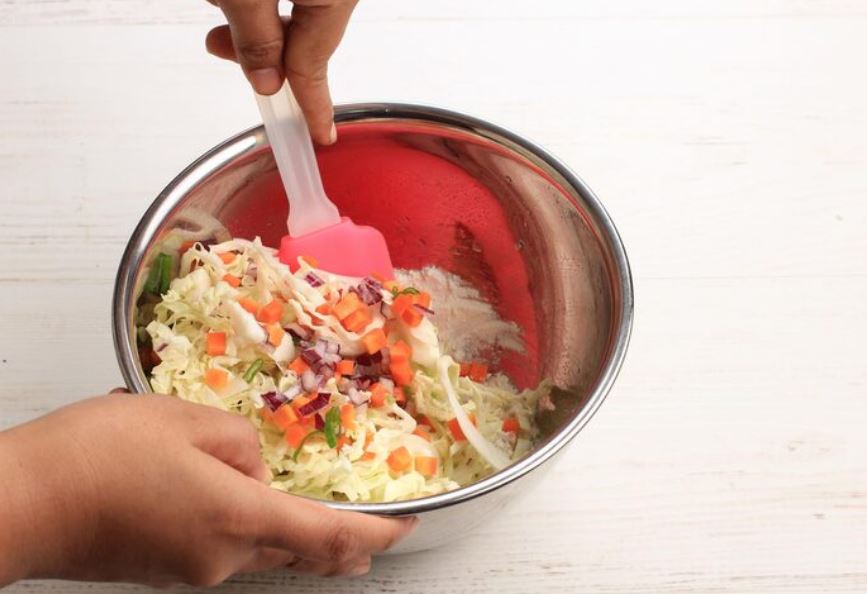
Food safety sources generally agree that homemade coleslaw made with regular store-bought mayonnaise should be refrigerated for three to five days. Until you give it some thought, that window seems generous. The majority of coleslaw has begun to release water from the cabbage by day three, which thins the dressing and softens everything to a more limp than refreshing texture. The flavor may still be acceptable. Most likely, the crunch is gone.
When things truly get dangerous, it has less to do with the refrigerator and more to do with what occurs before the leftovers arrive. Coleslaw is typically left out on a table for the duration of a cookout, which can go well beyond the USDA’s recommended two-hour limit. That window is reduced to one hour during intense summer heat. When people are chatting, grazing, and refilling drinks, an hour goes by quickly. It’s simple to overlook.
A completely different problem is introduced by homemade mayo. It should be eaten within two days because it is made without the stabilizers and preservatives present in commercial versions. This means that any coleslaw dressed with it has a shorter shelf life, regardless of how well it is stored. Although the margin of error is smaller than most people realize, it is still safe to use it for a few days.
Beyond the calendar, there is something worth keeping an eye on. Turned coleslaw often has a faintly fermented smell, a sour, slightly off note that is different from the vinegar tang that should be present. Instead of arguing your way into another serving, it’s better to let it go if there’s an odor, the texture has become completely watery, or the color appears drab and gray. The five-day limit is a maximum, not a guarantee.
It really does matter how you store it. Airtight containers prevent moisture buildup and slow down the deterioration of texture and safety. Coleslaw that is pushed to the back of the refrigerator behind other items or left loosely covered tends to spoil more quickly than anticipated. Some home cooks would rather keep the shredded vegetables and the dressing apart until they are ready to serve. The coleslaw that results from that process on day four looks much more like something you would actually want to eat, but it requires more work.
