
Usually, it begins in the same manner. A kitchen counter full of foil trays that no one had finished, a Friday night, and an overly ambitious order. By Saturday morning, the question—half hopeful, half guilty—arises: is that leftover chow mein secretly working against you, or can you really reheat a Chinese takeaway the following day?
The short answer is that you can, and millions of people in Britain do it every weekend without any problems. However, the truthful response has requirements, and those requirements are more important than most of us would like to acknowledge.
The framework is widely accepted by experts in food safety. Instead of being left in its original packaging, the takeout must be sealed in clean containers and placed in the refrigerator within two hours of arriving at your door. It should be consumed within a day or two of being chilled, and it should only be reheated once, until it is perfectly hot. Not warm. The edges are not steaming. The majority of dangerous bacteria die at temperatures above 75°C, which is hot to the core.
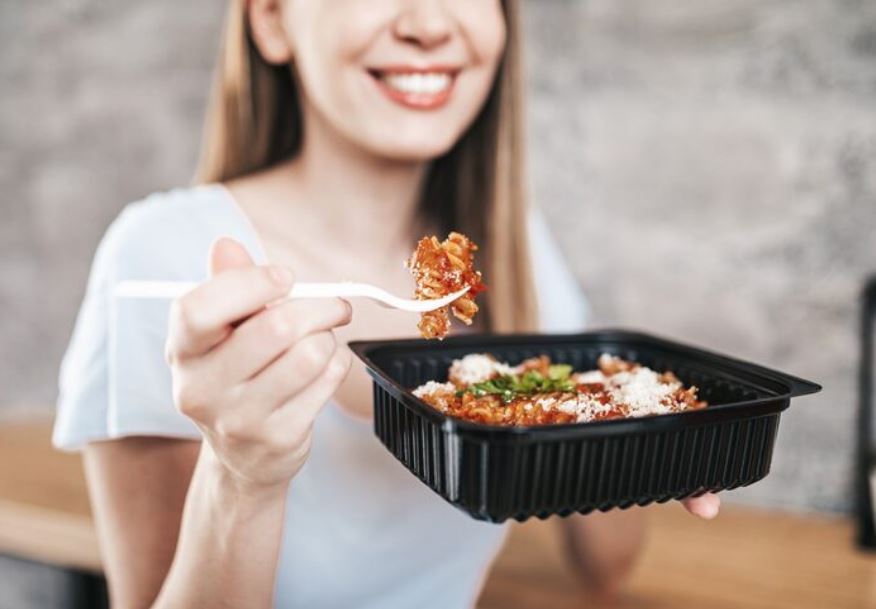
The story takes a serious turn when it comes to rice, and it merits its reputation. Bacillus cereus spores, a bacterium tenacious enough to withstand the initial cooking, can be found in cooked rice. When those spores are left at room temperature, they grow and produce toxins that cannot be eliminated by microwaving. The hours before the refrigerator are the issue, not the reheating. People are surprised by this detail because their natural tendency is to believe that heat is a panacea. It isn’t with rice. Even though it seems wasteful, the bin is the safest place for your egg fried rice if it ended up on the worktop next to the prawn crackers.
Additionally, there is the issue of doing food justice, which is distinct from doing it safely. The disappointment of biting into crispy shredded beef that has become soft and somewhat apologetic is familiar to anyone who has microwaved it. In an oven or air fryer set to about 180°C, battered and fried foods recover best; ten minutes or so can bring back a true crunch.
To prevent them from drying out into a brick, noodles and rice work well in a hot pan with a drizzle of oil or a spoonful of water in the microwave. The most forgiving foods are curries and sauces, which are content to be heated slowly over the stove with frequent stirring.
Observing the discussion on Reddit threads and community Facebook groups, it seems that most people are aware of the rules and are just asking for permission. The responses are typically a mix of dark humor and assurance; some claim to have eaten sweet and sour chicken that is three days old for years, while others quote the two-hour rule as scripture. Each side has a point. Takeout leftovers handled carelessly contribute to the approximately one million cases of food poisoning that occur in the UK each year. However, with a little self-control, the risk is actually manageable.
It’s difficult to ignore the fact that the modest leftover has evolved into a minor ritual in British cuisine culture, a follow-up to the Friday night order. When prepared correctly, next-day Chinese food can taste almost as good as it did when it was fresh, and some would subtly contend that the flavors meld and get better. Just be mindful of the refrigerator, be mindful of the rice, and never reheat twice. The prize is a complimentary lunch. A lesson that you only need to learn once is the alternative.
