
After day two, the refrigerator became silent. No cheese, no foil-wrapped leftovers, and no half-eaten takeout boxes pressing up against the milk. Only stock. It was arranged in cartons like soldiers. That’s when it dawned on me that while it wouldn’t be simple, it would be fascinating.
The plan was fairly simple: soup would be served at every meal for fourteen days in a row. No solid food, no midnight almond snacking, and no exceptions for social dinners or difficult workdays. Just a lot of patience, blended veggies, broth, and protein when you can. Observing the NHS soup-and-shake program gain popularity—more than 13,000 patients were enrolled in 2024–2025—and wondering if the average person could duplicate the outcomes without a clinical setting or a prescription gave rise to the idea.
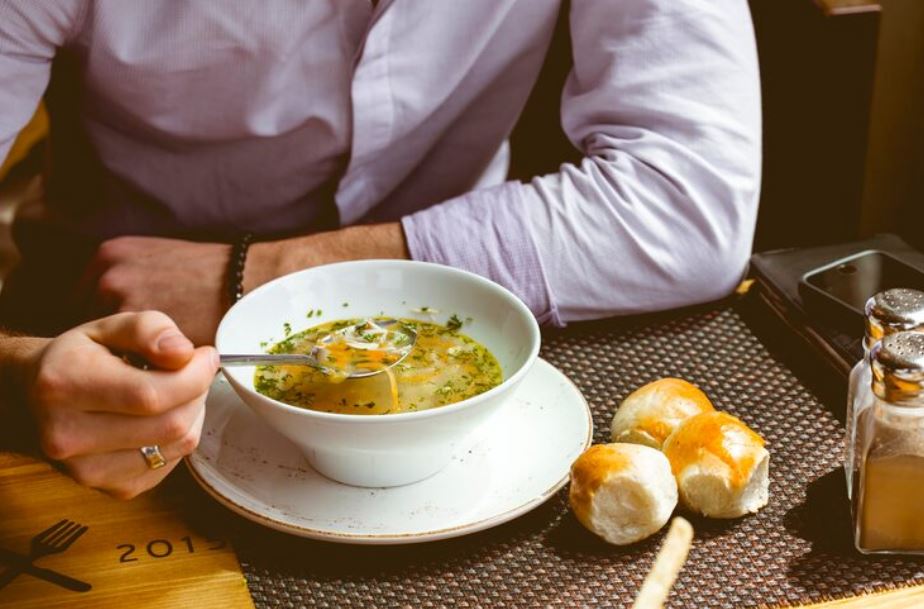
The worst days were the first and third. The hunger was more like a low hum that never went away than something dramatic. By mid-afternoon, sitting at a desk felt oddly draining, not because of a lack of energy per se, but rather because there was no ritual—the walk to the kitchen, the decision-making, the chewing. A large part of eating may be psychological, and reducing it to liquid shows how much mental space food truly takes up.
Something changed by day five. By Friday, the broth-based lentil soup that had appeared pitifully thin on Monday began to taste truly satisfying. When there are no other options, the body adjusts more quickly than anticipated. Without the continual stimulation of a variety of textures and flavors, appetite starts to wane. The stomach seems to subtly and unannouncedly adjust its expectations.
The weight shifted. By the end of the first week, about four pounds had been lost, which is well within the range that diet reviewers and researchers have recorded. Slower progress was made in the second week—roughly two pounds more—but the more significant changes were physical in ways that the scale doesn’t show. The low-grade constant of bloating practically vanished. The improvement in sleep felt more structural than accidental. Skin appeared more relaxed. These are real, but they’re not dramatic discoveries.
Social friction is something that no one can adequately prepare you for. It all adds up—eating soup during a lunch meeting, politely turning down a birthday cake, and explaining to a coworker why there isn’t a plate in front of you. Until you step outside of it, the ways that food is interwoven into everyday human interaction are invisible. It was actually more difficult than the hunger.
Without a cautious return to solid food, it’s still unclear if the effects would last longer than two weeks. This is purposefully addressed by the NHS program, which has a phase of gradual reintroduction. After a fortnight of broth, returning to regular eating would probably undo most of it in a matter of days. However, most people omit this detail when posting pictures of their transformations on social media.
It didn’t feel like a miracle to be on soup for fourteen days. It was unsettling, illuminating, and strangely illuminating, like a reset. The individual and the objective determine whether this is the best course of action. However, the outcomes were wild enough to make you think about trying it again.
FAQs
1. How much weight can you lose by replacing meals with soup for 14 days?
Around 4–6 pounds total, with faster loss in week one.
2. Is hunger a major problem on a 14-day soup diet?
It’s manageable — appetite settles significantly by day five.
3. Does the soup diet have any benefits beyond weight loss?
Yes — bloating reduces, sleep improves, and skin noticeably calms.
4. What’s the hardest part of replacing every meal with soup?
The social friction, not the hunger, proves most difficult.
5. Will the results last after stopping the soup diet?
Not without a careful, gradual reintroduction of solid food.
