

It’s likely that you have been using these two names interchangeably your entire life without ever feeling the need to question it. The majority haven’t. You’ll almost certainly find “shepherd’s pie” on the menu of any pub in London or a diner in the Midwest of the United States, even if the dish beneath those mashed potatoes is made entirely of beef. It’s one of those subtle, long-standing errors that the food industry has mostly ignored. However, the difference is real, and it’s easier than most people think.
It all boils down to the meat. Lamb is ground and used to make shepherd’s pie. Ground beef is used to make cottage pie. That’s all. There isn’t a secret method, a mystery ingredient, or a local spice blend that sets them apart. Only the animal. You would think that would be simple to maintain, but the names became confused and never fully recovered at some point, most likely in American cafeterias and chain restaurants.
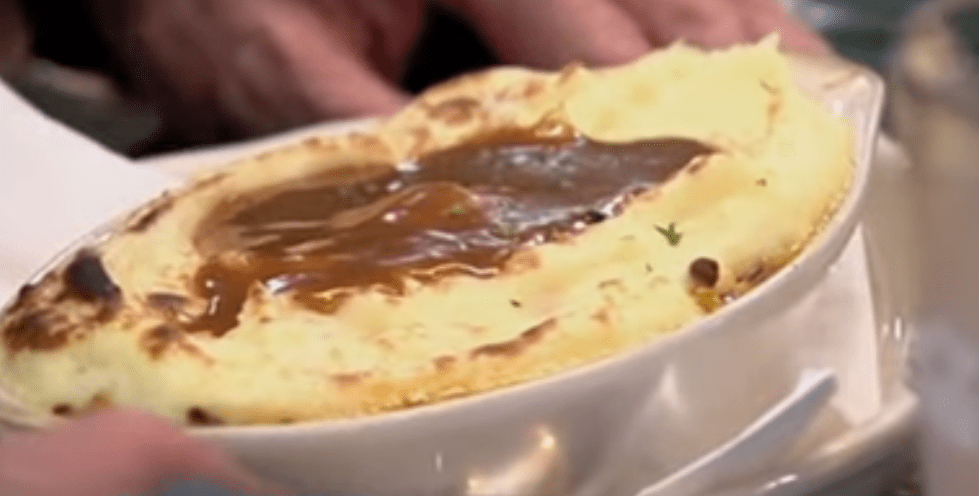
In fact, the term “cottage pie” first appears in written records around 1791, several decades before shepherd’s pie. The logic behind the nineteenth-century term “shepherd’s pie” is almost embarrassingly clear once you hear it. Sheep are tended by shepherds. Lamb is produced by sheep. Lamb is therefore a component of shepherd’s pie. A cottage pie, on the other hand, got its name from the type of simple home cooking that was typical of rural cottages; it was cheap, hearty, and made with whatever ground beef was available. It’s a little more difficult to justify the confusion when you know the etymology, but here we are.
The structure of both dishes is incredibly satisfying due to its simplicity. A thick layer of mashed potatoes is placed over a layer of browned minced meat that has been cooked down with onions, peas, and carrots in a baking dish. Everything is baked until the top is golden and the edges are just beginning to crisp. Sometimes cottage pie is made with thinly sliced potatoes rather than mashed ones, but this is more of a stylistic decision than a defining characteristic. Spooning that soft, buttery layer over seasoned meat on a chilly afternoon has an almost meditative quality, which is why the mashed version is still the classic.
Lamb is known to be divisive, especially among those who weren’t raised on it. It has a unique, slightly earthy flavor that most people who have only worked with ground beef would not anticipate. However, the flavor becomes rich and almost nutty when it is browned with garlic, rosemary, and a little broth. Many people who say they dislike lamb may have never had it properly prepared. It’s really difficult to dislike a good shepherd’s pie when it’s made with quality lamb and mashed potatoes.
By the way, the mashed potato question merits more consideration than it typically receives. The quality of the topping determines whether both pies succeed or fail. An otherwise great meat filling can be ruined by dense, sticky potatoes. The best versions are made by cooking russet potatoes until they are completely soft, then mashing them with warm cream, butter, and enough salt to give them flavor. Instead of adding to the richness below, the potato layer should feel light enough to contrast with it.
Not to be overlooked is the vegetarian perspective. With lentils, beans, or products like Beyond Meat in place of the filling, plant-based versions of both pies have gained genuine popularity. Some eateries are experimenting with root vegetables and mushrooms to create a savory depth that contrasts surprisingly well with the potato topping. It turns out that the dish is more versatile than its conventional reputation implies.
Whether you refer to it as cottage pie or shepherd’s pie, you are ultimately describing a working-class dish that has been around for more than 200 years and has somehow become a comfort food for everyone. The distinction between the two is subtle enough that most people are unaware of it, but significant enough that doing it correctly truly conveys something. You’ve made a shepherd’s pie if you reach for the lamb. You’ve made a cottage pie when you reach for the beef. When you take everything else away, it really is that easy.
FAQs
Q1: What is the main difference between shepherd’s pie and cottage pie?
Shepherd’s pie uses ground lamb; cottage pie uses ground beef.
Q2: Which one came first — shepherd’s pie or cottage pie?
Cottage pie is older, first recorded in 1791.
Q3: Can you make these pies without meat?
Yes, using lentils, beans, or plant-based meat substitutes works well.
Q4: Why do so many people confuse the two names?
Restaurants and cafeterias have used both names interchangeably for decades.
Q5: Does the potato topping differ between the two pies?
Cottage pie occasionally uses sliced potatoes instead of mashed.
