

These days, a certain type of lunch line forms on some streets in London, and it doesn’t stop at a drive-through window. It ends at a counter where people are dredging chicken in a glaze that has a subtle gochujang and garlic scent, and they don’t seem to mind standing a little longer than they would for a Big Mac. That’s the subtle, almost unexpected change that’s currently taking place on British high streets. McDonald’s isn’t being overtaken by Korean fried chicken restaurants like KoKoDoo. Not just yet. However, they are eroding the reflexive lunch choice, which McDonald’s has had for decades.
Though it hasn’t been refined into one yet, KoKoDoo’s story resembles a well-known founder myth. In 2016, Mary and Joseph Yoon began selling chicken from a food truck. Ten years later, in January 2026, they will open their seventh UK store, a flagship on Fulham Broadway. It takes ten years to go from truck to flagship. It’s the kind of slow-build trajectory that, up until the point at which it can no longer be ignored, tends to be disregarded by those looking for the next big thing.
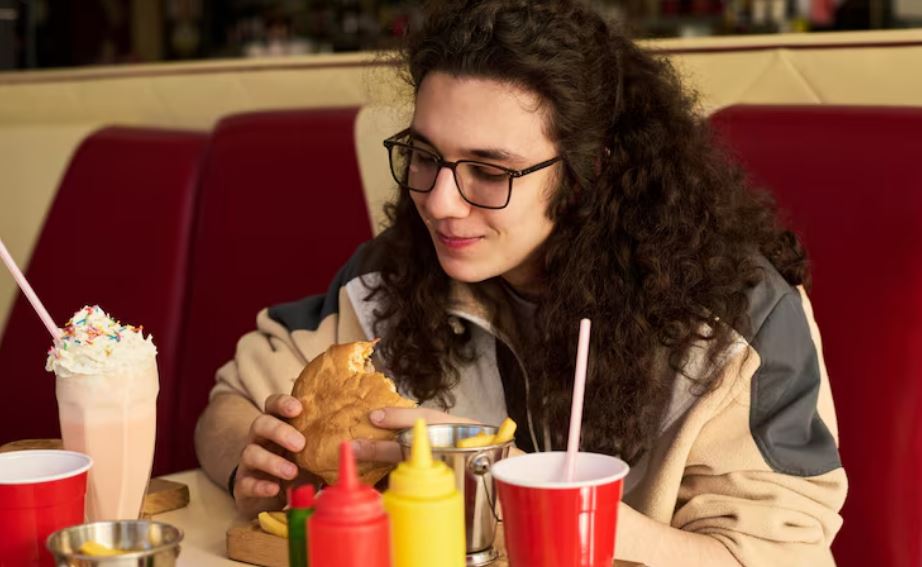
From the outside, the way the praise sounds is striking. It’s not quantified. The burger gave a foodie vlogger goosebumps. Words like “hidden gem” and “closest to authentic,” which are completely different from how people discuss a McNugget, are used by commenters on Reddit and TikTok. A McNugget doesn’t give anyone the chills. That isn’t exactly a criticism of McDonald’s; rather, it’s an observation about what these smaller chains are offering: a feeling of exploration and in-depth knowledge that is difficult to produce on a large scale and even more difficult to replicate.
Furthermore, the timing is not coincidental. After a few years of plant-based expansion that now seems to have gone too far, British eating habits have been swinging back toward meat, particularly toward protein-dense, decadent dishes. Pubs are cutting back on vegetarian options, according to data from Lumina’s Menu Tracker, while the share of mains of chicken dishes increased by several percentage points. Recently, McDonald’s removed the majority of its vegetarian menu, leaving only the McPlant. Thus, there is already a desire for chicken in particular rather than just protein in general. It just so happens that Korean chains are selling a version of it that seems more intriguing than what has been available for thirty years.
Here, it’s important to be truthful about scale. With over 45,000 locations across the globe, McDonald’s generated nearly $27 billion in revenue last year. KoKoDoo has seven stores. This is more of a single sparrow landing close to a giant’s foot than David vs. Goliath, and the giant hasn’t likely noticed it yet. However, fierce competition doesn’t always bring about change on high streets. Sometimes they change because the old default option begins to feel like the dull one when enough small, beloved, talked-about places open in enough cities. That type of disruption happens more slowly and is much more difficult to quantify until it has already occurred.
It’s still unclear if KoKoDoo and similar chains will ever achieve the density necessary to significantly reduce McDonald’s lunch traffic. They reached seven stores in ten years. If British diners continue to gravitate toward food that feels discovered rather than default, the next five may look very different. However, something is changing in the lines for the time being, even if it’s only apparent to those who are in them.
FAQs
1. What is KoKoDoo, and when was it founded?
KoKoDoo is a Korean fried chicken chain founded in 2016 by Mary and Joseph Yoon.
2. How did KoKoDoo start?
It began as a food truck before expanding into permanent restaurants.
3. How many UK locations will KoKoDoo have with its new opening?
Seven, including the new Fulham Broadway flagship, opening January 2026.
4. Why is McDonald’s facing more competition from chicken-focused menus?
Because UK diners are shifting toward meat-led, high-protein dishes again.
5. Does KoKoDoo currently rival McDonald’s in scale?
No, McDonald’s has over 45,000 locations compared to KoKoDoo’s seven.
