

Almost everyone who has attempted to follow a British recipe is familiar with that brief moment of perplexity when the directions say something like “180°C / 160°C fan/gas mark 4.” Three figures. Just one oven. And the silent, slightly ashamed question: which one do I really use?
This is the succinct response. The majority of contemporary kitchens have fan ovens, and 180°C fans are Gas Mark 4. You lower the temperature to 160°C, which is closer to Gas Mark 3, if your recipe is written for a traditional oven at 180°C and you wish to convert it for fan use. The 20-degree difference seems insignificant. It’s not in baking.
Fan Ovens, Gas Marks and Celsius
| Question | Answer |
|---|---|
| What gas mark is 180°C fan? | 180°C fan is Gas Mark 4 |
| What is 180°C conventional oven in a fan oven? | Reduce to 160°C fan (approximately Gas Mark 3) |
| Why do fan ovens use a lower temperature? | The fan circulates hot air, cooking food faster and more evenly — so less heat is needed |
| How much do you reduce temperature for a fan oven? | Reduce by 20°C from the conventional oven temperature |
| What is Gas Mark 4 in Fahrenheit? | 350°F |
| What is 160°C fan in Fahrenheit? | Approximately 320°F |
| Does fan oven cook faster than conventional? | Yes — check food 5–10 minutes earlier than the recipe states |
| What does “180°C / 160°C fan / gas mark 4” mean? | All three refer to the same cooking temperature — just for different oven types |
| Is 180°C fan the same as 180°C conventional? | No — 180°C fan is hotter than 180°C conventional in effect; use 160°C fan instead |
| When should I avoid using the fan setting? | For delicate bakes like soufflés or sponge cakes — fan can dry them out or cause cracking |
| How do I know if my oven temperature is accurate? | Use a stainless steel oven thermometer placed inside the cavity while it runs |
| What is a “moderate” oven in old cookbook terms? | Around 180°C / Gas Mark 4 / 350°F — a standard baking temperature |
Unlike conventional ovens, which allow hot air to settle in zones, fan ovens circulate hot air continuously throughout the cavity. This movement accelerates the process and more evenly disperses the heat. Because of its effectiveness and general dependability, almost all ovens sold in the UK today come with a fan setting by default. The trade-off is that you have to slightly modify your expectations regarding timing and temperature.
For its part, the gas mark system is a holdover from a previous era. It was made for gas cookers that only showed dial positions rather than temperatures in degrees. In a traditional oven, gas mark 4 is approximately 180°C; if fan-assisted heat is being used, it is approximately 160°C.
Although the majority of people under forty have never owned a gas oven with a mark-based dial, the measurement can still be found in recipes passed down through the generations, old cookbooks, and the kind of clipped instructions your grandmother wrote in the margins of a notebook. It is still important to know the conversion.
Additionally, it is worthwhile to exercise some caution when it comes to oven accuracy. A dial is set by manufacturers, but what takes place inside the cavity may be quite different. Certain ovens exceed the desired temperature by 20 to 40 degrees. Some find it difficult to even get to the set point. Most home cooks seem to rely more on the display than they ought to. The most useful five pounds a baker can spend is probably an inexpensive oven thermometer (the kind that sits on a shelf inside the oven while it runs), which can reveal unexpected irregularities.
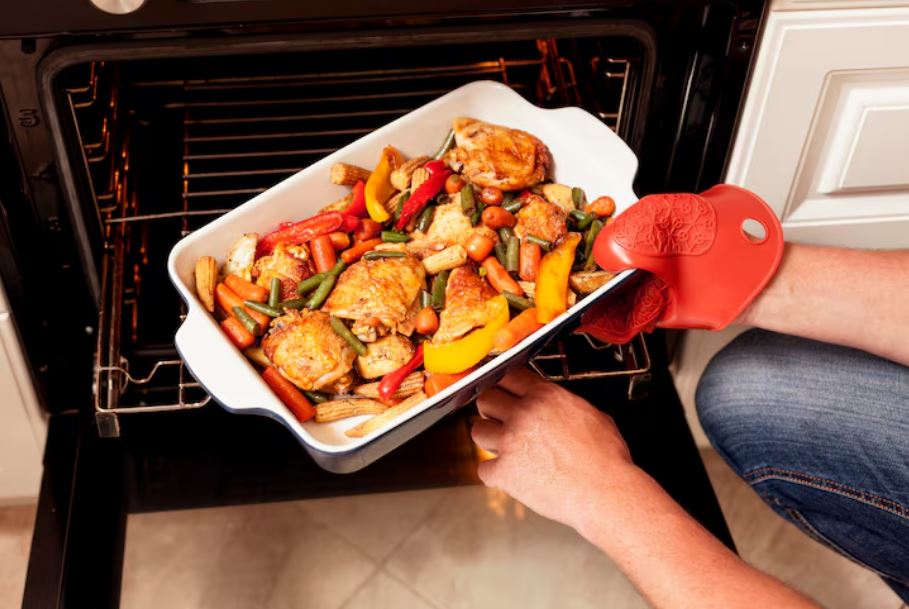
The general rule applies to most everyday cooking: a fan oven requires 20 degrees more heat to produce the same results as a conventional oven, so you should lower the temperature accordingly. Sheet pan dinners, baked veggies, and roast chicken are all reasonably forgiving. Baking is not as much. Before the center is set, a Victoria sponge at the incorrect temperature will dome, crack, or dry out around the edges. Overheating causes the pastry to shrink and brown before it has a chance to cook all the way through. When eggs and butter are added, the margin of error is significantly reduced.
In short, if a recipe calls for 180°C in a conventional oven, set your fan oven to 160°C. 180°C fan is Gas Mark 4. Keep an eye on the timing. Fan ovens frequently finish earlier than the recipe calls for, so it’s a good idea to check five to ten minutes ahead of time rather than being overly cautious. Additionally, it might be worthwhile to check the oven itself before doing anything else if results have been inconsistent despite following a recipe to the letter.
One of those things that seems insignificant until something goes wrong is oven temperature. Then they take precedence over everything else.
