

Downloading an exercise app, opening it twice, and then watching it gather digital dust for six months can lead to a certain kind of defeat. The majority of people are familiar with that emotion. It’s not exactly laziness. More often than not, the gap between what an average day permits and what a workout requires is just too great to bridge. Therefore, it’s worth keeping an eye out for anything that completely closes that gap.
Although Japanese interval walking has been popular in fitness and wellness circles for some time, interest in it has increased by nearly 3,000% as of 2026, and the explanation is simple. The structure is nearly offensive in its simplicity. For three minutes, walk quickly. For three minutes, walk slowly. Do it again. You have twelve minutes after two complete rounds. That’s sufficient, and it’s supported by clinical research rather than just a content creator with a ring light.
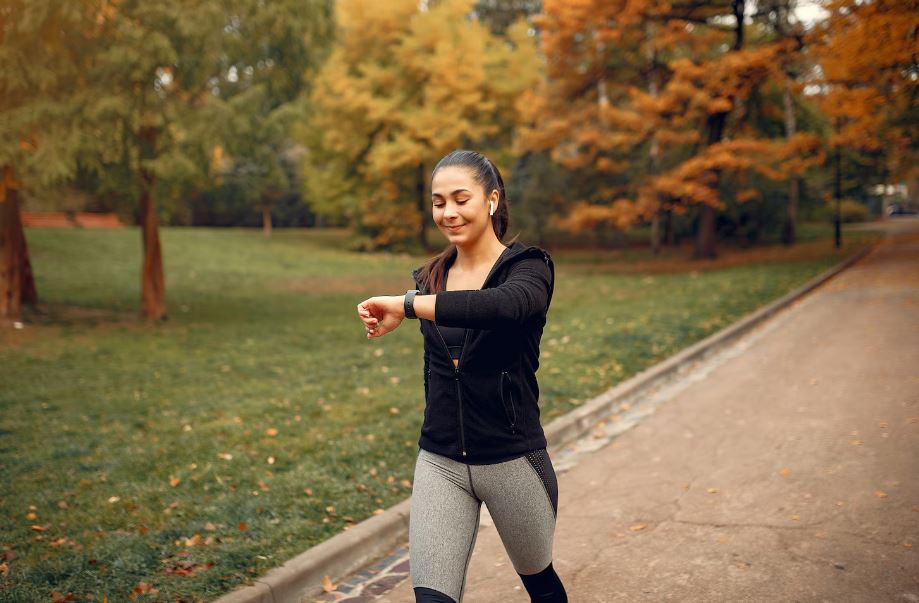
Researchers at Shinshu University in Japan created the approach as part of a long-term public health study with the specific goal of finding something that worked for women over 40, a demographic that fitness culture has historically failed to adequately serve. They discovered that the interval structure yielded significantly better results than walking steadily at the same moderate pace for the same duration, even at walking speeds. After five months of regular practice, participants experienced improved blood glucose control, decreased blood pressure, and increased aerobic fitness. It’s difficult to ignore how infrequently fitness trends have that kind of support.
The science is not enigmatic. The adaptation of your cardiovascular system to steady-state effort happens rather quickly. After a few weeks, walking at the same pace every day ceases to be a meaningful form of exercise. That adaptation is disrupted by intervals. Your heart rate increases during the fast segments. Before the effort is repeated, the slow segments permit a partial recovery rather than a full recovery. The training effect resides in that unfinished recovery.
The fast phase actually occurs at about 70% of maximum effort. You’re covering ground, breathing more forcefully, and moving purposefully, not running. Not a gasp. Simply strolling as though you’re a little late for something. The slow phase returns to a leisurely walk at about 40% effort. Steady walking cannot achieve the same results as repeating that contrast.
This particular trend feels different from the 6-6-6 challenge or the 12-3-30 treadmill protocol because it naturally fits into existing time. The school run turns into a break. Two rounds plus a cooldown make up a lunch break. Walking after dinner in the evening, which is already one of the best practices for controlling blood sugar levels, turns into a cardiovascular exercise that does more than just move your legs. A new time is not needed for the workout. When used differently, it takes the same amount of time.
A common misconception is that anything shorter than 45 minutes isn’t truly exercise. More people have likely remained sedentary due to that assumption than any lack of motivation in history. There’s a feeling that people are finally doing the math correctly as this specific trend gains traction in 2026 against the backdrop of longer, more intricate fitness regimens. Measurable improvements can be achieved by putting in twelve minutes of focused effort five times a week for three months. Twice before quitting, an hour-long session yielded no results. The numbers don’t support the conventional method.
FAQs
Q1. What is Japanese interval walking?
It alternates 3 minutes of fast walking with 3 minutes of slow walking.
Q2. Where did this walking method originate?
Shinshu University researchers in Japan developed it for long-term population health studies.
Q3. How often should you do this workout?
Five sessions per week deliver the best cardiovascular and metabolic results.
Q4. Do you need any equipment to start?
No equipment is needed — just a good pair of walking shoes.
Q5. How long before you notice real results?
Measurable improvements in fitness and energy typically appear within two to three months.
