

When you unroll a sheet of pastry, slide it into the oven, and watch it rise like something you’ve truly worked for, you get a certain kind of satisfaction. Of course, nobody actually makes their own puff pastry from scratch for a last-minute vol-au-vent or a Wednesday night tart. Because of this, the supermarket’s ready-rolled shelf is more important than most food writers would like to acknowledge.
Aldi’s version, which costs £1.09 for 320g and is marketed under the Ready, Set… Cook! Label has been quietly gaining popularity among home bakers for some time. At 34p per 100g, the sheet already stands out from the premium end of the market. M&S’s all-butter version costs 94p per 100g. Dorset Pastry surpasses £1.50. Aldi’s offering begins to feel more like a conscious decision at that spread rather than a compromise.
The Aldi sheet had the highest rise of the test, measuring 28mm, which is truly remarkable by any measure, when the Guardian’s food desk conducted a blind comparison earlier this year. The color reached that specific golden-brown hue that gives you the impression that you’ve done something right in the kitchen, the lamination opened up nicely, and the bake was even. It received three stars and the “Best Bargain” designation, which may be more significant than the M&S product’s four-star rating depending on what you’re baking.
However, it’s important to be realistic about what you’re getting. Butter is not used in the Aldi pastry. Here, palm oil, an emulsifier, and a tiny amount of ethanol work well. This is reflected in the flavor, which was tested and found to be neutral, which is a polite way of saying it doesn’t add much of its own personality to the dish. For most applications, especially savory ones where the filling is already carrying the flavor, that should be acceptable. However, you might notice a difference with a proper all-butter sheet if you’re making something where the pastry is the key, like plain cheese straws or a simple tarte tatin.
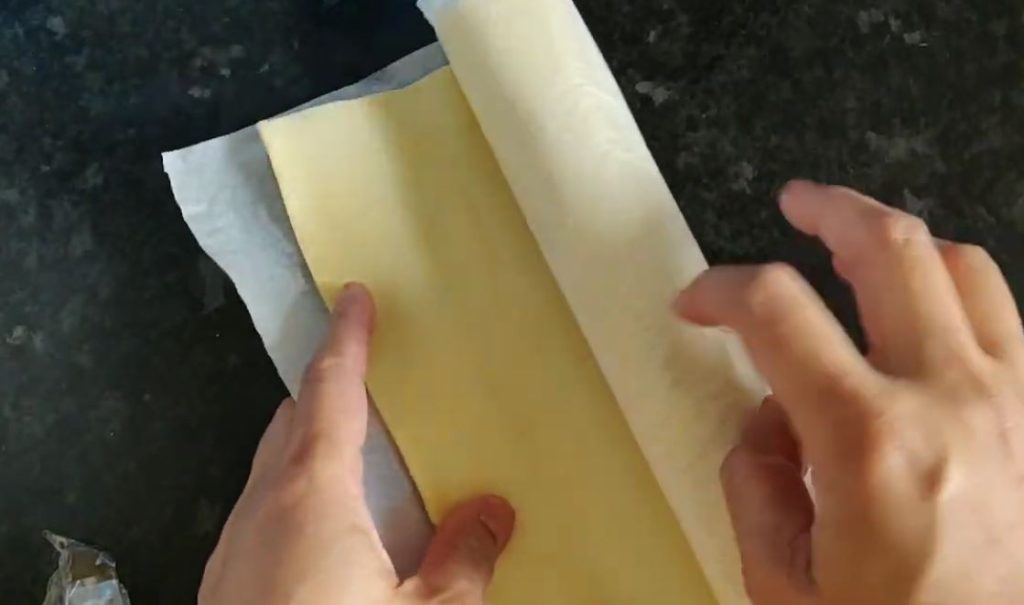
The Aldi pastry is very good at acting. You don’t need to do anything creative with it; it bakes evenly and rises consistently. When unrolled, the sheet is said to measure 40 cm by 25 cm, which is a suitable size for the majority of home recipes. If necessary, it can be expanded. That level of dependability is very important for a product at this price.
Additionally, the vegan perspective is now more pertinent than it was in the past. The Aldi pastry is suitable for vegan baking without the need for substitution because it is made with vegetable fats instead of dairy butter. That’s something that high-end all-butter options can’t match, and it makes things much easier for households that need to accommodate various dietary requirements.
It’s difficult to ignore the fact that palm oil is frequently brought up in criticism of Aldi’s puff pastry. That’s a legitimate worry, especially for consumers who consider ethical and environmental sourcing. Although they present their own production challenges, the butter-based substitutes do avoid that problem. There isn’t a perfect solution here; there are trade-offs, which is essentially how most grocery store food is.
Depending on what you’re making and your priorities, Aldi’s ready-rolled puff pastry may or may not be the best option. It’s hard to argue with a sheet that rises higher than nearly everything else on the shelf for just over a pound if price and performance are your criteria.
FAQs
1. Is Aldi ready rolled puff pastry made with butter?
No — it uses palm oil instead of butter.
2. How high does Aldi puff pastry rise when baked?
It rises to an impressive 28mm, the highest in Guardian testing.
3. Is Aldi puff pastry suitable for vegans?
Yes, it contains no dairy or animal products.
4. How much does Aldi ready rolled puff pastry cost?
It costs £1.09 for 320g, just 34p per 100g.
5. What size is the Aldi ready rolled puff pastry sheet?
The sheet measures 40cm x 25cm when unrolled.
