
British kitchens are undergoing a quiet revolution that has nothing to do with a fancy gadget or a famous chef. It takes place over a bowl of soaking chia seeds that were refrigerated the previous evening or over a saucepan of oats at seven in the morning. The modest breakfast, long abandoned in favor of a soggy bowl of commercial cereal or skipping meals entirely, is being reclaimed, and the outcomes are truly noteworthy.
Perhaps the most dependable way to start this shift is with overnight oats. You mix rolled oats with seeds, a little milk or plant-based substitute, and any available fruit, then let it sit overnight. In the morning, it’s cold, thick, and strangely satisfying in a way that a hot meal isn’t always. Variations of this have been promoted for years by the BBC’s food editors, and it’s possible that its continued inclusion in recipe collections indicates that people continue to make it because it truly works.
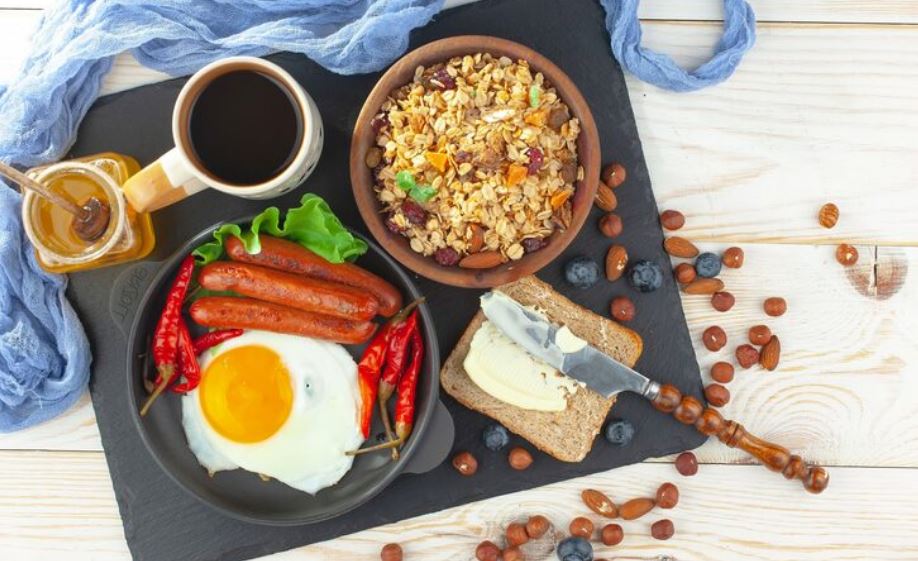
The foundation of the British healthy breakfast is still eggs, but the method has evolved. Toast with scrambled eggs was the norm ten years ago. These days, home cooks are using leftovers to make frittatas, serving mustard mushrooms over wholemeal toast with a light cream cheese sauce, and packing avocado, eggs, and spinach into breakfast wraps. People seem to have become more accustomed to using the stove before nine in the morning, which seems like a real cultural shift to anyone who grew up hurrying out the door.
The debate over avocados has been resolved. Once written off as a millennial fad, it is now a staple for people of all ages. It is typically served with soft poached eggs and black beans to make it more of a meal than a snack. A vegan, thirty-minute beans-on-toast recipe with Mexican influences has received tens of thousands of reviews on UK recipe sites and continues to draw new cooks every week. It’s difficult to ignore how far that dish has come since its inception.
Smoothies cover a certain void. A blended mixture of frozen berries, banana, yoghurt, and oats can be prepared in five minutes and eaten standing up for households with truly hectic mornings—school runs, early commutes, etc. It’s real, but it’s not glitzy. Nutritionists continue to disagree on whether smoothies make a healthy breakfast, but the consensus seems to be moving in the direction of yes—as long as the fiber is still present.
Baked oats, which fall somewhere between breakfast and dessert, have gained a devoted following. They are warm, satisfying, frequently flavored with blueberries or cherries, and require very little skill. People who say they don’t like porridge are converted by this type of recipe. Additionally, something baked, sweet, and nourishing in one bite tends to persuade someone who has spent years persuading themselves that a healthy breakfast entails deprivation.
The UK’s relationship with breakfast is evolving, as is becoming more evident. Healthy no longer equates to boring, and homemade no longer means difficult. The recipes that are popular in kitchens all over the nation are flavorful, useful, and based on ingredients that don’t need to be purchased from a specialty store. That’s probably what keeps them going more than any trend.
FAQs
Q1. How long does it take to prepare a healthy homemade breakfast?
Most recipes take between five and forty-five minutes, depending on complexity.
Q2. What ingredients are most commonly used in UK healthy breakfast recipes?
Eggs, oats, avocado, berries, and wholemeal wraps dominate the most popular recipes.
Q3. Are these breakfast recipes suitable for vegans and vegetarians?
Yes, many options are fully plant-based or easily adapted for both diets.
Q4. Can healthy breakfasts still taste good without being complicated to make?
Baked oats and overnight oats prove that nutritious food can be genuinely satisfying.
Q5. Is a smoothie considered a proper breakfast replacement?
Nutritionists increasingly say yes, provided the drink retains its natural fibre content.
