

Somewhere in coastal Georgia, a diner serves grits in large ceramic bowls with a small pool of butter slowly melting in the middle and steam rising off the surface like something that truly knows it’s doing something right. That picture has stuck with me. This dish doesn’t make an effort to win you over. It simply appears, filling and warm, and moves on. Grits have a nutritional profile that is worth closely examining, which makes them all the more intriguing.
A typical cup of cooked grits, such as those made from regular or quick-cooking varieties, contains approximately 151 calories, 32 grams of carbohydrates, 3 grams of protein, and only 1 gram of fat. On paper, the numbers are modest, but they only provide a partial picture. The picture of micronutrients is much more intriguing than what the macros show right away. That same cup provides about 20% of the daily recommended amount of thiamine, 16% of folate, 11% of niacin, and 17% of iron. That’s a significant contribution from a dish that most people associate more with Sunday mornings and butter than with any meaningful discussion of nutrition.
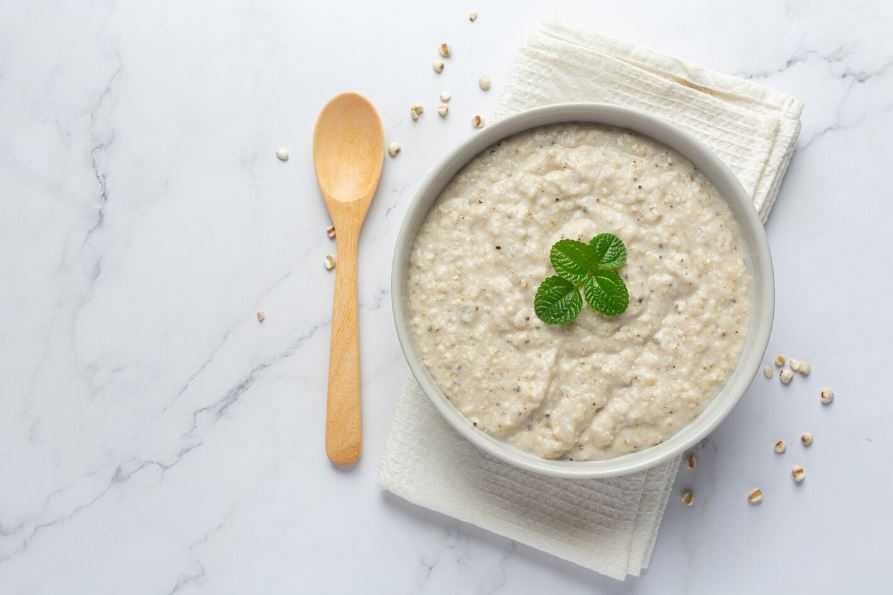
When most people reach for a bag on the shelf, they don’t realize how important the type of grits is. Stone-ground grits preserve the entire kernel, including the bran and germ, and are sometimes referred to as “old-fashioned grits,” which is a description that is accurate in multiple ways. This implies that the grain will contain more fiber, B vitamins, and other nutrients. In contrast, instant grits are processed, precooked, and dehydrated, removing the germ and outer bran layer. In essence, what you are purchasing is boiled water reconstituted starchy endosperm. Before assuming that all grits are nutritionally equivalent, it’s probably worthwhile to understand that some brands add vitamins back in, but it’s not quite the same thing.
Additionally, grits are naturally gluten-free, which is important for an increasing number of people dealing with gluten sensitivity or celiac disease. They completely avoid that problem as a corn-based food, which makes them a sensible substitute for wheat-based porridges like Cream of Wheat, which has its own devoted fan base but clearly can’t make the same claim. The closest Italian equivalent is polenta, which is made from a different type of corn and has a slightly coarser texture. However, grocery store labels frequently confuse the two.
The antioxidant content is one topic that receives insufficient attention. Carotenoids and polyphenols, which are plant compounds found in corn, seem to boost immunity and lessen oxidative stress. These compounds are fairly well transported through the cooking process by grits, especially when they are whole grains. Lutein and zeaxanthin are two particular antioxidants linked to eye health and defense against age-related vision loss. It’s important to note that frying grits drastically lowers their lutein content, which could support the idea of keeping things straightforward and letting the bowl do its job without much assistance.
To be honest, grits don’t exist in a vacuum. The whole nutritional picture is shaped by what you eat them with. A restaurant version swimming in heavy cream, butter, and cheddar is quite different from a simple bowl cooked in water or low-fat milk. To be fair, the restaurant version is also delicious, but it’s probably not something that people eat every day. The cooking technique and accompaniments are much more important than the grits themselves for those watching their intake of sodium or saturated fat. However, when combined with eggs, veggies, or lean proteins, they make a truly substantial breakfast or side dish that the American South has been quietly correct about for a long time.
FAQs
1. How many calories are in a cup of cooked grits?
A standard cup of cooked grits contains approximately 151 calories.
2. Which type of grits is the most nutritious?
Stone-ground grits retain the most fiber, B vitamins, and whole-grain nutrients.
3. Are grits a good source of iron?
Yes, one cup delivers 17 percent of the recommended daily iron intake.
4. Can people with gluten intolerance eat grits?
Grits are naturally gluten-free, making them safe for people with gluten sensitivity.
5. Does cooking method affect the nutritional value of grits?
Frying reduces lutein content significantly, while boiling preserves most nutrients.
