

Anger of a certain type only intensifies over years. It doesn’t show up overnight. It builds up through magazine covers, red-carpet commentary, and an excessive number of morning-show segments about which actress has lost weight and how. Something inside Busy Philipps finally gave way when she sat down on Lovett or Leave It with Jon Lovett. And when it did, it felt more like a person expressing what many people had been silently thinking for a very long time than a celebrity moment.
She said, “Give me the Ozempic, I don’t care,” with an unrehearsed bluntness. “I didn’t create the problem.” She continued by attacking what she perceived as a blatant hypocrisy at the core of Hollywood’s wellness discourse, one that has been present for decades but has seldom been called out with such vigor. She contended that Human Growth Hormone has long been used by male actors over 40. She called it outright: “The superhero physiques, the inexplicably lean leading men well into middle age.” “That’s why all the movie stars have been so fit after 40,” she replied. “They’re on drugs.” It was something she had never seen on the cover of Time magazine. Never once.
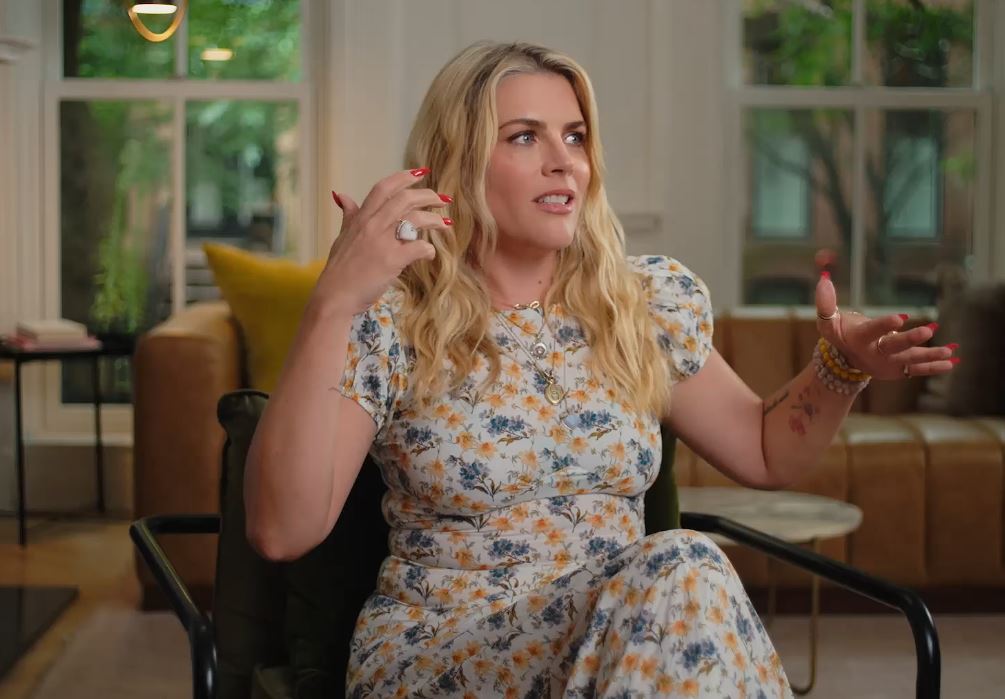
It’s difficult to ignore the stark differences in the framing of those two exchanges. Men’s use of HGH in entertainment has existed in a sort of cultural gray area, quietly accepted and seldom examined. When Ozempic—a medication initially intended to control blood sugar in people with type 2 diabetes—arrived, the coverage abruptly skyrocketed. Long opinion pieces in The New York Times, cover articles in The Economist, and New York magazine. Philipps would contend that the discussion turned into one that was almost entirely focused on women, urgent, and cautionary.
Busy Philipps has never been particularly nuanced. The Girls5Eva actress and podcast host has spent years developing a public persona that doesn’t back down from difficult subjects, such as motherhood, mental health, and the unachievable physical standards of the entertainment industry. However, because her Ozempic remarks weren’t coming from an abstract place, they had a different impact. They arrived weighed down by fatigue. “I can’t do this anymore” fatigue that is real and apparent.
Her remarks didn’t really have anything to do with weight loss medications. She framed it in a systemic way. She noted that anyone who has witnessed a family member battle obesity is aware of how the world views that individual. Prospects for employment change. Social dynamics shift. Every conversation, every meal, every doctor’s appointment—the cultural machinery of shame operates silently in the background. Ozempic isn’t vanity for a lot of people. It’s a relief.
It’s important to note that in recent years, the celebrity discourse surrounding GLP-1 medications has become much more candid. According to Chrissy Metz, it was like turning off the “food noise” that had been taking up all of her thoughts for years. In an ABC special, Oprah Winfrey publicly discussed her own use and distanced herself from Weight Watchers, encouraging others to let go of the stigma. A pharmaceutical is not being treated like a party trick by these individuals. They’re talking about something more akin to a change in how their brains perceive hunger, which is precisely what the research indicates these medications can accomplish.
Philipps is aware of how complicated the situation is. She is not ignoring the discussion about access, the price of these drugs, and the fact that GLP-1 medications are still unaffordable for a large number of individuals without insurance. Her main point, however, is more difficult to refute: the fury aimed at women for taking a legitimate, FDA-approved drug is drastically out of proportion to the silence surrounding what men in the same field have been doing for decades.
Her remarks seem to have unlocked something, at least momentarily. Fans on all platforms reacted with what appeared to be recognition—not just agreement, but also the particular relief of hearing something that had gone unsaid finally spoken aloud. In the news cycle, that emotion quickly fades. However, it’s still unclear if the Ozempic conversation will ever be able to hold men and women to the same standard of scrutiny, and the double standard she described isn’t going away. As I watch this particular debate play out, the honest answer is probably not, at least not until more people are willing to express exactly what Busy Philipps said.
FAQs
Q1: What did Busy Philipps say about Ozempic?
She publicly defended women’s right to use it without shame or judgment.
Q2: Why did Busy Philipps bring up HGH?
To expose the double standard between how men’s and women’s drug use is treated.
Q3: Is Ozempic only used for weight loss?
No — it was originally developed to manage blood sugar in type 2 diabetes patients.
Q4: Which other celebrities have spoken about using GLP-1 drugs?
Chrissy Metz, Oprah Winfrey, and Rosie O’Donnell have all discussed their experiences openly.
Q5: Where did Busy Philipps make her Ozempic comments?
On Crooked Media’s Lovett or Leave It podcast, hosted by Jon Lovett.
