

Most people can identify a certain moment, usually around Tuesday night, when they are standing in front of an open refrigerator with a container of something they cooked four days ago, but it no longer looks edible. They created the meal plan on Sunday with sincere hope, and it has already begun to fall apart. The plan wasn’t particularly flawed. The reason for this is that the plan was never designed to withstand contact with a real week.
This collapse occurs so frequently that it is nearly predictable. In real time, people create comprehensive meal plans, compute calories, and select healthy recipes. Then Wednesday shows up with a lengthy work call, a forgotten lunch, and all of a sudden a drive-through bag on the passenger seat. The issue is not with the plan. It is supported by the infrastructure.
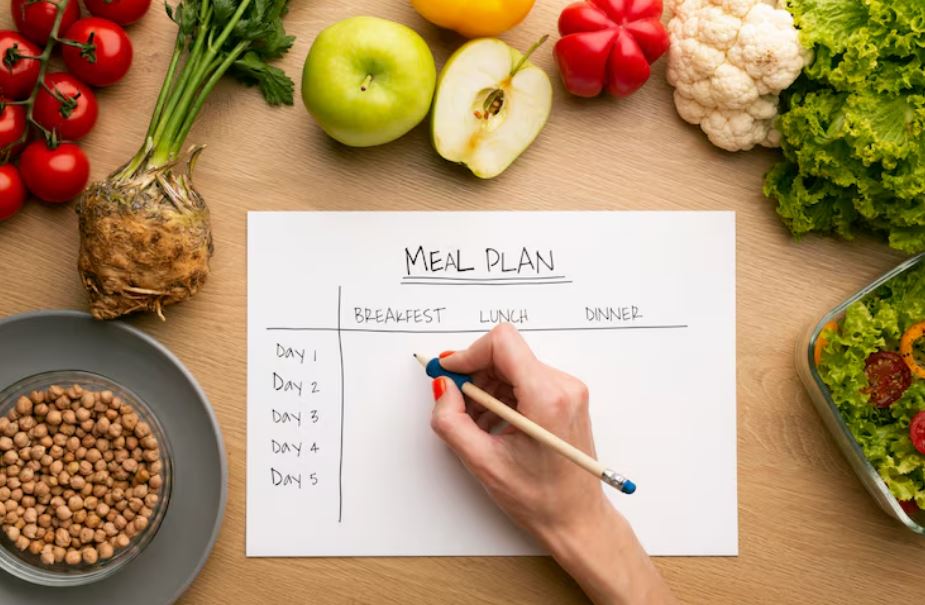
The goal isn’t a perfect list of meals, which is something that most guides subtly ignore when creating a weekly meal plan for weight loss. Having food on hand when you’re exhausted, preoccupied, and impatient is the aim. These are the times when everything is decided.
It’s not because of fitness culture mythology that protein is the most dependable foundation. Its underlying science is quite simple. In the range of 20 to 30 percent of its calorie content, the body burns a lot more energy when it breaks down protein than when it breaks down fat or carbs. More significantly, protein suppresses hunger for longer. An hour later, a meal consisting of Greek yogurt, eggs, or grilled chicken doesn’t leave someone rushing for snacks. That eliminates a significant number of the choices that cause weekly plans to go awry.
1.6 to 2.2 grams of protein per kilogram of body weight per day is a reasonable starting point. That equates to between 112 and 154 grams over the course of a day for a person weighing about 70 kg. Until the meals are planned out and the math becomes doable, it seems like a lot. Most people can get there without worrying about every gram by eating three healthy protein-anchored meals and a snack.
It doesn’t have to be surgical, but the calorie structure is important. Depending on their baseline energy requirements and level of activity, most people lose weight gradually at a rate of 1,500–1,800 calories per day. A weekly weight loss of about one pound can be achieved by cutting 500 calories from daily maintenance intake. Some people may move more quickly than others. Even nutrition scientists find it challenging to fully account for the roles that gut biology and individual metabolism play in this research, which is actually messier than the clean numbers suggest. The truth is that consistency is more important than accuracy.
What occurs on Sunday afternoon is what really keeps a plan going past Wednesday. Spend roughly ninety minutes on actual physical preparation rather than creating a more complex meal plan. Prepare a large amount of turkey or chicken. Eight to ten eggs should be hard-boiled. Prepare a pot of quinoa or brown rice. Vegetables that will otherwise go unused until they become soft should be cleaned and chopped. Divide up the snacks.
Although the work is unglamorous, it transforms the entire week. The weary Tuesday version of yourself makes a totally different choice than the person waiting at a drive-through when there’s cooked food in the refrigerator. A background in cooking is not necessary for the Sunday system. It necessitates making one appearance and performing the tedious task.
Plans are more likely to be quietly abandoned on the weekends than to be loudly abandoned. There’s something to be said for flexibility rather than rigidity, and Saturday in particular has a way of feeling like a reward day. Ordering grilled instead of fried, avoiding the bread basket, and prioritizing protein even when dining out are all wiser decisions rather than rigid adherence. Five cautious meals are not eliminated by one flexible one. Treating one deviation as a total failure is typically the cause of the collapse.
Observing people create new meal plans with intricate spreadsheets and color-coded containers gives me the impression that the complexity itself becomes a barrier. The most detailed plans are not the ones that endure. They are based on the fact that the majority of people do not actually prepare meals with optimal motivation daily. Wednesday is accounted for in actual plans.
FAQs
Q1: Why do most weekly meal plans fail by midweek?
No pre-prepped food is available when tiredness and distraction take over.
Q2: How much protein should I eat daily for weight loss?
Aim for 1.6 to 2.2 grams per kilogram of your body weight.
Q3: How long does Sunday meal prep actually take?
Around 90 minutes covers everything needed to survive the full week.
Q4: Can I eat out on weekends without ruining my plan?
Yes — choose grilled over fried and keep protein the priority.
Q5: How many calories should I target for steady weight loss?
Between 1,500 and 1,800 daily calories works for most people.
