
The majority of diets require some suffering. Measure the portions, resist the bread, and count the macros. The idea that losing fat requires accepting a certain amount of discomfort is the foundation of conventional weight loss advice. For this reason, an increasing amount of research on ad libitum vegan eating initially seems almost dubious. You’re telling people that they can eat as much as they like, replace the steak with roasted vegetables and lentils, and still achieve significant weight loss. It sounds like something you might find on the back of an infomercial that airs late at night.
However, the figures continue to appear in peer-reviewed publications.
According to a randomized clinical trial that was published in JAMA Network Open in 2026, adults who were overweight and adhered to a low-fat vegan diet—eating freely and without calorie targets—reduced their dietary energy density by about thirty percent. By weight, they did not consume less food. They consumed equal amounts of food. However, compared to the control group, the daily calorie total decreased by roughly 357 kilocalories because plant foods have far fewer calories per gram than meat, dairy, or eggs. It’s not a rounding error. Without anyone being instructed to deprive themselves, that significant daily deficit was calculated.
The study’s lead author, Hana Kahleova, who also serves as the Physicians Committee for Responsible Medicine’s director of clinical research, presented it in a way that is almost deceptively straightforward. Your body’s natural appetite signals work in your favor rather than against you when the foods on your plate have a lower energy density. You eat until you’re full. Simply put, you consume fewer calories. Although it contradicts decades of diet culture that taught people that hunger was the price of progress, there is a logic to it that makes sense once you hear it.
Although the idea is not new, it is becoming more difficult to reject the body of evidence. A cohort study conducted in 2014 as part of Dr. McDougall’s residential health program monitored 1,615 individuals who adhered to a low-fat, starch-based vegan diet for a mere seven days. 1.4 kg was the median weight loss. Blood pressure decreased. The median decrease in cholesterol was 22 mg/dL. For seven days. Unlimited food intake. These are not the numbers you would anticipate from a week in which replacing eggs with oatmeal is the largest intervention.
Boňjan Jakík and colleagues’ Slovenian study, which included 241 participants on a 10-week ad libitum plant-based program supplemented with two daily meal replacements, produced a longer-term picture. Compared to controls, body fat decreased by 4.3 percentage points, or more than 13%. The average weight loss was 5.6 kg. The majority of muscle mass was maintained, which is crucial because most crash diets cause an indiscriminate loss of both lean and fat tissue. At a 60-day follow-up, 60% of participants had maintained their weight loss without participating in any official programs. It’s worth pausing to consider that.
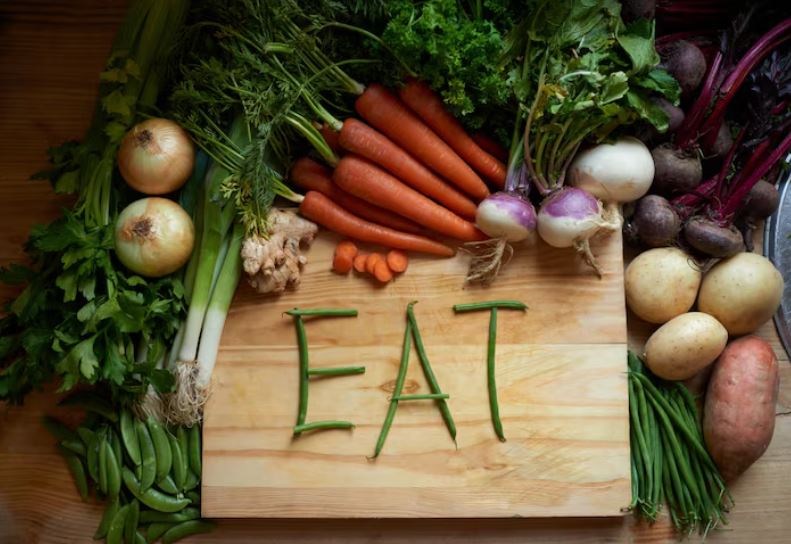
Energy density might be one of those mechanisms that has been there the entire time. Vegetables’ water content and legumes’ fiber both physically fill the stomach. Digestion is slowed by them. Before the number of calories increases, they release satiety hormones. Conversely, meat and cheese are so high in calories that they allow you to consume hundreds of calories before you even feel full. Restructuring a diet around the former instead of the latter causes the math to subtly change without anyone having to worry about it.
All of this still seems almost counterintuitive, and it’s important to recognize the limitations of ad libitum research. These are not metabolic ward studies, where each bite is monitored for a full year. Individuals self-report. It’s a messy life. It can be challenging for some people to maintain a plant-based diet, particularly in the absence of support systems. Furthermore, the improvements in blood sugar and cholesterol found in shorter studies don’t fully capture what occurs over years or decades.
Even so, it’s difficult to ignore the fact that something genuine is being recorded here as the evidence mounts. For decades, the diet industry has sold restriction. The growing body of research on low-fat vegan diets is subtly indicating that, for many people, eating differently rather than less may be the solution.
FAQs
1. Do you need to count calories on an ad libitum vegan diet?
No — you eat freely until satisfied, with no calorie targets required.
2. How much weight can you realistically lose on this diet?
Studies show losses ranging from 1.4 kg in seven days to 5.6 kg over ten weeks.
3. Why does a vegan diet cause weight loss without portion control?
Plant foods are lower in energy density, so you consume fewer calories naturally.
4. Will you lose muscle mass along with fat on this diet?
Muscle mass is largely preserved, with body fat percentage dropping significantly.
5. How quickly do health markers like cholesterol improve?
Meaningful cholesterol reductions were observed in as little as seven days.
6. Is this approach sustainable long-term?
Sixty percent of participants kept losing weight even after the formal program ended.
