

During a five-day window in mid-May, Frigorifico Gorina SAIC in Argentina packed cardboard cases of boneless top sirloin, eye round, knuckle cuts, and flat. The boxes moved silently. After passing through customs and entering the country, they traveled to distributors and retailers in Florida and Texas.
The USDA’s Food Safety and Inspection Service claims that they were denied the federally mandated import reinspection. Nearly 29,628 pounds of raw beef, all bearing the Argentine establishment number “EST. N° OF. 2025,” are currently being recalled because they are deemed to be at the highest risk level by FSIS.
The company responsible for the recall is Aventura, Florida-based Corte Argentino USA LLC. The agency announced it on August 7, but it wasn’t until weeks later that media coverage in Texas and Florida brought it back to the public’s attention. Some of the recalled products may still be in a home freezer, waiting for a weekend cookout that no one should have, as their use-by or freeze-by dates extend until September 20, 2026.
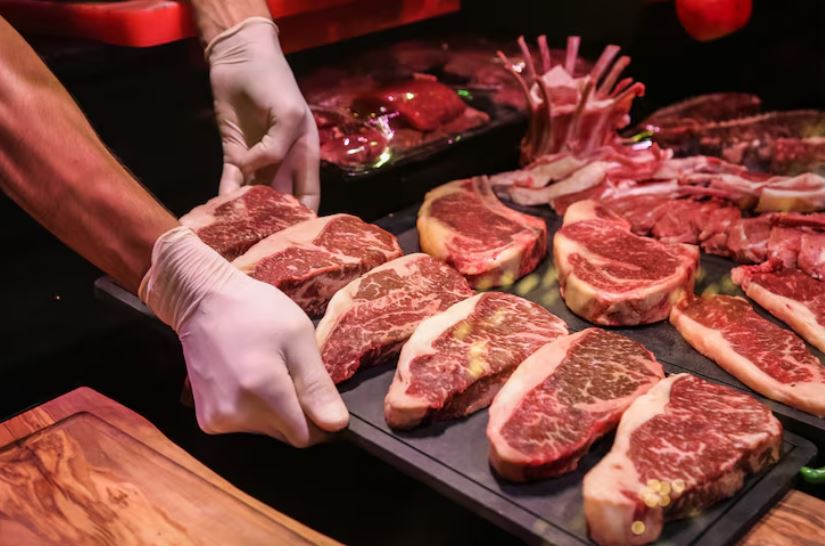
This recall is actually difficult to read because of the discrepancy between the explanation and the classification. It was classified by FSIS as a Class I health hazard, which is the same category used for circumstances in which consuming a product carries a reasonable risk of serious injury or death. However, no particular contaminant was mentioned in the recall notice.
Not a pathogen. Nothing prohibited. The product’s entry into the nation without the necessary import reinspection was the only explanation offered. That’s all. It’s odd to frame something as a paperwork issue while simultaneously giving it the agency’s highest risk rating, according to a food safety expert who was quoted in local Texas coverage. Technically, both statements are true. Simply put, they are uncomfortable sitting next to one another.
It is not a formality to require a reinspection. The purpose of the reinspection procedure is to confirm that imported beef satisfies USDA requirements by examining labels, temperature compliance, and condition. It serves as a checkpoint between American retail and overseas manufacturing. Ignoring it does not indicate that the product is flawed.
It does imply that no one checked that anything was correct. Even in the absence of a confirmed issue, that unverified gap is what grants the Class I label for a product like beef, where contamination risks include pathogens like E. coli and undeclared processing additives.
This recall landed harder than it might have otherwise because of the announcement’s timing in relation to everything else going on in Washington. President Trump announced on Truth Social a plan to allow an additional 300,000 metric tons of foreign ground beef into the U.S. market over a 90-day period, priced about 25% below current market levels, just days before the recall gained widespread public attention.
The administration’s stated justification was simple: the cattle herd needs time to recover, and domestic beef prices have been at an all-time high. Groups representing the cattle industry retaliated almost immediately, claiming that below-market imports undermined the financial incentive for American ranchers at the wrong time.
A recall of Argentine beef that had gotten past federal inspection and ended up on store shelves in two of the biggest states in the nation was brought up during that discussion. The import announcement and the recall are unrelated; FSIS made it clear that this is a reinspection compliance issue rather than proof of a contamination event connected to any trade decision.
However, people found it more difficult to treat them as completely distinct stories due to their close timing, and social media posts about local ranchers and where to purchase domestic beef quickly went viral in North Texas communities.
It’s difficult to ignore how frequently trade policy and food safety become entangled in the same news cycle. It is unlikely that the Argentine recall will change policy. The impacted product has a comparatively small distribution footprint, no illnesses have been confirmed, and FSIS is carrying out its routine effectiveness checks to verify the product has been removed.
Customers in Texas and Florida should compare their freezers to the recalled product descriptions if they purchased bone-in cuts from specialty or import-focused retailers in the previous few months. For the most part, everyone else is watching a contentious discussion about foreign beef that was already complicated prior to this specific shipment avoiding its checkpoint.
