

Around the second hour of simmering, a meat sauce stops smelling like raw meat and starts smelling like lunch or dinner. Not a certain dinner, but rather every good dinner you’ve ever had at someone else’s house, where the grandmother was nearby, slowly stirring something without being in a hurry. That’s the thing about a good recipe for lasagna sauce. You have to be patient. That’s the whole point.
It’s easy to see why most people who cook during the week choose to use a jar. Life moves quickly, but lasagna takes a while. Still, there is a real difference between a sauce that was opened and one that was built. A jar can’t come close to the depth of flavor you get from cooking onions until they’re soft and slightly golden, letting red wine slowly evaporate into beef and tomatoes, and adding a bay leaf that no one will ever see but everyone will taste.
It’s not a choice between homemade and store-bought, though. It is in the middle of béchamel and ricotta. In American lasagna, thick white scoops of ricotta mixed with egg and sometimes parsley are used to make the layers. Italian lasagna from Emilia-Romagna, which is where the dish comes from, uses béchamel instead. This is a mixture of butter, flour, and milk that is whisked together to make a creamy, slightly nutty sauce that covers all the noodles without making the meat sauce underneath taste too heavy. These two versions might both taste great. If you make béchamel the right way, it will feel more like a sauce than a filling. Something silky about it that ricotta never quite gets to.
Most of the time is spent cooking the meat sauce, or ragù. First, you add the Italian soffritto, which is made of onion, garlic, carrot, and celery. It’s a base flavor that can be found in many of Italy’s best dishes. Then add the ground beef and brown it until it stops being gray and starts to turn color around the edges. Then add tomato paste, crushed tomatoes, a splash of red wine, and Worcestershire sauce if you want to be practical. After that, there was a long wait. At least two hours, and some recipes say four, are needed for the sauce to thicken and reduce, and the kitchen will smell like something really hard to leave alone.
A widely used old recipe calls for adding just two tablespoons of white sugar to the tomatoes early on. That seems like it shouldn’t make sense, but it does: acidity is bad for a smooth sauce, and sugar cuts it without standing out. It makes the taste rounder, warmer, and easier on the tongue. It’s still not clear if this is a cheat or just good cooking. Most likely both.
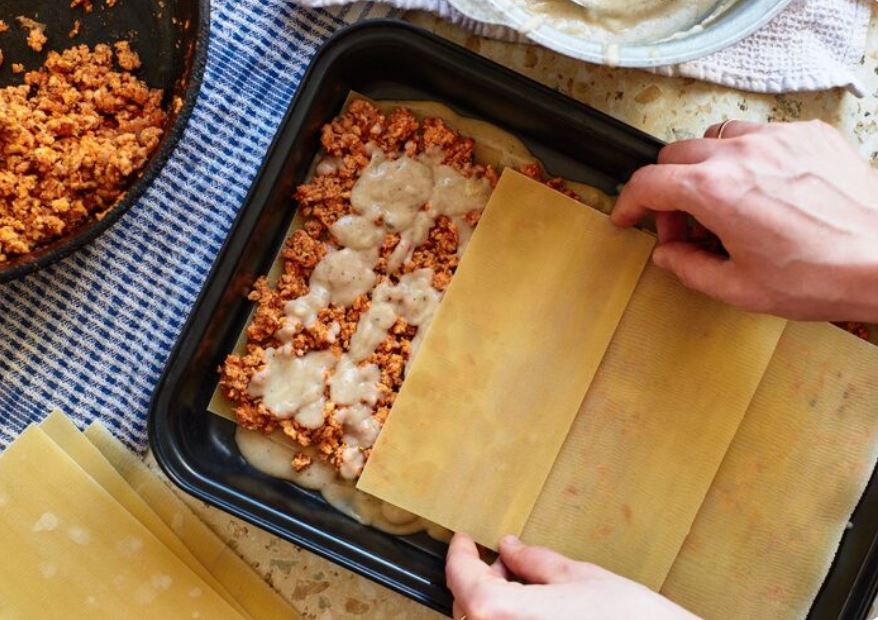
It’s a little ceremony to put together lasagna. Putting a spoonful of meat sauce on the bottom of the dish first will keep the sheets from moving around. This is a small tip that you might miss the first time you forget it. After that, add layers of pasta, ragù, and béchamel, keeping going until the dish is full. There is more white sauce and grated cheese on top, which bakes down into something that gets blisters and browns around the edges.
Depending on your mood, what comes out of the oven forty minutes later could be a lovely weeknight dinner or something truly moving. You can’t help but notice how something as simple as meat, tomatoes, flour, butter, and milk always feels like a big deal.
