

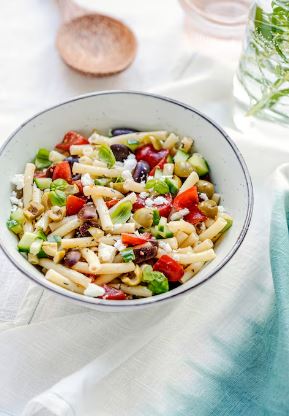
Feta receives a lot of recognition that it doesn’t always merit. It has become practically a given in orzo salads in particular, with the white crumble strewn on top as if the dish wouldn’t be possible without it. But when you take it out, an interesting thing happens: the dressing gets more attention, the other ingredients have to work harder, and the end product is frequently a cleaner, more adaptable salad that travels better, keeps longer, and doesn’t turn off anyone at the table who has a dairy intolerance. Feta may have been handling a lot of the heavy lifting just because no one bothered to ask.
When the dressing is properly considered, the feta-free version works best. Olive oil, fresh lemon juice, Dijon mustard, and a tiny bit of honey or maple syrup to balance the acidity make up a basic lemon vinaigrette that does more than most people realize. While the pasta is still warm, the crucial step of adding the drained orzo to the dressing is mentioned in some recipes but omitted in others. Instead of sitting in a pool of dressing at the bottom of the bowl, the orzo absorbs the lemon and oil as it cools, drawing the flavor into each piece. Even in a cold version served an hour later, there is a discernible difference.
Cooking the orzo properly entails boiling it in well-salted water for the entire recommended cooking time, sometimes an additional minute. Unlike pasta served hot, there is no sauce temperature to cover up the texture of undercooked orzo in a salad, which has a chalky resistance that doesn’t get better over time. After the salad is cooked and drained, it can be kept from clumping by giving it a quick shake in a sieve and drizzling it with a little olive oil. The character of the dish is then largely determined by the add-in selection. Cucumber and cherry tomatoes are typical. Brine and a hint of meatiness are added by the olives. The earthiness that feta typically offers is brought by artichoke hearts, especially the jarred variety in oil. Similar work is done by capers, whose sharp saltiness cuts through the richness of the olive oil dressing in a way that enhances rather than overpowers.
Observing this salad come together on a warm afternoon gives me the impression that it’s one of the more straightforward summertime recipes. No pretense. No method other than whisking a dressing and boiling water. This reasoning is fully supported by the BBC’s antipasti version, which is made entirely of jarred ingredients along with chickpeas and Parmesan. It uses the oil from the sun-dried tomato jar as part of the dressing itself, which is both useful and really delicious. The warm Mediterranean version, which includes sautéed bell peppers and cherry tomatoes that are folded through before serving, suggests the salad is more versatile than the cold, prepare-ahead format suggests.
Here, fresh herbs are more important than in most pasta salads, and the choice of herb significantly alters the dish’s flavor. It feels lighter and more summery with mint. Basil is more in line with traditional Italian flavors. When nothing else is available, parsley is the dependable constant. Many recipes call for a combination of two or three herbs, which is usually the right instinct. The herbs must be present in enough quantity to register because they give the green freshness that feta used to deliver through its salty tang. Dill complements lemon surprisingly well, adding a subtle anise note that gives the dressing a more thoughtful flavor than it should have for something put together in less than twenty minutes.
It’s still unclear if searches for the no-feta version primarily reflect the dairy-free and vegan community finding a workaround, or if it has actually surpassed the classic in popularity. In any case, the salad still tastes good without the cheese. Perhaps it’s even better.
