

Something about a good basil pasta dish is almost too simple to be honest. You heat water. You warm up oil. A handful of green leaves does most of the work. Still, people keep trying to find it, making changes, and arguing over things like whether the tomatoes should be charred or raw and whether the cheese should be grated or blended. That tension—between keeping things simple and fiddling around a lot—is what makes this dish so interesting to think about.
The version that is being talked about the most right now in the food world is Ali Slagle’s creamy cottage cheese basil pasta from NYT Cooking. At first, the idea seems a little sketchy. It seems like you’d make cottage cheese in pasta sauce when you’re out of cream and don’t want to spend time going to the store. But when you quickly mix it with Parmesan, lemon zest, garlic, baby spinach, and a big handful of torn basil, it turns out shiny, bright green, and richer than it should be. There are over 1600 home cooks who have given it five stars, which is a lot.
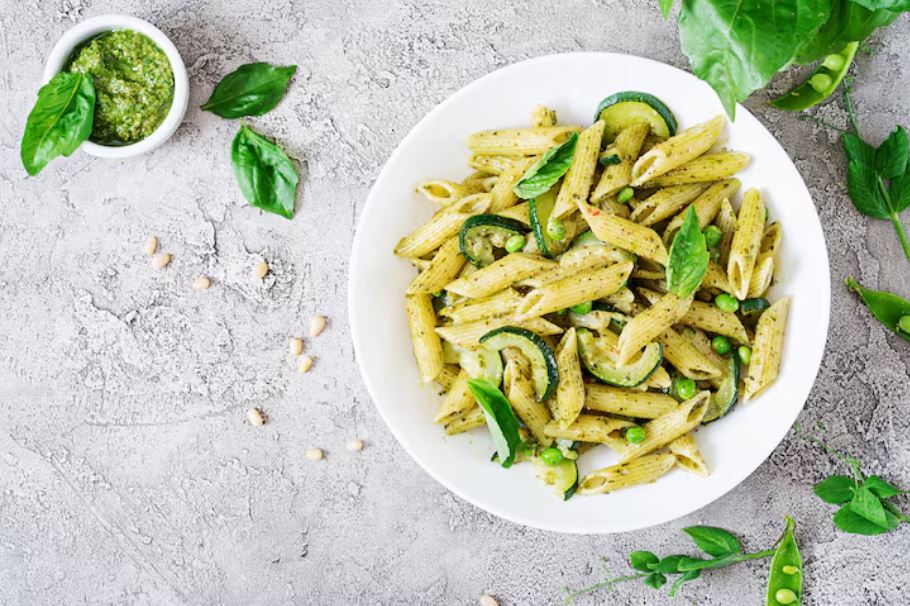
In this case, the technique is more important than most people think. The sauce is mixed separately, and then the pasta water is added to loosen it up. Finally, the sauce is tossed off the heat with the spaghetti. Getting rid of the heat is the last part that really works. It keeps the basil bright and stops everything from getting dull and sad. It seems like this is a smart, simple kitchen because of the way the sauce coats the pasta as you toss it. The color is somewhere between jade and olive.
With its nine-minute cook time and very good argument that riper tomatoes make better sauce, the cherry tomato version is at the other end of the complexity scale. Daen’s Kitchen has been quietly making it popular. Some sliced garlic and hot olive oil are added to the cherry tomatoes. The tomatoes blister and burst over medium heat, then fall apart into a jammy, slightly sweet sauce. A lot of salt is added, and chili flakes are optional. The pasta is then tossed in with just enough starchy cooking water to hold everything together. At the end, when the food is no longer hot, fresh basil is added, and pecorino is sprinkled on top. This might be the most honest version because it has the fewest steps, nothing to blend, and only the pan to wash.
Another version is with garlic butter. This recipe has been on Allrecipes for years, and people keep making it when they have guests coming over in 25 minutes and a pound of spaghetti sitting on the counter. Butter, garlic, basil, Parmesan, and olive oil are mixed in a bowl with drained hot pasta. That’s the whole recipe. The basil doesn’t have to do anything for it to work.
The most obvious thing that all three versions have in common is that they put quality over complexity. If the olive oil is bad, the cherry tomato version will be much worse. Basil that has been dried won’t work because it’s not the same plant in any meaningful way. It’s the cloudy, starchy liquid that most people drain off without giving it a second thought that makes the sauce stick or slide off. It’s still not clear why home cooks don’t pay attention to it, since recipe writers talk about it so often. It could be that it just looks like dishwater.
All of this makes the most sense in the summer. Basil grown outside in the summer is sweeter than basil grown in a greenhouse in January, and Daen’s Kitchen says that cherry tomatoes get softer, juicier, and much more likely to burst if you leave them on the counter for a few days before cooking. When those things are true, following these recipes feels less like following directions and more like letting the season cook for you.
