

A warm dish of bread and butter pudding with cream-soaked bread puffed up at the edges and the top turning a pale golden color in the oven, has a very reassuring quality. It’s the type of dessert that gives a kitchen a welcoming scent. The obvious question is whether the freezer can save you if you’ve made too much, which happens more frequently than most people realize.
In a nutshell, the answer is yes, but only under very specific circumstances, particularly when cream is involved.
Cream makes a difference. A custard enriched with double or single cream behaves differently in the freezer than a regular custard made with milk alone. Cream has a higher fat content, which should protect the mixture. However, when the custard is frozen and then thawed, it usually splits. The silky quality that initially made the pudding worthwhile is largely lost, and the texture becomes grainy and occasionally watery. You’re never going to get the original back, but you can salvage it with a gentle reheat.
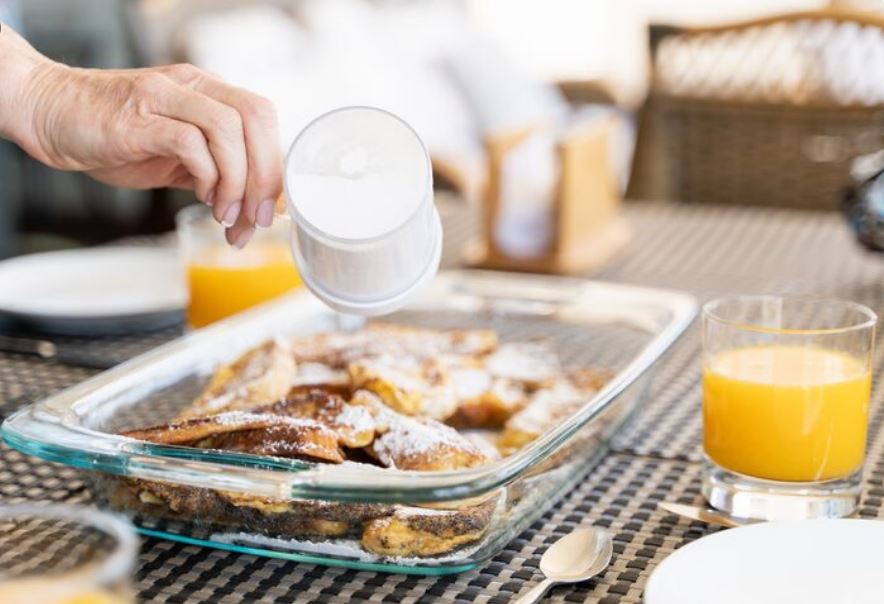
Freezing the pudding before baking, as opposed to after, is the most widely accepted recommendation, including from sources that have thoroughly tested this. Put everything together by buttering the bread, layering it in the dish, covering it with the cream and egg mixture, and stopping there. Before placing the dish in the freezer, tightly wrap it in two layers of clingfilm and a layer of foil. It keeps well for up to three months when prepared this way. When it’s time to bake, it must thaw for a full day in the refrigerator and then be placed on the counter for about 30 minutes to remove the chill before being placed in the oven.
Most home cooks seem to be unaware of this distinction until they’ve already committed an error. It makes sense to freeze a baked, cream-heavy pudding because it is solid, cooked, and appears stable. However, custard is fundamentally an emulsion, and emulsions are delicate substances that don’t handle the expansion and contraction that freezing causes.
The refrigerator is a much better option than the freezer if you’ve already baked it and there are leftovers. A cream-based bread and butter pudding, when properly covered, keeps for up to three days in the refrigerator and reheats fairly well in a low oven or even a microwave on a gentle setting. Although it’s not quite as good as freshly baked goods, it’s still close enough to be worthwhile to eat.
The general takeaway from this, which holds for the majority of cream- and egg-based desserts, is that the freezer is best used for preparation rather than storage. It is really helpful to prepare the pudding in advance and freeze it unbaked, especially during the holidays or when preparing food for a large gathering where timing is crucial. It usually goes wrong when leftovers are frozen after the fact, with the cream already cooked into the custard. Although it’s still unclear why so many recipes don’t address this distinction more explicitly up front, it’s important to be aware of this information before freezing an entire dish and finding out about the texture issue days later.
