
Close Menu
Friar Street KitchenFriar Street Kitchen
    Facebook X (Twitter) Instagram
    Facebook X (Twitter) Instagram
    Friar Street KitchenFriar Street Kitchen
    Subscribe
    • Home
    • Food
    • Menu
    • Health
    • Restaurants
    • Lifestyle
    • Privacy Policy
    • Contact Us
    • Terms of Service
    • Disclaimer
    • About Us
    Friar Street KitchenFriar Street Kitchen
    Home » Can You Reheat Cooked Prawns More Than Once? Here’s What Food Safety Experts Actually Say
    Food

    Can You Reheat Cooked Prawns More Than Once? Here’s What Food Safety Experts Actually Say

    Jawdah Hannad BasaraBy Jawdah Hannad BasaraJuly 15, 2026No Comments3 Mins Read
    Facebook Twitter Pinterest LinkedIn Tumblr Email
    Share
    Facebook Twitter LinkedIn Pinterest Email

    When you look at a container of Friday’s prawn curry in the refrigerator on a Sunday afternoon, a certain kind of optimism takes over. It has a pleasant scent. It appears to be fine. You survived just fine after eating half of it on Saturday. It wouldn’t be any different to reheat it today. Even though that reasoning is comfortable, it is precisely at this point that things start to go wrong.

    Unlike, say, a vegetable soup or a beef stew, prawns are not forgiving. They have a high moisture content, a delicate protein structure, and move remarkably quickly through the temperature danger zone, which is the window between 5°C and 60°C where bacteria multiply most quickly. Under the correct circumstances, the number of Vibrio and Salmonella, both linked to improperly handled seafood, can double every 20 minutes. The prawn in your refrigerator may not be safe just because it doesn’t appear to have changed.
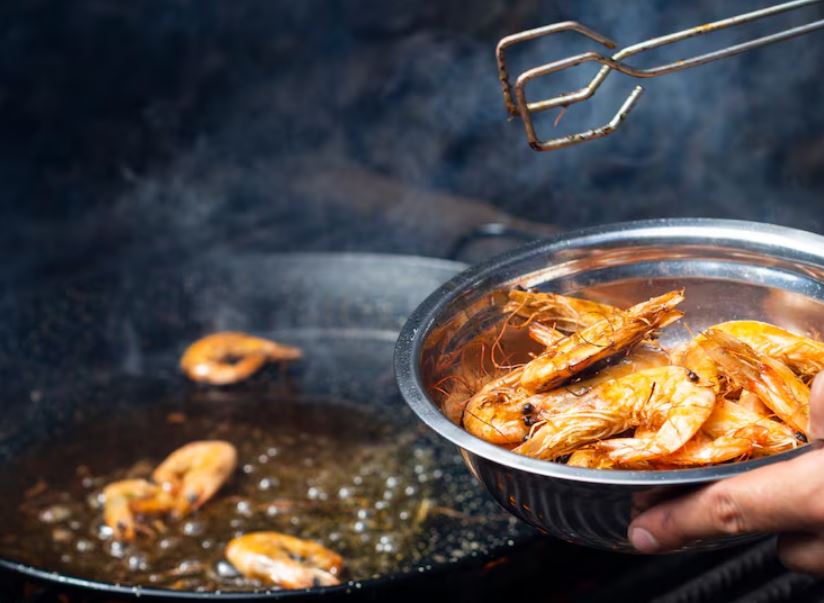
    can you reheat cooked prawns more than once
    can you reheat cooked prawns more than once

    Regarding the question of reheating, the FSA’s food safety guidelines are rather straightforward: once. Cooked prawns should only be reheated once, to a minimum internal temperature of 74°C. The logic goes beyond what transpires during the actual reheating process. The cooling times and the time the prawns spend being pushed back into the danger zone each time they are taken out of the refrigerator and reheated are what matter. Every cycle presents a chance for bacterial regrowth, and certain bacteria produce toxins that are resistant to heat and cannot be removed by microwave time.

    It’s important to comprehend the 74°C rule as the temperature at which the majority of dangerous bacteria are consistently eliminated rather than as a random figure. Food safety experts always advise using a probe thermometer for anything involving shellfish because getting prawns hot enough to steam on the outside does not ensure the center has reached that threshold. The majority of home cooks don’t have one. Additionally, the majority of home cooks do not always get food poisoning, but the odds are not as favorable as they might seem.

    The texture issue is nearly as significant as the safety issue, and both make the case against repeated reheating. Prawns have very little heat resistance because they are low in fat. Once overcooked, they become rubbery. They resemble pencil erasers after being overcooked twice. One could reasonably argue that a prawn suffers more harm than it deserves from even one careless reheating over high heat.

    The research and recommendations do support the following: a single cautious reheat is safe if prawns were refrigerated within two hours of cooking, kept below 4°C in a sealed container, and consumed within two to three days. The majority of people are unclear about at least one of those conditions, which is the issue. While everyone went for a walk, the curry was left on the stovetop. The leftovers were pushed to the back of the refrigerator and loosely covered. When it comes to shellfish, these minor mistakes are more significant than with most other foods.

    Observing how carelessly people handle leftover seafood gives me the impression that the true danger is not ignorance of the regulations but rather assurance that nothing negative has ever happened. Usually, it hasn’t. However, when prawn-related food poisoning does occur, it usually leaves a lasting impression. Divide the food into portions, reheat it once, and accept that the remainder will either be consumed cold or not at all. That’s the honest response, but it’s also the less romantic one.

    Reheat Cooked Prawns
    Share. Facebook Twitter Pinterest LinkedIn Tumblr Email
    Jawdah Hannad Basara
    • Website

    Jawdah Hannad Basara is a food and lifestyle writer who covers the narratives, trends, and discussions influencing our eating habits. She writes with the kind of curiosity that transforms a straightforward meal into a larger narrative, covering everything from restaurant culture and viral kitchen experiments to the health science behind common ingredients at Friar Street Kitchen.Her work encompasses dining, wellness, recipes, and the cultural influences that shape what is served to us. Jawdah contributes astute observation and a readable voice to the whole range of food journalism, whether she's dissecting a TikTok culinary trend, exploring what your comfort food says about you, or wondering why the Sunday roast might be in danger.

    Related Posts

    How Long Does a Victoria Sponge Last in the Fridge — And Are You Storing It Wrong?

    July 15, 2026

    Can You Freeze Bread and Butter Pudding Made With Cream? Here’s What Actually Happens

    July 15, 2026

    How Long Does Homemade Coleslaw Last With Mayonnaise — The Answer Might Surprise You

    July 15, 2026
    Leave A Reply Cancel Reply

    You must be logged in to post a comment.

    Food

    How Long Does a Victoria Sponge Last in the Fridge — And Are You Storing It Wrong?

    By Jawdah Hannad BasaraJuly 15, 20260

    A Victoria sponge sitting on a kitchen counter on a Sunday afternoon has a subtly…

    Can You Reheat Cooked Prawns More Than Once? Here’s What Food Safety Experts Actually Say

    July 15, 2026

    Can You Freeze Bread and Butter Pudding Made With Cream? Here’s What Actually Happens

    July 15, 2026

    How Long Does Homemade Coleslaw Last With Mayonnaise — The Answer Might Surprise You

    July 15, 2026

    Can You Reheat a Chinese Takeaway the Next Day? The Honest Answer Every Leftover Lover Needs

    July 15, 2026

    Can You Freeze Cooked Toad in the Hole? Here’s What Actually Works

    July 15, 2026

    This Watermelon Margarita Recipe With Watermelon Syrup Fixes the One Mistake Everyone Makes

    July 15, 2026

    The Best High-Calorie Weight Gain Recipes You Can Make With a Single Pan and Basic Ingredients

    July 15, 2026

    The Worst Habit Diners Have That’s Making Servers Quit

    July 15, 2026

    Why Dark Kitchens Are Quietly Taking Over Your Food Delivery Apps

    July 15, 2026
    Facebook X (Twitter) Instagram Pinterest
    © 2026 ThemeSphere. Designed by ThemeSphere.

    Type above and press Enter to search. Press Esc to cancel.