

The smell of peaches before you actually see them, ripe, warm, and almost too sweet, sitting in crates at a farmers market or piled on a kitchen counter going soft, is a summertime moment that most people can probably recall. This cobbler is all about that smell. Not the pan size, not the baking time, not the Bisquick box. The peaches.
There have been variations of this recipe in American kitchens since at least the 1960s, which may be explained by the recipe’s almost embarrassing simplicity. The original recipe, which included Bisquick mix, milk, butter, sugar, and canned peaches, was simple enough for your grandmother to put together on a weeknight. Back then, it worked. It continues to function. However, using fresh peaches alters the outcome in a way that is difficult to explain without coming across as overly dramatic.
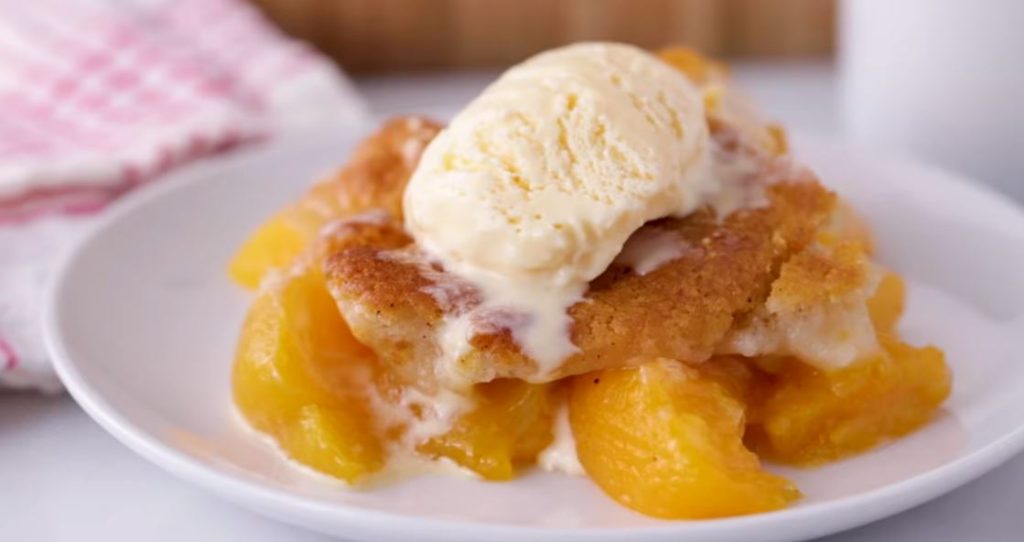
Juice from fresh peaches is released uniquely. When baked, they retain a slight texture that canned fruit never quite manages, and beneath all that sweetness, they have a subtle tartness that prevents each bite from becoming monotonous. When brown sugar is used instead of white, it adds a subtle caramel undertone that complements the fruit. For some people, these might seem like minor distinctions. Others see them as precisely the point.
First-time makers are often taken aback by the method. The batter is poured over the melted butter in the baking dish without stirring or spreading. The peaches are the last to land on top. The batter somehow rises up and around the fruit while the oven takes care of the rest, producing a crust that is halfway between a soft cake and a biscuit. Considering how little work went into it, it appears more intentional than it should.
The standard window for baking at 375°F is about 45 to 55 minutes, but ovens vary enough that it’s probably best to check at 40 minutes. You want the edges to pull slightly from the pan and the top to be a deep golden brown. It seems that people frequently pull cobblers too soon, leaving them pale and a little doughy in the middle. This quiet impatience is typically what makes a good cobbler forgettable.
It’s difficult to ignore how much this dish changes based on what is served with it. The obvious solution is vanilla ice cream melting into the warm crust, and it’s obvious because it’s right. One of those pairings that has endured long enough to seem obvious is the contrast between cold and hot, between the clean dairy and the sugared fruit.
If fresh peaches are out of season, frozen peaches can be used; however, baking significantly softens the texture. If you want the exact flavor of something your mother used to make on a Sunday, canned peaches that have been thoroughly drained will yield the nostalgic version. That’s how food memory is stubborn, and there’s nothing wrong with respecting it. However, it seems like a sensible idea to use summer peaches when they are actually available and ripe enough that the skin yields when light pressure is applied.
