

Most home cooks are familiar with this moment. You realize that Christmas dinner is still three weeks away after peeling what feels like half a bag of potatoes, boiling them until the edges become soft and raggy, and shaking them around in the pan until steam fills the kitchen. It used to seem a bit compulsive to plan like that. It appears to be common sense now.
The short answer to the question of whether cooked roast potatoes and parsnips can be frozen is “yes,” but the longer answer is more intriguing. It turns out that the method you select has a big impact on how delicious they taste that day. As it happens, the worst potatoes to freeze are raw ones. When the water, which makes up about 80% of them, freezes, the ice crystals rip through the cell walls. When you thaw them out, you’ll have something more akin to watery, grey mush than anything worth putting in a roasting tin.
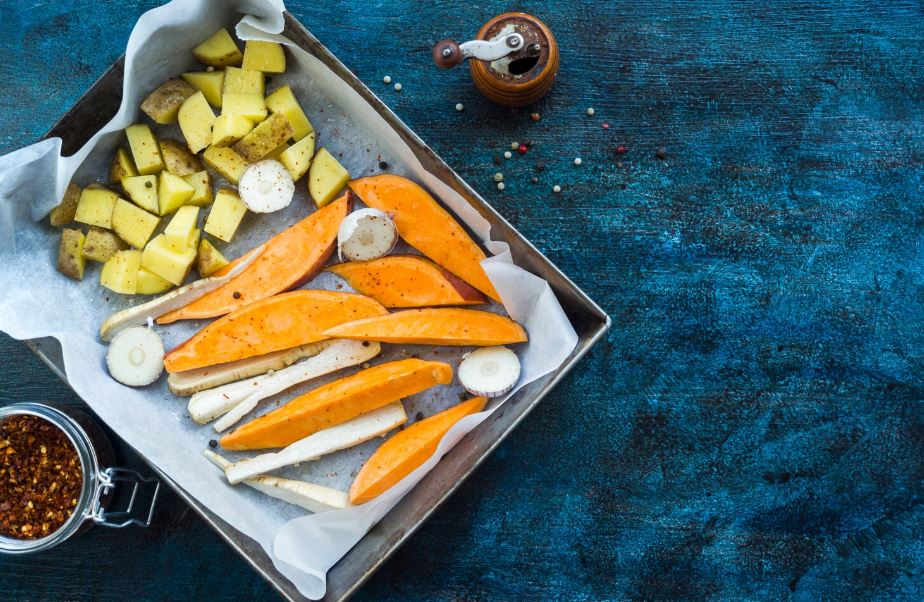
Everything is altered by parboiling. The method is fairly straightforward: peel, cut, boil for about seven minutes, drain completely, and then toss the potatoes in a pan with a few tablespoons of plain flour, giving them a good shake until the flour coats them evenly and the edges become rough. The crispy surface later on is a result of that roughness. After they have cooled a little, arrange them so they are not in contact on a baking tray covered with parchment paper, then freeze until solid. After that, they can be stored for up to a month in a bag; according to some sources, this can be extended to three months, though quality does seem to deteriorate slightly after four weeks.
The fact that parboiled-then-frozen potatoes frequently outperform fresh ones is truly surprising, and this has been tested numerous times in unofficial home blind tastings. It holds together better, the outside crisps up more forcefully, and the inside is fluffier. Sometimes the inside of freshly made roasties is denser and less yielding, like a baked potato. It defies logic. It seems to be consistent as well.
Similar reasoning is used by parsnips, though there are a few notable distinctions. They don’t require the same rough treatment as potatoes, and the parboil time is reduced to about four minutes instead of seven. Rather, they have a savory crust that crisps up beautifully when frozen if you coat them with finely grated Parmesan before freezing. Unlike potatoes, they don’t require preheating in fat. They will be ready in about 45 minutes if you drizzle some goose fat over the top before putting them in at 220°C. Once you’ve completed the preparation, there’s an almost effortless quality to it.
On the actual day, whether it’s Christmas or not, very little is needed. When the fat in the roasting tin is hot enough, add the frozen potatoes without first thawing them, then let the oven finish. Before the outside begins to color, the interior can warm through by starting at 190°C for the first twenty minutes and then raising the temperature to 220°C. They will turn golden, perfectly crisp, and free of the lingering sense of effort that often accompanies last-minute kitchen preparation if you turn them once or twice while cooking.
It’s difficult to ignore how much this alters the actual texture of Christmas morning. Quieter evenings in early December are used to spread out the preparation that typically takes place in a frantic, slightly resentful outburst on the 25th. It’s quieter in the kitchen. On days when it doesn’t really matter, the cleanup is done. Contrary to popular belief, the potatoes benefit from it.
