

Seeing a Ninja Slushie machine operate has an almost theatrical quality. In about an hour, you have something that looks like it came out of a restaurant machine—smooth, icy, and strangely satisfying in a way that a standard blender never quite manages. The drum spins, and the mixture gradually thickens against the cold barrel walls. Even though it’s a small domestic moment, it doesn’t seem insignificant when you’re wondering why you ever paid $14 for a frozen margarita at a bar while standing in your kitchen on a July afternoon.
It’s easy to see why the strawberry margarita is currently the most popular beverage made with this machine. The natural sweetness of strawberries softens the harsh edges of tequila without much help, and they are inexpensive and widely available. Whether blended from fresh fruit or thawed from frozen, a good strawberry purée adds a vivid, almost artificially bright color that makes the drink appear far more impressive than the effort required would suggest.
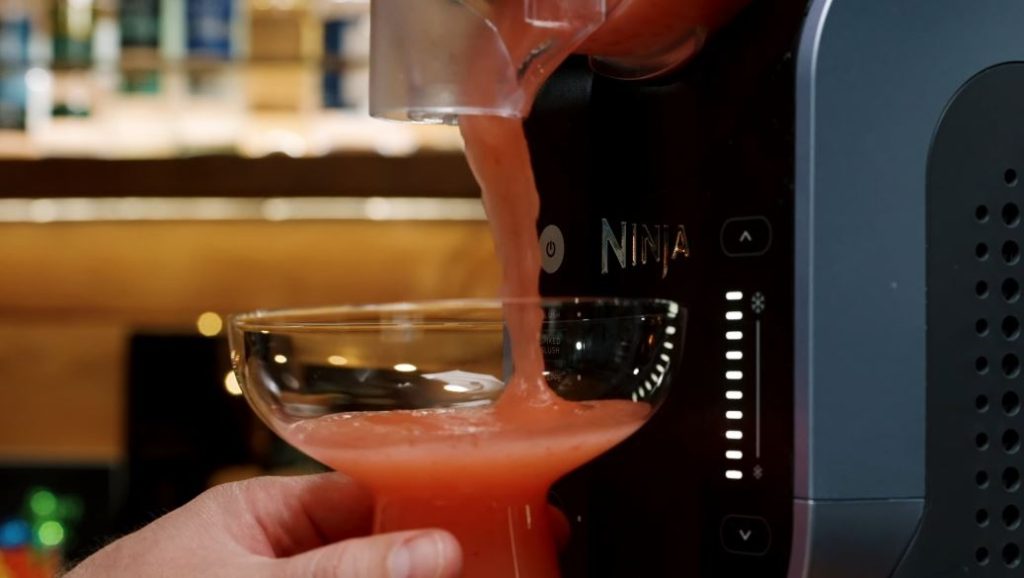
Most people make mistakes the first time when it comes to getting the ratios right. Alcohol and the machine have a rigid relationship. If you add too much tequila, the drum will start throwing error codes, beep once every minute, and flash its LED lights in a way that makes it seem like the appliance is personally upset with you. A general guideline that seems to work for most recipes is to limit the amount of alcohol in each serving to one to one and a half ounces. The freeze cycle struggles after that. The machine cannot create the fine, shaved-ice texture that makes a slushie worthwhile if the mixture contains too much alcohol. Alcohol simply doesn’t cooperate with cold the way water does; it resists freezing.
Four cups of purified water, one and a half cups of blanco tequila, one cup of strawberry purée or flavored mix, and roughly half a cup of triple sec are a good starting point for a full batch, or roughly four to six servings. Grand Marnier is sometimes substituted for triple sec, and if you’re looking for something a little more sophisticated, that’s actually a good choice. There is a slight but noticeable difference—a little less sweetness and a little more depth. It also significantly reduces freeze time and results in a denser, more uniform slush when the ingredients are pre-chilled before being loaded into the machine.
More than most recipes realize, fresh lime juice is essential. The flat, preserved quality of bottled lime juice is lost in a frozen beverage. Conversely, freshly squeezed juice maintains enough brightness to cut through the tequila and strawberry and remind you that you’re sipping a margarita rather than just a frozen fruit drink. Making a salted rim correctly is also worthwhile. When applied to a glass rim that has been lime-wiped, coarse salt adds a mineral sharpness that makes the first sip noticeably better than one without.
The Ninja Slushie machine may have actually helped to bridge the gap between entertaining at home and the type of experience that was previously exclusive to eateries or beach bars. There’s a feeling that the frozen cocktail, which has historically been associated with chain restaurants and all-inclusive resorts, is becoming more popular. A strawberry margarita slushie made with real fruit and good tequila is a serious beverage. Simply put, the machine makes it simpler to demonstrate that.
