

There are recipes for mac and cheese, and then there are those that subtly take over a family’s routine and never go away. The baked version from The Chunky Chef definitely belongs in the second group. It has received almost 8,000 ratings since it went up in late 2019, and its unyielding rating of 4.88 out of 5 indicates that people aren’t just cooking it once.
The layering is what sets this recipe apart from the many others that are similar. Pasta is typically poured into a dish, covered with cheese, and placed in the oven by home cooks. By splitting the cheese into three portions and creating a dish that resembles a lasagne, this recipe challenges your preconceived notions. A portion is folded between two layers of pasta, a portion is added to the sauce, and the remainder is used to crown the top. On paper, it sounds fussy. In actuality, it takes about five more minutes and yields a noticeably better result.
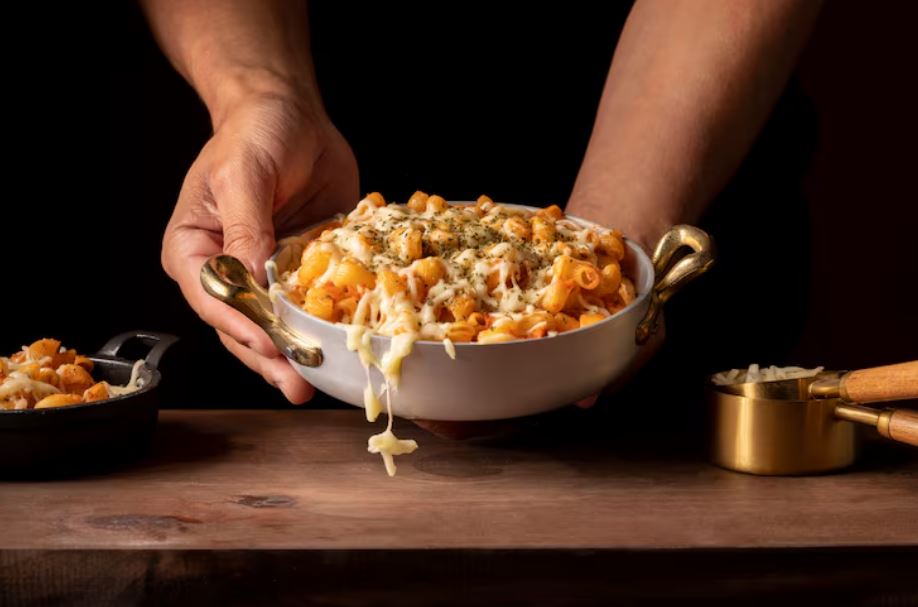
The cheese sauce itself is a traditional roux made by cooking butter and flour together until the smell of raw flour is gone, then slowly pouring half and a half and whisking in whole milk until the mixture thickens to the consistency of pudding. The cheese is then added: Gruyère for its slightly nutty, melty flavor that entices you to keep taking another spoonful, and medium cheddar for its sharpness. A dash of smoked paprika. Add black pepper and salt. It’s just a few ingredients that do a lot of work.
More important than it may seem, the pasta must be cooked to just under al dente before it comes into contact with the sauce. When baked, fully cooked pasta often becomes soft and slightly sticky. The noodles can finish in the oven without becoming mushy if you pull them out a minute early. In most recipes, this kind of detail is overlooked, but in this one, it’s clearly stated in the method.
Baking takes place for just fifteen minutes at 325°F. This comparatively low temperature prevents the sauce from drying out or breaking at the edges, which is a common issue with hotter, quicker baked mac recipes. Instead of being scorched, the top turns out bubbly and slightly golden, and the interior remains truly creamy instead of solidifying into a block. Perhaps the main factor contributing to this recipe’s consistency is its moderate temperature.
On the same website, there’s also a stovetop version designed for evenings when turning on the oven seems like too much work. In that case, the macaroni is cooked directly in milk without the use of roux, and the cheese sauce is constructed around the starch that the pasta releases. There, mustard powder appears to sharpen everything, and Gouda joins the cheddar. Although it’s a different animal—looser, faster, and more appropriate for a weeknight—it has the same fundamental belief that delicious mac and cheese doesn’t require complex technique.
It’s difficult to ignore how frequently that proves to be accurate. Recipes with thousands of real reviews are typically not the most complex. They are the ones who understand the basics, utilize authentic ingredients, and provide precise directions that work in a typical home kitchen. One of those is this.
