

When you realize the Lyle’s tin is empty halfway through melting butter and sugar, a certain kind of mild panic sets in. More often than most home bakers would like to acknowledge, it occurs. One of those British store cupboard essentials that is often overlooked until it runs out is golden syrup.
Fortunately, flapjacks are actually fairly forgiving when it comes to replacing the syrup, despite their reputation as a perfectly balanced bake. Many options will be effective, and some may even yield a desired outcome.
The most natural place to start is with honey, which is also likely the first alternative that most people choose. It gives the oats a slightly floral, warmer sweetness and works on a straight 1:1 ratio. The most neutral outcome will be produced by lighter runny honey, such as the kind found in a squeezy bottle at any supermarket; this is similar to what golden syrup does. Although it’s not always a bad thing, darker varieties like buckwheat or manuka will change the flavor more noticeably. However, it’s important to be aware of this before committing to the entire jar.
Another dependable choice that manages the 1:1 swap well is maple syrup. The texture of the final flapjack holds up well, and it adds a very subtle caramel-maple note that doesn’t overpower the oats. Keeping a close eye on the oven is more important than usual because there is a slight trade-off in binding strength compared to golden syrup—flapjacks made with maple syrup can be a little more crumbly if underbaked. However, it was worthwhile. The taste is really delicious.
In terms of flavor, light corn syrup is arguably the least intriguing alternative, but it’s also possibly the most dependable. Without adding much of its own personality, it closely mimics the sweetness and texture of golden syrup. Corn syrup is a quiet, capable substitute for those who prefer their flapjacks to be fairly neutral and prefer the oat and butter flavor to take center stage.
It gets a little more complicated and intriguing when it comes to date syrup. It has a rich, almost molasses-like flavor that can be overwhelming when used straight, but it works in a 1:1 swap. Diluting it—two thirds honey to one third date syrup gives you the depth without letting it take over—is a popular workaround. The end product is a slightly chewy, darker flapjack with a level of complexity that is difficult to attain with any of the simpler alternatives. There’s a chance that some people would favor this over the original.
It’s important to note that golden syrup is about 25% sweeter than the majority of its substitutes. Most people won’t be able to tell the difference in practice. However, using a little bit more than a direct 1:1 might be helpful if you’re baking for someone who has a very sweet tooth or if the recipe is already fairly lightly sweetened. A tablespoon or two more than the recommended amount should be sufficient, but not significantly more.
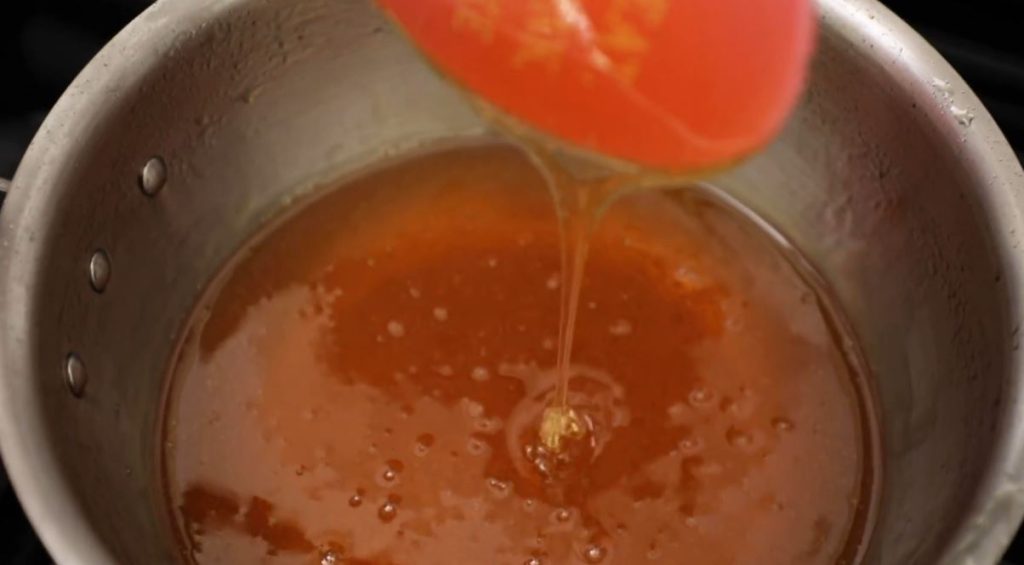
Making your own golden syrup is another option, though it sounds more complicated than it actually is. The basic method involves simmering sugar, water, and a small amount of lemon juice slowly without stirring. This is crucial because stirring the pan causes the sugar to crystallize, which leads to a grainy defeat. When done correctly, it takes around 45 minutes to create something that is actually quite similar to the original. Making flapjacks on a leisurely afternoon is satisfying, and if you bake them frequently, they keep well enough to be worth the effort.
The other principles don’t change, regardless of the replacement you choose. For the right texture, rolled oats—not steel-cut or quick-cooked—cannot be compromised. Before baking, firmly press the mixture into the tin and avoid cutting them while they’re still warm. It takes time for flapjacks to set. Whatever is in the syrup tin hasn’t changed.
