

The deep, jewel-toned purple bottle with the triple X on the label can be found in any gas station cooler, grocery store refrigerator, or gym vending machine. Vitaminwater XXX Açaí Blueberry Pomegranate has become one of those products that consumers almost instinctively reach for; in their mental ranking of drink options, it typically falls between a soda and plain water. It appears to be healthy. It seems healthful. As usual, reality is somewhere in the middle.
The 120 calories in a typical 20-ounce bottle of Vitaminwater XXX are all derived from carbohydrates. There are only 32 to 33 grams of total sugar, mostly from cane sugar and crystalline fructose, and no fat, protein, or fiber. It’s worth stopping to consider that. One bottle contains about the same amount of sugar (32 grams) as multiple chocolate chip cookies. By any nutritional standards, it’s not a terrible amount, but for a beverage that promotes vitamins and antioxidants, it’s important to be aware of the sugar content before you’re halfway through the bottle.
The vitamin profile is where things start to become really helpful. Depending on the bottle size and serving size, the XXX flavor provides between 60 and 100 percent of the daily recommended value of vitamin C.
Additionally, it contains a strong lineup of B vitamins, including B3 (niacin), B5 (pantothenic acid), B6, and B12, each of which contributes at least 100% of your daily value per bottle. That is not insignificant. While most people who eat a reasonably balanced diet are not deficient in B vitamins, having them in a drink you already drink has some useful benefits. B vitamins are involved in energy metabolism. The label also lists trace amounts of manganese and selenium, two antioxidant minerals that are unnoticed but have important but silent functions in the body.
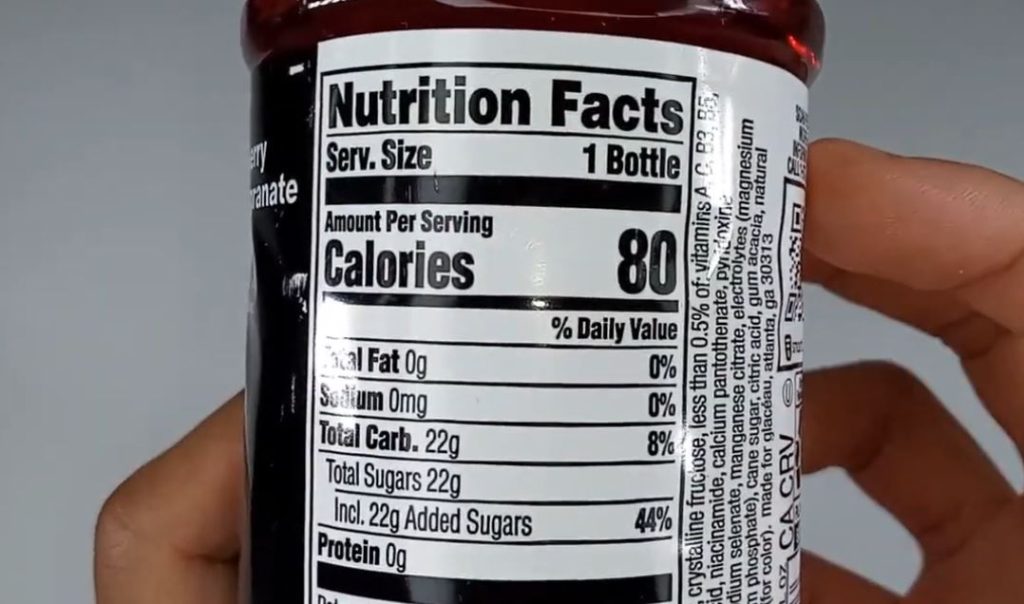
It’s important to distinguish between the two because the zero-sugar version of the same flavor has a different nutritional story. Vitaminwater Zero Sugar XXX virtually eliminates carbohydrates and sugars while maintaining the vitamin and mineral content by substituting stevia leaf extract and monk fruit extract for crystalline fructose and cane sugar. Reverse osmosis water, potassium phosphate, calcium lactate, magnesium lactate, sodium selenate, and manganese citrate are among the ingredients listed on the zero version. The brand makes a point of stating that there are no artificial flavors, artificial colors, or artificial sweeteners, and in this instance, it seems to be true.
Reading the nutrition panel on both versions gives the impression that Vitaminwater fits neatly into a category it created for itself. It’s not quite a sports drink, plain water, or juice, but rather something meant to fill the gap between the three.
Since the brand first appeared in New York delis and health food stores in the early 2000s, Glaceau, the company that created it and is currently owned by Coca-Cola, has been doing this. With its triple-berry positioning and antioxidant messaging, the XXX flavor is one of the brand’s most enduring SKUs, and for good reason. It tastes good, the color is eye-catching, and the label employs language that seems somewhat related to wellness without being overly dramatic.
Like most questions about nutrition, whether something is truly healthy depends on the context. With its 120 calories and high vitamin content, the original is a fair trade-off for someone who would typically reach for a soda or sweetened iced tea.
The zero-sugar version offers almost the same functional benefits without the glycemic load for someone attempting to closely monitor sugar intake. Vitaminwater XXX is not a replacement for whole fruits, a balanced diet, or a true hydration strategy, and it has never made such a claim. It’s an improved, flavored water beverage. The most honest relationship with the product is likely to result from seeing it for what it is, rather than as something more indulgent or medicinal than it actually is.
Nutritional science hasn’t definitively answered the question of whether the antioxidant levels in a single bottle offer any discernible cellular benefit. However, the label is fairly clear about what’s in the bottle. Usually, it’s a good idea to know what you’re drinking.
