

Shutters close, lights go out, and perhaps there’s a kebab shop at the end of the road that shines like a lighthouse for the inebriated and desperate. It’s not pubs staying later or clubs reopening, that’s disturbing the silence. Orders for smash burgers, shared pizzas, and trays of chicken doner are interrupting it. These orders end up on coffee tables in apartments all over the nation while someone’s friend browses a delivery app to decide what else to put in the basket.
Because Soho restaurants have pushed reservations back to half ten and Chinatown establishments are serving until four in the morning, it’s easy to label this a London phenomenon. And that is undoubtedly true. However, a dimly lit dining room with a maître d’ isn’t the type of late-night dining that’s genuinely changing how young Brits socialize. Five phones are lit up on a sofa at home, and someone is debating whether or not to buy garlic bread.
If you’ve recently spent any time with people in their twenties, industry data supports what seems obvious. According to surveys, indulgence and socializing rank among the top reasons people order in after hours, with comfort food and shared dishes dominating late-night orders.
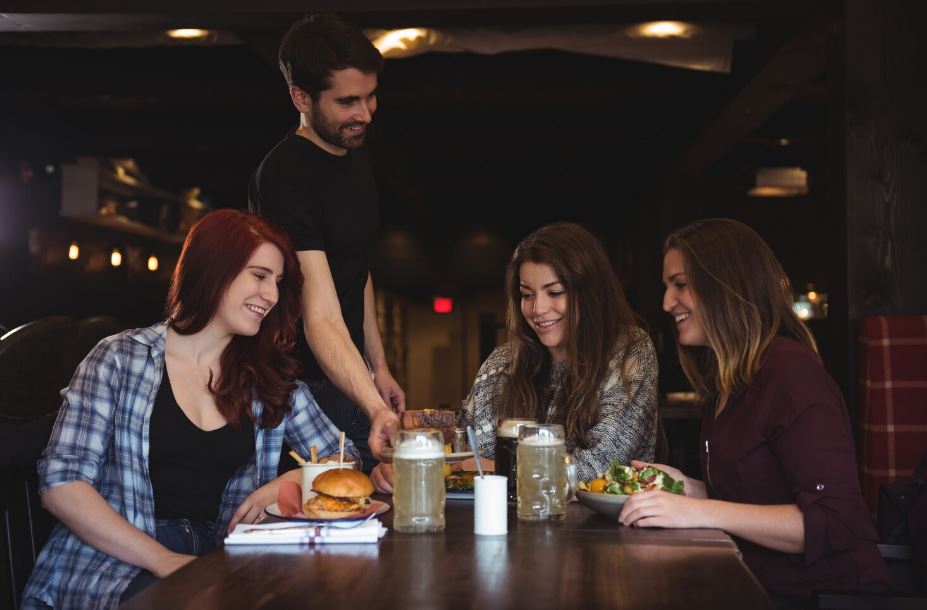
By most accounts, this is being pushed by Gen Z and millennials. They’re eating later because eating has become the thing you do together when going out properly feels like too much work, too expensive, or both. This isn’t necessarily because restaurants are staying open later.
| Aspect | Detail |
|---|---|
| Trend Name | Late-Night Dining Ritual |
| Core Demographic | Gen Z and millennials drive most late-night ordering activity |
| Top Ordering Motivations | Comfort food ranks at 21%, with sharing and indulgence close behind at 20% |
| Popular Dishes | Smash burgers, shared pizzas, and chicken doner feature heavily in late-night baskets |
| London Restaurant Shift | Mountain in Soho extended its latest reservation slot to 10:30pm |
| Extended Hours Example | Noodle and Beer in Chinatown stays open until 4am, Thursday through Saturday |
| Discount Incentive | Arlington and The Park offer 25% off for diners arriving after 9pm |
| Early-Dining Counter-Trend | OpenTable data showed 6pm and 5pm bookings rising while 8pm slots declined |
| Seasonal Driver | Summer months see a notable rise in late-night delivery demand |
| Industry Voice | Kate Nicholls, chair of UKHospitality, notes pressure on the night-time economy |
It’s important to observe this generational divide. Reservation data has shown an increase in 5 and 6 p.m. bookings over the past year, while traditional 8 p.m. slots have actually decreased. Older diners, who may have once kept a bar open until midnight, are increasingly going out earlier and returning home sooner. In the meantime, those who are staying up are engaging in activities that are more subdued than going out. They’re placing orders. It’s not as if nightlife vanished and nothing took its place. It was replaced by something, but not in a building with a bouncer and a license.
Observing this from the outside, it’s remarkable how unglamorous the majority of the food is. Carpaccio doesn’t seem to be part of anyone’s late-night ritual.
Smash burgers are what it is. It’s a 20-piece chicken box divided among four people who ordered it, even though they didn’t really need that much food, because more dishes encourage sharing, which makes the evening feel more like an event than just dinner. Subtly, it’s almost performative; the ritual of gathering around the food takes precedence over the food itself.
Delivery platforms have made this easier—possibly too easy. Particularly in the summer, people tend to order later because they travel more, stay out longer, and generally have more flexible schedules. A generation that is more at ease hosting at home than going out, more cautious of nightlife expenses, and seemingly content to make a 10 p.m. pizza order feel like a proper social occasion—it’s difficult not to wonder if convenience is driving the behavior or simply accommodating something that was already there.
It remains to be seen if this continues. Restaurants in real late-night neighborhoods, such as Chinatown, Manchester’s former curry mile, and the Lebanese section of Edgware Road, have long catered to a different type of clientele: shift workers, cab drivers, and people leaving the stage at 11 p.m. The new version of the same impulse is considerably younger and more domestic. This may become ingrained in a generation’s socialization by default. It’s also possible that it’s a phase related to particular economic pressures that eventually subside. However, for the time being, the lights are remaining on a bit longer, though not always in the expected locations.
