

Around November, a certain kind of domestic optimism emerges: the notion that this year, somehow, the roast dinner will go off without a hitch. At the same time, everything was hot. There was no one with oven gloves on both hands and a slightly desperate expression hovering nervously over the oven. It’s a pleasant fantasy. To be honest, more than anything else in recent kitchen history, the air fryer has contributed to its realization.
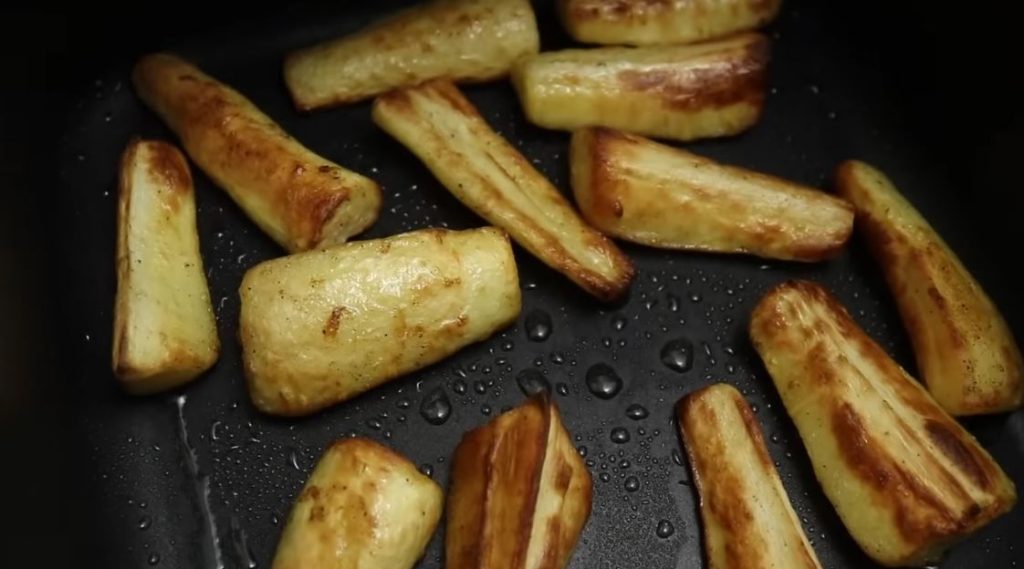
For many years, Aunt Bessie’s Honey Glazed Roast Parsnips have been a mainstay in British freezers, bearing the brand’s subdued promise of taking care of the labor-intensive tasks. The whole point is that they come ready to go, batter-coated, honey-drizzled, and pre-fried. However, the question of how long they really need keeps coming up in Facebook groups, air fryer communities, and Christmas planning threads.
The answer is 22 to 24 minutes at 180°C, according to Aunt Bessie’s own packaging, but only after the air fryer has been preheated for about 3.5 minutes. The majority of people omit this preheat step, which is likely why many batches turn out pale on the outside and soft in the center. It’s similar to putting bread in a toaster that hasn’t warmed up yet when the basket is placed inside a cold machine. Although technically cooked, the outcome is not quite perfect.
A maximum batch size of 200 grams, or about two portions, is advised. That’s the part that surprises people, particularly if they intend to serve a six-person table and think they can fit everything in at once. The crispness is destroyed by packing the basket too full. The parsnips essentially steam against one another rather than crisping up because the hot air needs room to circulate. Instead of taking a chance on a single, massive, overcrowded load, it is worthwhile to cook in two smaller batches and keep the first warm.
The basket needs a good shake halfway through cooking. Without it, the pieces at the bottom remain pale while the ones at the top brown completely, so this is a must. Around the eleven-minute mark, a strong shake actually affects the outcome. For the last three or four minutes, some people raise the temperature to 200°C, which causes the honey glaze to change from golden to slightly caramelized and sticky. It’s difficult to ignore the additional depth it adds, but whether that’s preferable depends on personal preference.
Most kitchens are familiar with the Aunt Bessie’s packet’s oven method, which calls for 25 to 30 minutes at 220°C. However, during that brief window when everything else is vying for shelf space, the air fryer saves a few minutes and, more significantly, frees up the main oven. The true value at Christmas is flexibility, not speed per se.
It’s important to keep in mind that air fryers differ more than manufacturers typically acknowledge. Even under the same conditions, a large dual-basket unit and a compact drawer-style model behave differently. The 22- to 24-minute guide is a good place to start, but it’s more important to trust your own eyes and check at 20 minutes, looking for that particular gold-brown color and the slight crispness when the basket is shaken.
Getting this specific detail right has a subtle satisfying quality. The parsnips are a simple dish. They are a supporting act, a side dish. However, when they are served correctly—that is, when they are truly crispy, hot enough, and the honey glaze is working—they often become the topic of conversation at the conclusion of the meal. The vegetable that attracted attention. That is not insignificant.
FAQs
Q1: How long do Aunt Bessie’s parsnips take in the air fryer?
Cook them for 22 to 24 minutes at 180°C.
Q2: Do I need to preheat the air fryer first?
Yes — preheat for three and a half minutes before adding parsnips.
Q3: How much can I cook in one batch?
Maximum 200 grams, roughly two portions, per batch.
Q4: Should I shake the basket during cooking?
Shake it once, firmly, at around the eleven-minute mark.
Q5: Is the air fryer faster than the oven for these parsnips?
Yes — the oven requires 25 to 30 minutes at 220°C.
Q6: Can I get a more caramelised finish?
Raise the temperature to 200°C for the final three to four minutes.
