

A tiny jar of fermented black beans is likely to be found somewhere close to the stove in practically every serious kitchen in 2026. Tucked between the garlic and the olive oil, it is used frequently but is not prominently displayed or labeled with much fanfare. It’s the kind of ingredient that doesn’t make an impression, which is likely one of the reasons it took so long for it to leave Chinese pantries and enter the larger discussion about professional cooks’ perspectives on flavor.
With a passion that verges on evangelism, Rocco DiSpirito, who has worked in professional kitchens for decades and has a James Beard Award to show for it, has been utilizing fermented black beans. He works them into tomato sauces, crushes them into olive oil, and applies them to seafood. The pitch is straightforward: a small amount goes a long way, and what it adds is something genuinely difficult to duplicate: a rich, savory umami flavor that grounds everything around it rather than taking center stage. Perhaps this is precisely what a particular strain of contemporary cooking has been lacking. accuracy devoid of soul. method that lacks depth.
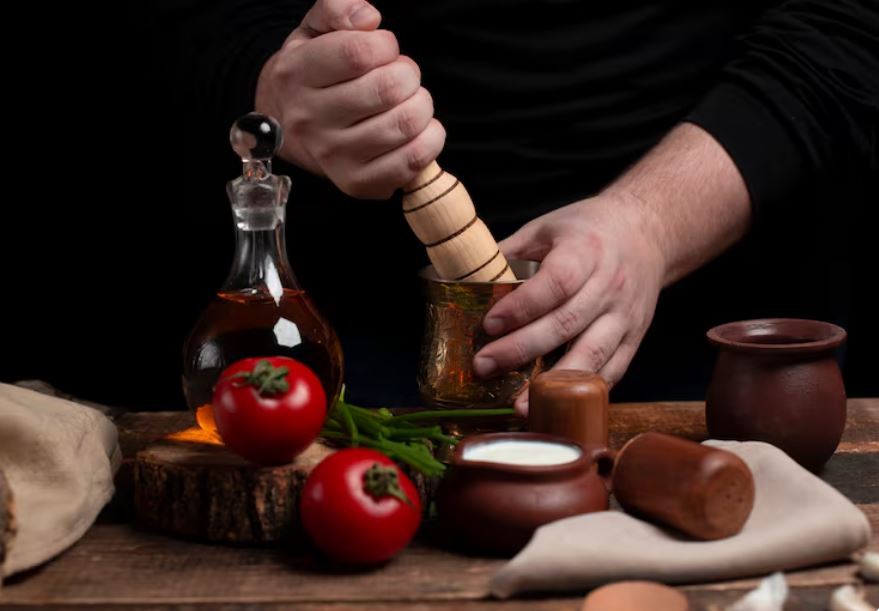
The larger change is genuine and has been developing for some time. Umami-forward cooking is no longer a niche preference, as many chefs have noticed from their own dining rooms, according to Spiceology’s 2026 Flavor Trend Report, which tracked the most talked-about and socially shared ingredients of the year. It has become popular due in part to social media and in part to a real disenchantment with safe food. It seems as though diners have quietly grown weary of salt doing all the work.
The fact that fermented black beans aren’t exotic in the way food media usually portrays “discovery” ingredients is what makes them intriguing and a little out of the ordinary as a trend. They have been used for centuries in Chinese cooking and can be found in black bean sauce, stir-fries, and mapo tofu. They were never mysterious. They were simply disregarded by a Western restaurant that frequently confuses familiarity with restriction. There’s a certain satisfaction in seeing that gradual change.
Judy Joo, who gained notoriety for popularizing Korean cuisine, is arguing similarly for dulse, a red seaweed with a briny, smoky edge that she characterizes as a finishing seasoning rather than a main course. She describes it as adding a “savory, briny sparkle” to seafood or citrusy salads without the need for additional salt. The analogy to fermented black beans is intentional. Both components encourage self-control. Both encourage you to view seasoning as an integral part of the entire dish rather than as the last step.
In early January, Forbes reported that chefs nationwide are predicting that 2026 will be characterized by dishes with a lot of sauce and flavor from around the world. One chef described this as “food with a point of view” rather than “food designed to photograph well.” Black beans that have undergone fermentation look good in that context. They don’t appear to be much. They don’t trend, for sure. However, they are the reason the food tastes the way it does in a room full of thoughtful diners. This specific ingredient is already present in professional kitchens and has been for some time, but it’s still unclear if it will make any significant inroads into home kitchens.
FAQs
1. What is the spice chefs are adding to everything in 2026?
Fermented black beans — prized for their deep, savory umami depth.
2. How do chefs use fermented black beans in cooking?
Crushed into olive oil, worked into sauces, or brushed onto seafood.
3. Why are fermented black beans trending now if they aren’t new?
Western kitchens finally stopped mistaking familiarity with this centuries-old ingredient for limitation.
4. What other ingredient is gaining similar momentum in 2026?
Dulse, a red seaweed, is rising as a briny finishing seasoning.
5. What broader shift is driving this move away from salt-heavy cooking?
Diners are genuinely fatigued by food that plays it safe.
