

The same silent panic occurs in American and British kitchens every year, usually during the final week of November. When a turkey is taken out of the freezer with plenty of time to spare, it thaws more quickly than anyone anticipated. Or visitors put off dinner for two days. Suddenly, a household is staring at a huge, raw bird and wondering how long it can remain there before it starts to cause problems.
The USDA’s Food Safety and Inspection Service says the short answer is one to two days. Before it needs to be put in the oven or put back in the freezer, a turkey that has completely thawed in the fridge can stay there for that window. It’s a closer margin than most people realize, and rather than viewing the rule as an arbitrary precaution, it’s important to understand why it exists.
In essence, a frozen turkey is in suspended animation. The quality deteriorates after about a year, but it can be kept in the freezer indefinitely without becoming dangerous. That pause ends as soon as the meat thaws. Any bacteria that were present before freezing awaken and begin proliferating once more, and raw poultry provides them with ample opportunity to do so. The process is significantly slowed by a refrigerator set at 40°F. It doesn’t stop it.
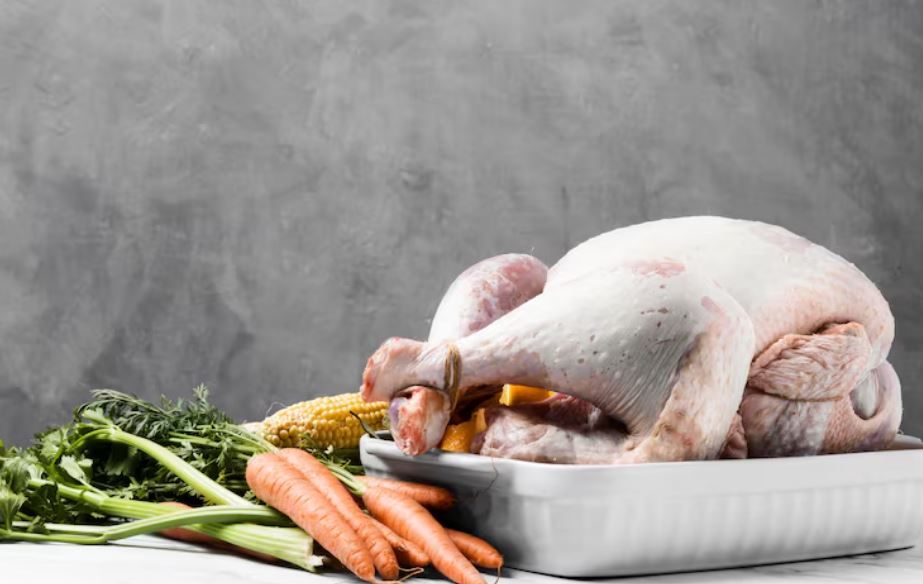
Home cooks are most frequently caught off guard when it comes to thawing techniques, which are more important than most people realize. Only turkeys that have been gradually thawed in the refrigerator from the beginning are eligible for the one-to two-day grace period.
A bird must be cooked immediately after being defrosted in cold water with the bag submerged and the water changed every 30 minutes. Similarly, when meat is thawed in a microwave, some parts may start to warm into the danger zone while other parts remain frozen. You can gain flexibility by using the fridge method. There is no way to regain the flexibility that the quick methods give up for speed.
The way the planning is done is somewhat ironic. Just thawing a 20-pound turkey in the refrigerator takes four to five days, or about twenty-four hours for every four to five pounds. As a result, the safe holding window following thawing is shorter than the actual thaw. The mild math anxiety this causes is evident to anyone who has seen a bird sit obstinately half-frozen on day three, only to discover it fully soft on day four with dinner still 48 hours away. The good news is that you can refreeze a properly thawed turkey without cooking it. You might lose some moisture and texture, but the bird is still there.
Your senses continue to be a sensible safety net. A dull gray or greenish cast to the skin, a tacky or slimy feel beneath the fingers, and a strong or sour smell are all signs of spoiled turkey. Regardless of what the calendar indicates, the choice has already been made for you if any of those appear. It is thrown in the trash. It’s difficult to disagree with food safety experts because they consistently make this claim. No roast dinner is worth the risk because poultry-related foodborne illness is typically very unpleasant.
As long as the refrigerator stays cold and the timeline remains accurate, it seems that people’s anxiety frequently outweighs the actual risk. After thawing, cook it within two days, or refreeze it and try again. To prevent the juices from spilling onto other items, store it on a tray on the lowest shelf. In actuality, that is the entire discipline. There is a deadline for the turkey. You only need to be concerned about whether you remembered to remove the giblets if you respect it.
