

A flapjack has a subtly humble quality. It appears surprisingly straightforward: just oats, butter, syrup, and a small amount of sugar, packed into a tin, and baked. No thermometers, piping bags, or intricate methods. However, practically every person who bakes regularly has a story about a crumbly flapjack. When you first took the tin out of the oven, it looked perfect, but as soon as you tried to cut it, it collapsed into a pile of sticky oats. People don’t realize how common it is.
In baking forums, food columns, and perhaps more kitchen conversations than anyone can count, the question of why flapjacks fall apart has been discussed. The fact that the solutions are always the same while the issue still exists is startling. It alludes to the misconception that flapjacks are a beginner’s recipe when, in reality, they are very specific about a few key elements.
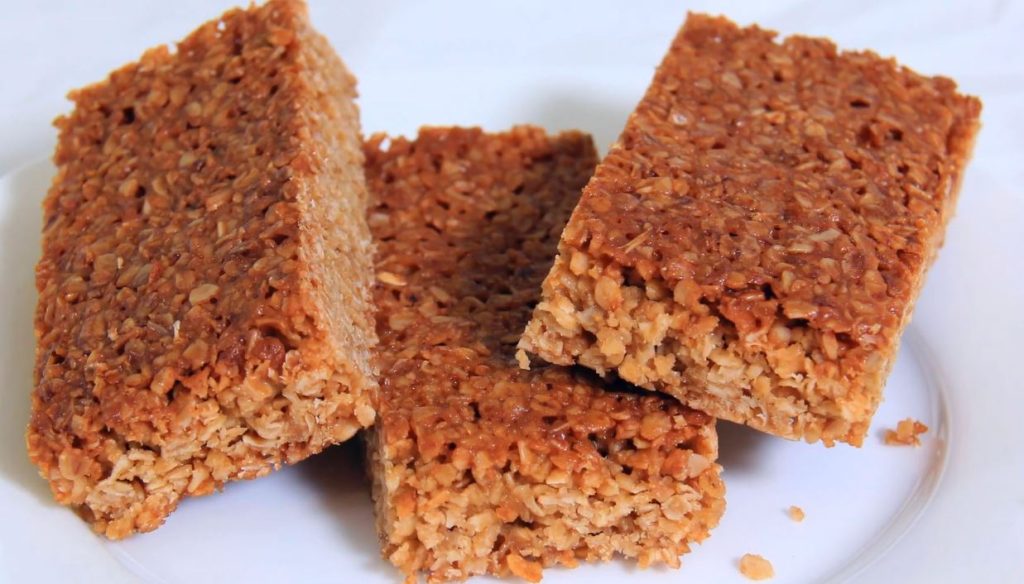
Most people are unaware of how important oats are. The premium jumbo rolled oats, which have the right texture and bite and are ideal for porridge, are tempting. It makes sense, that instinct. However, jumbo oats are not the appropriate tool in this situation. The difference between a bar that holds together and one that doesn’t is that they don’t absorb the syrup mixture well enough; instead, they sit coated in it. The thin, reasonably priced porridge oats that are typically found on grocery store shelves work well to bind everything together. It’s one of those situations where the less expensive ingredient works better.
Another problem is the liquid-to-oat ratio. Instead of pouring the mixture straight into the tin after adding the oats, it’s worth taking a moment to examine it. Additional oats are required if golden syrup is collecting at the bottom of the pan. Add a bit more syrup if the oats appear dry or barely coated. It may seem apparent, but recipes are written for average oats under average circumstances, and oats differ more than most people realize. At this point, the five minutes spent making adjustments could mean the difference between a successful and unsuccessful batch.
It becomes surprisingly contentious during the baking process. When a flapjack is overcooked, the syrup completely dries out, leaving the oats crumbly and dry, almost granola-like. A different kind of failure, but still a failure, occurs when you undercook it and the mixture remains dense and raw in the middle. Not just the clock, but the signal to look out for is the color golden. A flapjack that requires twenty-five minutes in one kitchen may require twenty minutes in another because every oven operates differently.
What happens right after the tin is taken out of the oven is probably the most neglected step. At this stage, the flapjack is pliable and soft, which is actually helpful. The mixture is compressed, and the air pockets that eventually become crumbling points are driven out by applying pressure to the surface with a flat spatula, the back of a spoon, or even the base of another tin after the mixture has cooled for about five minutes. It appears to be a minor issue. It isn’t.
Cutting comes next. Most people don’t realize how crucial patience is in this situation. A warm flapjack will almost certainly shatter if it is cut. A knife’s pressure will cause everything to shift because the mixture is still soft and the binding agents haven’t solidified. The flapjack has the best chance of maintaining clean edges if the tin is allowed to cool completely—properly cold, not just warm—and ideally rests in the refrigerator overnight before slicing. It’s difficult to ignore the number of crumbly flapjack mishaps that could have been prevented with a few more hours of patience.
All of this has a certain irony. The flapjack is designed to be simple enough for anyone to assemble on a weekday afternoon without the need for specialized tools or training. And once you know what it really needs, it is simple. Not fancy oats, not speculation, not impatience. Just the right amount of heat, a firm press, a balanced syrup ratio, porridge oats, and enough cooling time before using a knife.
