

A Salmonella outbreak linked to imported eggs has now sickened nearly 500 people in the UK, and the number is still rising. A single bacterial cluster was responsible for 259 cases and one death, according to UK health officials as of August 25. When two recently discovered related clusters are added, the overall picture is 474 confirmed cases, two fatalities, and a public health investigation that began more than a year ago.
The length of time this went unnoticed at scale is especially startling. August 2025 is when some of the investigation’s earliest samples were collected. The nearly identical genetic makeup of the bacteria in all three clusters (t5.9411, t0.24068, and t5.9765) strongly suggests a common food source. Investigators now think that source is eggs brought into the UK from overseas.
The language used by the UK Health Security Agency has been cautious. The connection to imported eggs, according to officials, is strongly implied but not yet proven. That’s a reasonable scientific distinction, but the public may not know what to do as a result of the hedged language. At the very least, the practical advice is more obvious: make sure your eggs are cooked through if you’re eating them at a restaurant, café, or takeout. Look for the British Lion mark or the Laid in Britain assurance program when purchasing eggs to use at home.
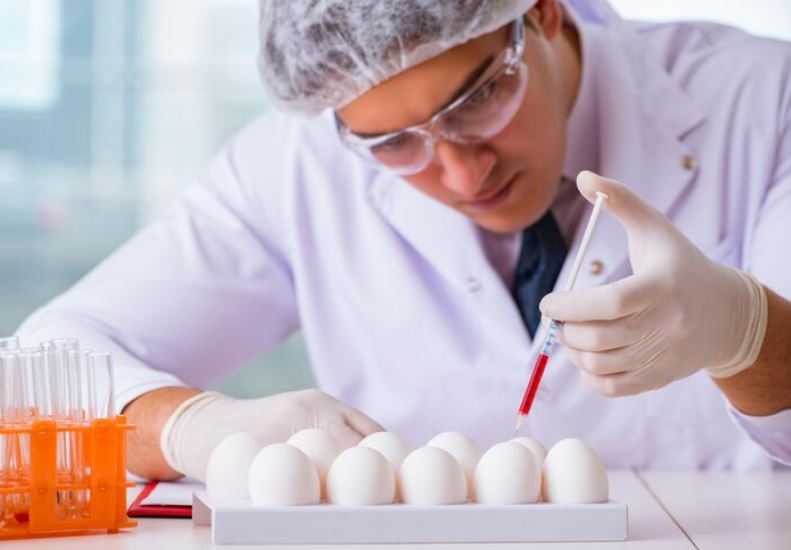
These two plans are in place for just this kind of situation. Salmonella vaccination is required for hens that lay British Lion eggs. Throughout the supply chain, there are requirements for traceability, frequent testing, and oversight. Eggs coming from outside the nation are not covered by any of that infrastructure, which contributes to the outbreak’s appearance as a preventable narrative unfolding in slow motion.
The cases have been dispersed unevenly throughout the nation, with the highest concentrations occurring in London, Yorkshire, and Humber, and they have been disproportionately associated with eating out rather than cooking at home. This suggests that catering and food service businesses, such as small cafés and takeout, are probably purchasing cheaper imported eggs without fully realizing the risks involved. Some of those establishments might not have known either. Commercial kitchen supply chains may involve several distributors, and not all companies examine the origin of eggs in the same way that they might examine the sourcing of meat.
In the UK, over one-third of those who became sick needed hospital treatment. For a foodborne illness, that is a substantial percentage. Most healthy adults who contract salmonella experience a few unpleasant days, including fever, cramping in the stomach, and vomiting, before the illness goes away on its own. However, the infection can progress to sepsis in infants, the elderly, pregnant women, and anyone with a weakened immune system. Babies and adults as old as 92 were among those who fell ill during this outbreak.
Additionally, the outbreak is not limited to the United Kingdom. Austria, Belgium, Denmark, France, Germany, and the Netherlands have all reported cases; the Dutch investigation suggests that chicken meat, not eggs, is the likely source in that nation. It’s important to note this divergence. A distribution network that moves more quickly than public health surveillance can easily monitor is suggested by the same bacterial family, distinct vectors, and various nations.
Beneath all of this is a legitimate question: how much do customers really know about the origins of the eggs in their breakfast at restaurants? Honestly, there isn’t much to say. At the grocery store, the British Lion mark provides customers with a dependable signal. However, the café counter lacks a comparable level of transparency. This outbreak appears to have taken root in that gap, which is well-known from previous food safety discussions over the years.
The investigators are still at work. Officials have stated at each update that the investigation is still ongoing. It’s still unclear if the contamination entered through multiple supply routes or if a single importer or country of origin is to blame. It is evident that the number of cases increased by about 25% in just one week, and the trend hasn’t yet reversed.
