

When you’ve reheated bolognese three times in a week, cooking without meat stops being a sacrifice and starts to feel almost exciting. This change, which is quiet, slow, and happening in many kitchens at the same time, is what makes meatless pasta recipes go from being a niche interest to more of a cultural shift. The fact that a recipe for Gochujang Buttered Noodles has over 11,000 five-star reviews on a site like NYT Cooking is not an accident.
The list of ingredients is part of the reason for this. You don’t have to be hungry to eat meatless pasta. You can cook mushrooms slowly until they taste like something ancient and earthy, or you can mix a preserved lemon into cream until the sauce smells like the Amalfi Coast in July. It means ninety minutes of work for eggplant bolognese, which is well worth it. The vegetables don’t taste like meat. They’re doing their own thing, which is getting better and better.
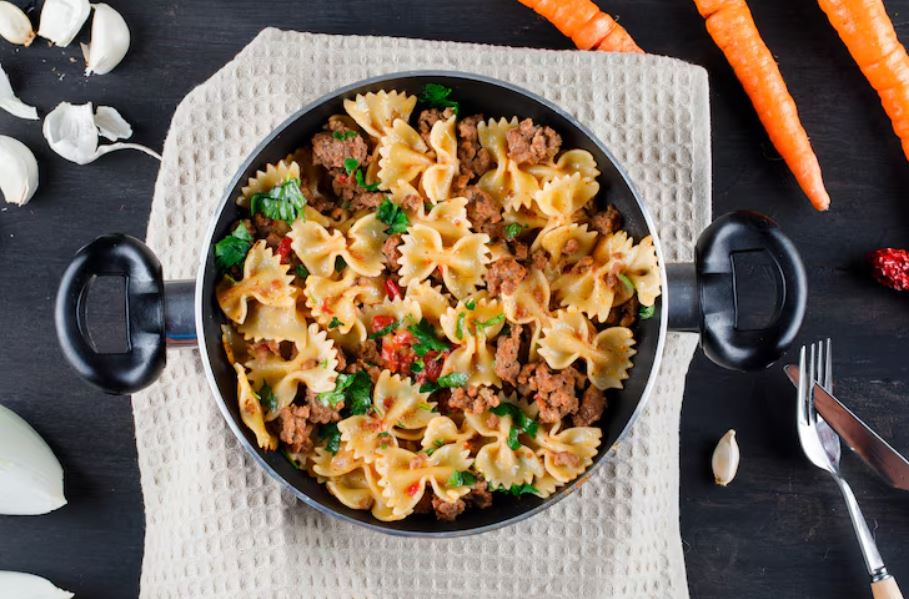
It’s easy to see why the one-pot style has become almost synonymous with cooking without meat on the weekends. Ali Slagle’s One-Pot Pasta With Ricotta and Lemon has become the go-to recipe for a certain type of tired Tuesday. It only takes fifteen minutes to make, has almost twenty thousand ratings, and is so simple that it seems almost suspicious. When people trust a recipe that simple that much, it seems like something real is going on. It seems like people are cooking it, eating it, and telling everyone they know about it.
It’s interesting to see how far the flavors have strayed from the typical Italian framework. Spaghetti with harissa and miso. Ayran and labneh. Noodles with hari chutney. Butter with gochujang. Instead of trying too hard to be fusion, these dishes are based on real flavor logic, taking ingredients from Korean, Middle Eastern, and South Asian kitchens and adding them to pasta in ways that feel natural. Perhaps this is the most globally diverse pasta bowl that we’ve ever seen. This variety is part of what makes meatless food so much more interesting now than it was even five years ago.
Another thing to think about is the texture. This is where meatless pasta recipes may have made the most progress. Mushroom pasta with garlic crumbs that are crispy on top. On top of buttery lemon noodles are strewn toasted almonds. Roasted cauliflower folded into elbows is a good source of protein. These recipes know that meat isn’t usually used for flavor, but for chewing, crunch, and contrast. There are other ways for the best meatless pasta dishes to get to where they are, and most of the time, they work.
You can’t help but notice how easy things have become. Mondays without meat used to feel like a middle ground. When you grab a bag of pasta and a tin of white beans on a Wednesday night, it doesn’t feel like self-control; it feels like you know exactly what you want for dinner.
