

Ranch tends to incite defensiveness. Someone in the room will cross their arms if you mention that you are altering the recipe. After all, Americans have been debating this condiment—bottled, powdered, drizzled, and dunked—for decades. Therefore, a reasonable person might have raised an eyebrow when Greek yogurt and cottage cheese began to appear in the same sentence as ranch dressing. And yet. Here we are.
In meal prep circles, the popular recipe—blended cottage cheese, a tablespoon of ranch seasoning, and a scoop of plain Greek yogurt—has become something of a quiet phenomenon. It appears creamy. It has a ranch flavor. The lumpy, contentious texture of cottage cheese vanishes entirely somewhere in the blender. Since most home cooks are not hesitant about protein counts, that final point is more important than most people realize. It has to do with texture.
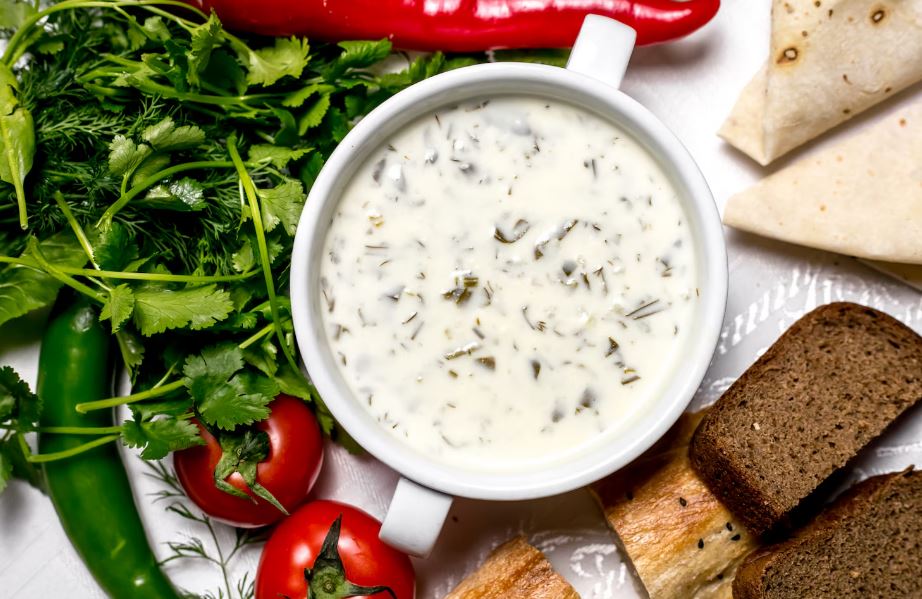
The formula’s simplicity is what makes it intriguing. The cottage cheese base provides nearly 35 grams of protein per cup, which sounds aggressive until you realize you’re probably eating the same amount of regular ranch anyway, just with a fraction of the nutritional return. Dietitians like Lindsay Pleskot, a registered dietitian based in Canada, have been promoting this version for a while. The cottage cheese is smoothed out by Greek yogurt, especially the full-fat two to five percent variety, which adds just enough tang to make the palate think it’s getting something close to the real thing.
The idea that a sauce or dip’s base doesn’t have to be cream or mayo to feel decadent seems to be part of a larger trend that is gradually taking place in home kitchens. Greek yogurt ranch dressings have been around for a long time. The cottage cheese version, which is somewhat thicker, contains more protein, and may be more forgiving as a dip than as a pourable dressing, feels like a logical progression. It thins out when you add a tablespoon of lemon juice. If you leave it alone, it will hold a chip without saying sorry.
This type of recipe travels in a way that is difficult to ignore. It begins with a food blogger or dietitian, is picked up by someone searching for a healthier snack option, and is eventually created for a toddler who simply wanted something to dip her broccoli in. Adoption that was practical and nearly unintentional. There is no campaign behind it. No promotion of the brand. Finding the people who need it is just a practical solution.
It’s worth taking a moment to consider the seasoning question. Fresh herbs, such as dill, parsley, garlic, and onion powder, were experimented with in many early iterations of this recipe, each measured out separately. Even among those who began there, packaged ranch seasoning usually wins out. The blend in those tiny packets has been refined over decades to achieve a particular flavor note, not because fresh herbs don’t taste good. It’s possible to replicate it from the ground up, but it’s also the type of project that results in a version that’s close but slightly off in an unidentifiable way.
It remains to be seen if this stays in people’s refrigerators forever or disappears when the next protein craze emerges. For the time being, however, the cottage cheese ranch dip takes up a useful space. It’s nearly effortless, keeps for a few days, and has a way of making a plate of veggies feel more like a snack than a chore.
That is not insignificant.
