

A Victoria sponge sitting on a kitchen counter on a Sunday afternoon has a subtly satisfying quality; the jam is visible through the layers, and a small amount of cream is on the verge of escaping from the sides. It seems like it ought to go on forever. It won’t. It might not even survive past Tuesday if there is fresh cream in the middle.
The truth is that a Victoria sponge’s shelf life is largely dependent on its contents. From the time it is put together, a version with whipped cream and strawberry jam is working against the clock. The window should be kept in the refrigerator for two to three days, according to most food experts and home bakers. After that, the cream starts to leak, the sponge starts to absorb moisture from its surroundings, and what was once a celebration cake starts to look like something from the back of a forgotten shelf.
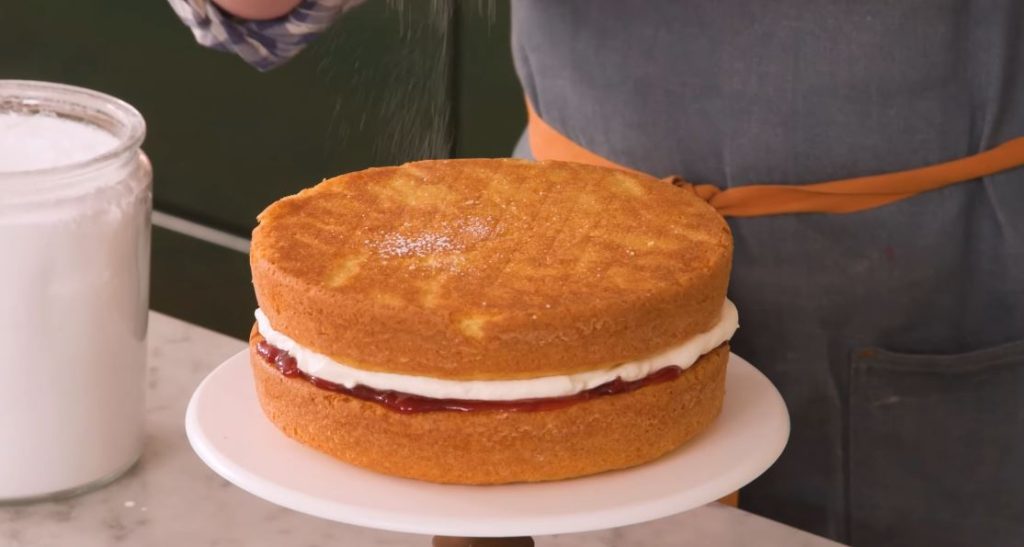
However, things change significantly when you replace the whipped cream with buttercream. Buttercream is far less likely to act erratically and is more stable and forgiving. When properly wrapped and stored in the refrigerator, a Victoria sponge filled with buttercream and jam can maintain its quality for up to five days—possibly even longer under ideal circumstances. There’s space to breathe, but it’s still not a cake you’d want to keep for a whole week.
Air exposure accelerates the decline more quickly than most people anticipate. A sponge can solidify in a matter of hours if the cut edge is left exposed, even in the refrigerator. The crumb loses its spring, the texture becomes dense instead of light, and the enjoyment of eating begins to diminish. The most practical way to increase shelf life by one or two days is probably to wrap the cake in cling film or put it in an airtight tin.
Although it has a condition, freezing is an option. Layers of unfilled sponge freeze remarkably well, retaining their texture for about three months. But the jam and cream don’t freeze very well. The practical solution is to freeze the sponge layers separately and add the filling after they have defrosted because fresh dairy and freezing temperatures do not mix well. It takes some preparation, but it’s a sensible tactic for anyone preparing a cake ahead of a celebration.
It’s important to consider refrigeration as a two-edged sword. Cream-filled cakes’ safe eating window is extended by the refrigerator, but cold temperatures also can mute flavor and tighten texture. Victoria sponge can taste strangely flat when compared to the same cake at room temperature, as anyone who has eaten it straight out of the refrigerator will attest. The easy fix is to take the cake out of the refrigerator about half an hour before serving. This will allow the sponge to loosen and the cream to revert to its original consistency.
Usually, there are clear indicators that the cake has reached the end of its useful life. Any fresh fruit decoration will appear noticeably worn out, the cream will begin to smell sour, and the sponge surface may feel tacky. When a cream-based cake has gone bad, it’s easy to tell. If there is any doubt, the scent by itself usually resolves the issue fairly quickly.
