

At some point, it’s hard to tell if you’re making custard or crème anglaise in most home kitchens. This usually happens around the third time you’ve whisked something pale yellow and vanilla-scented over a low flame. In the pan, they both look almost the same. Both smell really great. Both tend to get sour as soon as you stop paying attention. Still, calling them the same thing is like calling a latte a flat white in the world of professional pastry. Nearly there, though. Of course, they are not the same.
Why is thick custard different from velvety crème anglaise? Because crème anglaise is a cream sauce made in the style of custard, while custard is just custard. It’s all about how the egg proteins coagulate over heat. It sounds like a small difference. In real life, it changes everything from the texture to the temperature to what you can do with the food after it’s done cooking.
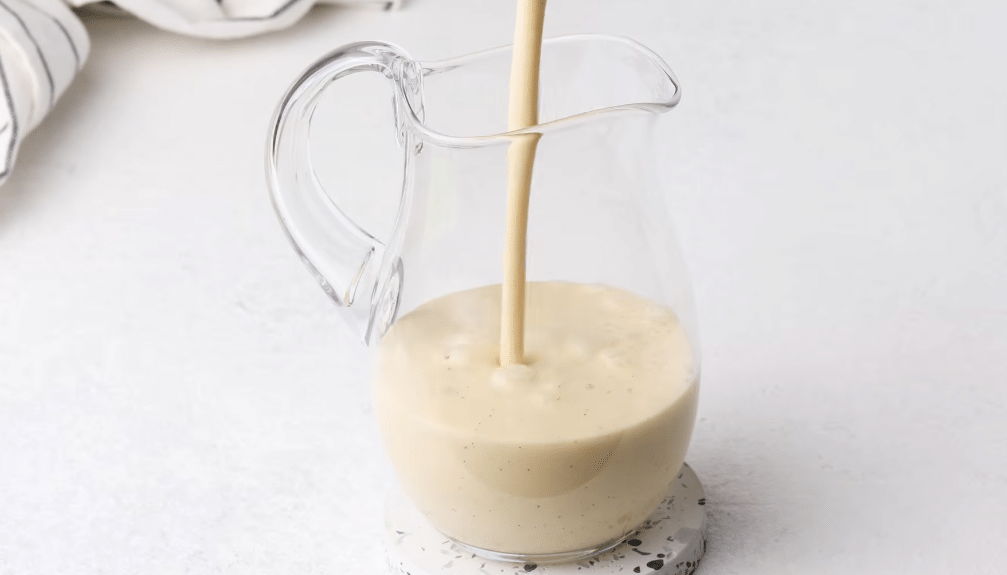
The French name for crème anglaise is “English cream.” This is one of those funny food facts that gets funnier as you think about it. The name “cream anglaise” comes from the fact that the English really like this sweet “mother sauce,” which is a vanilla-scented custard cooked on the stove and then served cold and flowing.
The French named it after the English. The English then changed the name back to custard. Over the course of hundreds of years, the two preparations quietly changed. They both had the same ingredients, but they were made with different goals in mind, which led to different results.
Egg yolks are the only thing that makes crème anglaise thicker. This makes the sauce thinner, silkier, and easier to pour. That’s the main difference in terms of technology. Not wheat starch. Don’t use egg whites. Not any flour. You only need egg yolks, sugar, cream, and time. Because the sauce is made from egg-yolk proteins gently coming together, the difference between “perfectly done” and “scrambled eggs in cream” is surprisingly small.
The temperature at which you cook crème anglaise shouldn’t go above 185°F (84°C). If it does, the lecithin in the egg yolks can clump together. A lot of people who have tried to do it at home have learned this the hard way, usually right before they put something lumpy through a sieve and hoped for the best.
Custard, on the other hand, is much thicker and is made from both egg yolks and egg whites. For firmer custard-based desserts, it can be baked in the oven. Because it can be baked, custard can be used in more situations. A crème brûlée is custard that has been baked. There is baked custard inside a quiche. The crumbly, golden top of a traditional English custard tart, which is made with baked custard. That’s not something crème anglaise can do. This sauce doesn’t turn into pudding; it stays on the stove, can be poured, and is still a sauce.
Starch is another thing to think about. Because of the different ingredients, there is also a big difference in the consistency. Custard is thick and can be used as a filling cream, while crème anglaise is runnier and is usually served as a sauce. Modern British custard, the kind that is poured over apple crumbles and sponge puddings, often has cornstarch in it, which makes it thick and shiny.
There is none in crème anglaise. The French version is meant to be very light; it almost slides off the back of a spoon instead of sticking to it. When drawing a line across the back of a spoon doesn’t cover it up, your crème anglaise is ready. That’s the nappé test, which is an old French method that is still used in professional kitchens today.
What crème anglaise turns into is where it really lives up to its name. To make the best ice cream, you mix crème anglaise with whipped cream before churning. It is the cooked custard base that is used to make ice cream. It’s also essential for the floating islands dessert, which is made of meringue clouds that have been poached and float in a pool of pale vanilla sauce.
Plus, it’s a surprisingly flexible base for trying out different flavors. When making crème anglaise, you need one cup of milk, one cup of cream, four egg yolks, and half a cup of sugar. Once you know that, you can have fun. If you add cardamom, raspberry, chocolate, or espresso to the cream, the whole sauce changes.
At times, it seems like people use the two terms interchangeably just because the list of ingredients is so similar. And it’s possible that the difference doesn’t matter much enough to argue about when cooking at home. But the difference is very clear very quickly when you’re making ice cream from scratch or trying to get that perfect smooth drizzle on top of an apple tart instead of a thick layer of custard. Before the cream starts to simmer, you should know which one you want.
In their own ways, both are still some of the most satisfying things you can make from scratch in the kitchen. It takes a lot of patience, and you have to stir the sauce all the time and wait nervously to see if it coats the spoon. Because it’s so light, crème anglaise is often eaten as a dessert by itself.
For example, the floating island is a traditional French dessert that has poached meringue on top of crème anglaise. Custard, on the other hand, always stands up for itself. It’s one of those recipes that is so deeply rooted in British food culture that it seems rude to question it. Just to be fancy, the French gave it a different name, took out the starch, and sent it back across the Channel. Both groups loved it, and they were right to.
FAQs
1. What is the main difference between custard and crème anglaise?
Crème anglaise uses only egg yolks; custard uses whole eggs and is thicker.
2. Can crème anglaise be baked like custard?
No — crème anglaise is strictly a stovetop sauce, never oven-baked.
3. Why is crème anglaise called “English cream” in French?
The French named it after the English, who famously loved this vanilla sauce.
4. What is crème anglaise most commonly used for?
It’s the base for ice cream and a drizzling sauce over desserts.
5. Does crème anglaise contain cornstarch like some custards do?
No — it thickens through egg yolks alone, with no starch added.
