

A batch of grainy fudge has a subtle, humble quality. You followed the recipe, kept a close eye on the pot, and allowed it to cool on the counter, but instead of fudge melting as it should, you got something that crumbles between your teeth like wet sand. Experienced home cooks frequently experience it, and the cause is nearly always the same: sugar crystallization. The first step to never having to scrape a failed batch into the trash again is to understand what that really means.
Fundamentally, fudge is a sugar candy. That may seem apparent, but consider what happens to sugar when it is heated. Two molecules, glucose and fructose, are joined to form table sugar, or sucrose. Heat causes that bond to disintegrate. According to Preston Stewart, Director of Chocolate at Onyx Coffee Lab, the issue is that those two molecules wish to reunite. They will if given even the smallest incentive, such as a stray sugar crystal, an early stir, or a drop of undissolved sugar on the pan’s side. And when they do, big crystals start to form all over the mixture, giving it a granular, gritty texture that will never go away.
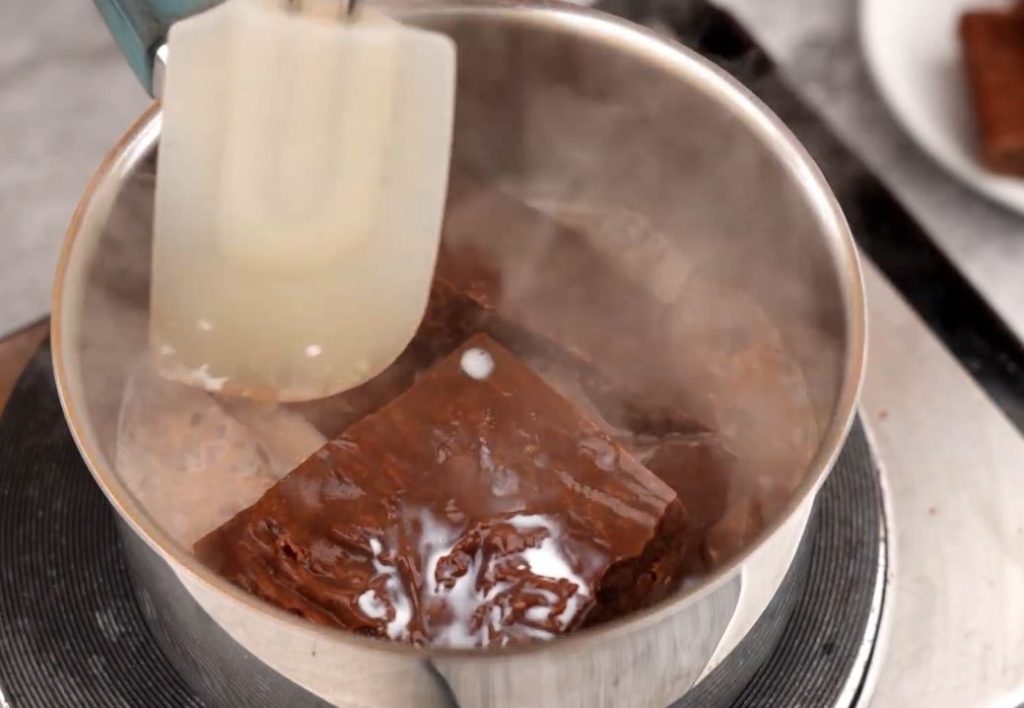
This is especially annoying because it takes very little to set it off. One of the most frequent mistakes is stirring the mixture once it reaches a boil. Seed crystals, which are tiny particles that serve as a sort of template for larger ones to build upon, are introduced by the motion. When the syrup is thick and unstable during cooling, the same thing can occur, and even a thoughtless prod can start a chain reaction. It’s the kind of failure that is almost always caused by physics but feels like bad luck.
Here, the temperature window is crucial. For fudge to develop the proper texture, it must reach the soft ball stage, which is between 234 and 239 degrees Fahrenheit. The sugar structure doesn’t form correctly below that. For completely different reasons, the fudge above it may overcook and become crumbly. Most of the guesswork is eliminated with a candy thermometer, but if you trust your hands more than your technology, the traditional method of dropping a small amount into cold water and seeing if it forms a pliable ball still works.
While cooking, there are steps you can take to lower the risk. Heat is distributed more evenly and scorching is less likely in a pan with a heavy bottom. A pastry brush moistened with water can dissolve sugar crystals that form on the pan’s sides during cooking, which frequently happens, before they return to the mixture and initiate the crystallization cascade. Leave the mixture alone after it has been removed from the heat. Avoid stirring, swirling, and giving in to temptation. Before adding the chocolate or other ingredients, let it cool to about 110°F.
One of the more dependable ways to keep things smooth is to add an invert sugar, such as corn syrup. Large crystals are more difficult to form when invert sugars obstruct the re-bonding process. For this exact reason, corn syrup is frequently used in traditional fudge recipes, even though the recipe doesn’t specify why. Fluff-based fudge recipes tend to forgive a few more mistakes than their traditional counterparts because marshmallow fluff has a similar function and the added benefit of being genuinely difficult to crystallize under heat.
It’s not necessarily over if the damage is already done, such as if you’re currently staring at a pan of grainy, sandy fudge. You can dissolve those rogue crystals and try again by tipping the batch back into the pot with a cup or so of water and gently melting it over very low heat. Once everything is back together, it’s worth adding a little extra vanilla because the water will somewhat dilute the flavor. Reheat it, allow it to cool down, and then give it another go. It seems like a lot of work, but it’s better than purchasing pricey candies to make up for it.
As all of this is happening, it’s difficult to ignore the fact that fudge rewards patience more than skill. Cooks who consistently get it right aren’t always the most skilled; rather, they are the ones who fight the impulse to get involved. When stirring seems inevitable, who doesn’t stir? who do not check every few minutes while they wait out the cooling period. The work is done by the chemist. The only true task is to stay out of the way.
