

British cuisine is changing, and it doesn’t smell like sourdough from a side street in Soho. It smells like charcoal-grilled kebabs on Manchester’s Curry Mile on a Tuesday night with a line stretching around the corner, and hoppy IPAs wafting from a converted taproom in Birmingham. The culinary center of gravity of the nation has begun to shift, first gradually and then suddenly.
The postcodes and headlines are still in London. However, something has altered. In 2022, Birmingham was named Britain’s most exciting food destination by The Good Food Guide, which was a novelty. After a few years, it now reads more like a prophecy.
Out of all the English cities outside of London, Birmingham has the most Michelin stars. It’s worth taking a moment to sit with just that. Without any of the media attention that a London postcode would have inevitably brought, eateries like Opheem and Harborne Kitchen have established significant reputations. Additionally, establishments like Riverine Rabbit are producing food that would garner admiring column inches anywhere in the nation in Stirchley, a suburb still slightly scented by Bournville’s Cadbury factory. There are fourteen seats in the dining room. That is not the length of the waiting list.
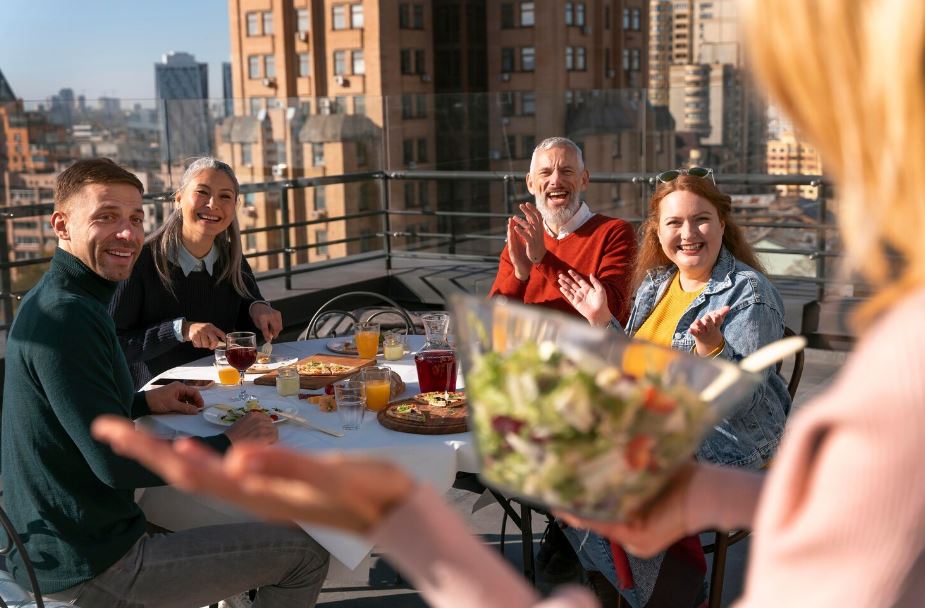
It’s not just the delicious food that’s intriguing. It’s the atmosphere of hospitality. The subtle transactional coolness that has infiltrated some London dining rooms, where service occasionally seems like a performance intended for someone else, is absent. Restaurants in Birmingham rely on repeat business. The safety net of first-time guests rewarding themselves with a destination meal is absent. This accountability results in something real. It’s not a rule that these rooms must be warm. It’s a need that developed into a personality.
Manchester has approached this in a different way. Its food scene has always been vibrant, but it was dispersed for a while. What has transpired over the past five years seems more like a real identity consolidation. With its own Cheshire farm and a daily menu change, Higher Ground embodies what the city has been subtly working toward: a serious, produce-led gastronomy that doesn’t feel imported from anywhere. Skof, Winsome, and Erst. These eateries aren’t attempting to emulate London. They are intentionally and clearly Mancunian.
Perhaps even more crucial to that narrative are the diaspora kitchens. When you’re actually standing on Wilmslow Road at nine o’clock at night, with the neon lights catching the steam from the grill houses and the entire street creating its own atmosphere, Rusholme’s Curry Mile is one of those locations that defies easy description. On the other hand, Bundobust has combined Indian street food with craft beer, which may seem gimmicky on paper, but in some way, it feels like the most natural thing in the world. Mango lassi, pale ale, and okra fries. It functions.
All of this is also motivated by a practical reality. Operating a restaurant in London is costly. Although it has been costly for years, the strain has increased. Because base costs were already so high, London is most affected by costs that are squeezing margins nationwide, such as food inflation, energy bills, and business rates. Skilled chefs who used to plant flags in Hackney or Bermondsey are now doing the math differently. Lower rents, a true local clientele, and more and more the kind of critical attention that once required a London address are all available in the North and the Midlands.
Saying that London is deteriorating would be too easy. It isn’t. However, the claim that delicious British cuisine is exclusive to the capital—a claim that never had much merit but continued nonetheless—feels appropriately resolved at this point. Manchester and Birmingham have not simply caught up. They’ve gained ground in some areas and on some nights. And they’ve succeeded without attempting to imitate London’s methods. Maybe that’s the whole point.
