

ColonBroom will eventually locate you if you venture into any area of the internet related to wellness. The strawberry-flavored powder photo appears tidy and approachable against whatever pastel background the marketing team selected that week; the advertisements are polished, and the before-and-after testimonials are persuasive in that specific way that makes you want to believe them.
According to the company’s own statistics, the product has helped over 500,000 people and has amassed a sizable following. It also consistently sells enough on Amazon to earn a bestseller badge in its category. All of this is intriguing because the fundamental component of ColonBroom is something you can purchase for twelve dollars at a pharmacy.
Psyllium husk, a soluble fiber derived from Plantago ovata seeds, is the active component. Its effects are fairly well-documented, and it has been around for decades in a variety of forms, the most well-known of which is Metamucil. Psyllium swells into a gel-like mass in the digestive tract when it absorbs water, giving stool more volume, promoting bowel regularity, and slowing digestion to the point where you feel fuller for longer after eating. The effects of satiety are genuine. According to Forbes Health’s review of ColonBroom, there is some evidence that supplementing with psyllium can lead to a decrease in caloric intake and an increase in weight loss. Here, the key words are “some” and “linked to.”
| ColonBroom — Product & Brand Overview | |
|---|---|
| Product Type | Powdered dietary fiber supplement |
| Primary Ingredient | Psyllium husk powder — 3.6g per serving |
| Total Dietary Fiber Per Serving | 3 grams |
| Manufacturer | Gut Health, UAB (Lithuania) |
| Distributor | Karma Processing Incorporated, Lewes, Delaware |
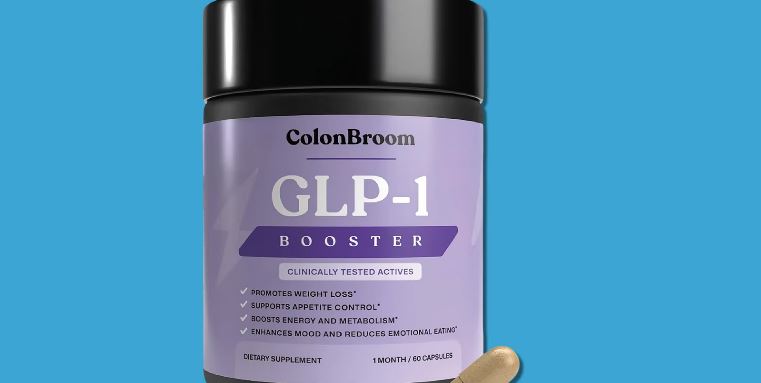
| Available Formats | Powder (strawberry, tropical fruit flavors), capsules (GLP-1 formula) |
| Official Website | colonbroom.com |
| Price (Standard) | ~$69.99/month (one-time); ~$64.99/month (subscription) |
| Key Claims | Weight management, bloating relief, bowel regularity, gut health |
| Notable Added Ingredients | L-Carnitine, Capsimax cayenne extract, chromium, B vitamins (Premium version) |
| GLP-1 Product Line | Capsule formula marketed as appetite control and metabolism support |
| FDA Regulation Status | Not FDA-regulated — classified as dietary supplement |
| User Rating (Amazon) | 4.1–4.3 out of 5 stars across product variants |
| Comparable Alternatives | Generic psyllium husk (Isabgol ~$12, Metamucil ~$20) |
Fat is not burned by psyllium. It doesn’t increase your metabolic rate, doesn’t target body fat that has been stored, and doesn’t really help you lose weight if you haven’t also addressed your diet. By keeping you feeling fuller in between meals, fiber can help you eat a little less, but this effect is only significant if you’re already eating in a way that permits a calorie deficit to occur. To the company’s credit, their own language usually uses phrases like “may help to feel more satiated” and “may help maintain body weight”; the asterisks are there if you look for them. However, taking ColonBroom along with an unchanged diet of excess calories will not result in meaningful weight loss.
The GLP-1 label is the focus of ColonBroom’s more recent marketing strategy, which includes a capsule line marketed as a “GLP-1 Booster.” This is where a little skepticism sets in. Drugs like Ozempic and Wegovy directly stimulate GLP-1, or glucagon-like peptide-1, which suppresses appetite and controls blood sugar. Psyllium husk does interact with metabolic processes in a broadly related way by enhancing satiety and possibly supporting blood sugar regulation, but referring to it as a GLP-1 booster is an aggressive framing.
Reddit reviewers have pointed it out, characterizing the marketing as taking advantage of Ozempic’s cultural moment instead of making a claim that is truly comparable. The Premium formula received a 2.5 out of 5 rating in a thorough review, which concluded that the price isn’t reasonable considering what you’re really purchasing.
It’s worth stopping at that price point. A month’s supply of the regular ColonBroom formula costs roughly $69.99, while the Premium version costs about $84. Bulk generic psyllium husk, which is essentially the same fiber, is much less expensive. The Premium line’s additional ingredients—one gram of L-Carnitine per serving, a tiny amount of Capsimax cayenne extract, chromium, and B vitamins—help to partially explain the disparity.
Although there is some research supporting the use of L-carnitine for fat metabolism and cayenne for a slight boost in metabolism, the effects of these additions are at best mild at the dosages found in ColonBroom. You’re paying for taste, convenience, and a product ecosystem that includes a meal plan, an app, and a quiz—all of which some people find to be genuinely helpful as a framework for altering habits.
Before beginning, it’s also important to understand the side effect picture. Because psyllium greatly expands when it comes into contact with liquid, taking it without enough water—the company recommends at least 12 to 14 ounces, plus a follow-up glass—can result in bloating, cramping, and in more difficult situations, a blockage. Another common error is starting at an excessively high dose. Almost everyone who is new to taking fiber supplements experiences an adjustment period of gas and digestive discomfort, which usually goes away in a week or two but surprises people who are hoping for instant relief.
When all of this is taken into consideration, it seems like ColonBroom is a respectable product with excellent marketing and pricey packaging. The fiber functions. Although indirect and modest, the weight management angle is real. It might be worthwhile for someone who finds the quiz-and-app format motivating, has trouble getting enough fiber from food, and needs organized assistance with their digestion. The math is more difficult to dispute for someone comparing the label to a $12 bag of Isabgol at the drugstore.
