

You can find ColonBroom staring back at you if you walk into any pharmacy or spend ten minutes browsing Amazon. It has pastel packaging, bold claims, and an eye-catching price tag. The brand has amassed an unexpectedly sizable fan base based on the somewhat antiquated notion that improving your digestive system will also improve your body weight. The question that seems to follow ColonBroom everywhere it goes is whether or not that is true.
Psyllium husk powder, a fiber made from the seeds of Plantago ovata, a plant that has been used medicinally for centuries, is the foundation of the product. It’s not particularly exotic. Psyllium consistently helps create easier-to-pass stools by absorbing water in the intestines. It’s a well-documented mechanism. The transition from “regular bowel movements” to “meaningful weight loss” is where things get murky, and ColonBroom heavily relies on that transition in its marketing.
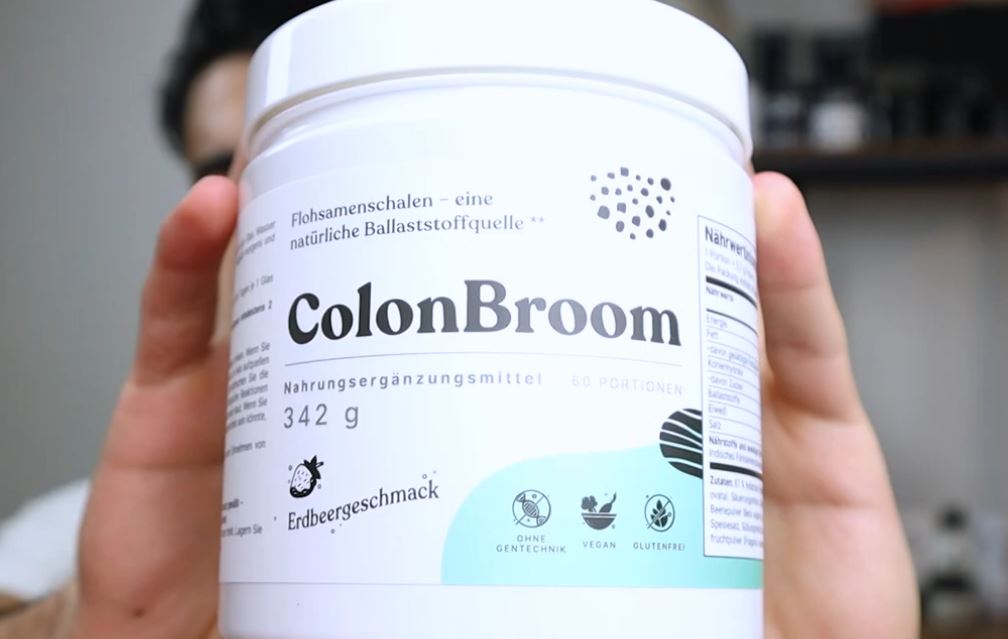
According to research, psyllium husk fiber may lower calorie intake by boosting feelings of fullness, which may eventually aid in weight loss when combined with a low-calorie diet. Support is the key word there. Psyllium supplementation has been linked in a few studies to slight weight loss, and there is solid evidence that it improves glycemic and cholesterol control, which is especially important for those with diabetes or prediabetes. These are actual results. However, they fall far short of the before-and-after transformation stories that abound on ColonBroom’s website, where energy returns and stubborn fat vanishes.
The timing of ColonBroom’s GLP-1 product launch is difficult to ignore. Words like “GLP-1 booster,” “appetite control,” and “metabolism support” were quickly appropriated by a plethora of supplements as Ozempic and Wegovy transformed public discussions about weight loss. ColonBroom was part of that surge. Perhaps more bluntly than any physician, Reddit reviewers described it as “pure capitalizing on Ozempic.” Although it’s a direct read, it’s not totally unjust. Berberine, Akkermansia, and other substances with some early-stage research interest are present in the GLP-1 capsules, but they don’t have any clinical evidence comparable to that of prescription GLP-1 drugs.
The company is distributed by a Delaware entity that is not accredited by the Better Business Bureau and is registered in Lithuania. Anyone doing due diligence needs to be aware of this before committing to a subscription, but it’s not necessarily disqualifying—many reputable supplement companies use similar structures. Strangely, the product’s manufacturing location is not made apparent on the packaging.
Compared to carefully chosen testimonials, user reviews are generally more truthful. ColonBroom’s GLP-1 capsule line has received 3.4 stars on Amazon from more than a thousand reviews, which is neither negative nor positive. Users often report better digestion and less bloating on Trustpilot, which is consistent with what psyllium can actually accomplish. Although they are less consistent and more difficult to distinguish from concurrent dietary changes, weight loss results do appear.
The ColonBroom website’s quiz-based entry is a clever design element. It feels like the product was created especially for you when you respond to questions about your digestion, cravings, weariness, and food sensitivities. That’s marketing done right. Additionally, ColonBroom is significantly more expensive at $69.99 per month than a bag of plain psyllium husk powder, which contains the same active ingredient in nearly the same amount, so it’s worth pondering that feeling for a bit before clicking “buy.”
ColonBroom is a legitimate fiber supplement. Psyllium husk is effective, and for those who have trouble maintaining consistency, a flavored, simple-to-mix powder with unambiguous instructions might actually help them form a habit they otherwise wouldn’t. Many users report improved regularity, decreased bloating, and improved digestion, all of which are reasonable in light of scientific findings.
Although it is more modest and conditional than the brand implies, the weight loss piece is also genuine. Feeling full is aided by fiber. Eating less is often the result of feeling full. Over time, the scale tends to change when one eats less. For some people, ColonBroom might be a supporting link in that chain. How much a nicer powder experience is worth to you in comparison to the plain version sitting two shelves over will likely determine whether or not that role justifies the price.
