

When you wake up in the morning after a long decorating session, walk into the kitchen with a cup of tea in hand, and gently press your finger against a cookie, you can’t help but feel defeated. The frosting is still delicate. Tacky as ever. Covered in tiny craters that weren’t there the previous night, it can occasionally even be bubbly. Bakers with experience understand this emotion. It has concluded several lovely batches.
Because royal icing is known for being dependable, its misbehavior is all the more perplexing. In actuality, it’s one of the more delicate baking mediums, and even minor errors result in hours of lost productivity. Oil is the most frequent cause of royal icing not setting, and it frequently comes up in baking communities and forum threads. The structural chemistry that causes royal icing to firm up properly can be disrupted by even a trace amount, such as from an unwashed bowl, a flavoring extract, or a greasy utensil.
Extracts derived from oil are especially quiet troublemakers. Unaware that some almond extracts are made with bitter almond oil rather than a water-soluble base, many bakers reach for almond extract without hesitation. After four consecutive unsuccessful batches, one cookie decorator vented her frustration online and eventually identified the culprit: her almond extract. For royal icing, she had set aside a different bowl, mixer, and set of beaters. She had cleaned the sink, used new sponges to wash everything, and then rinsed it with vinegar. Two days later, the icing remained soft and unset. There was oil in the extract she had been using.
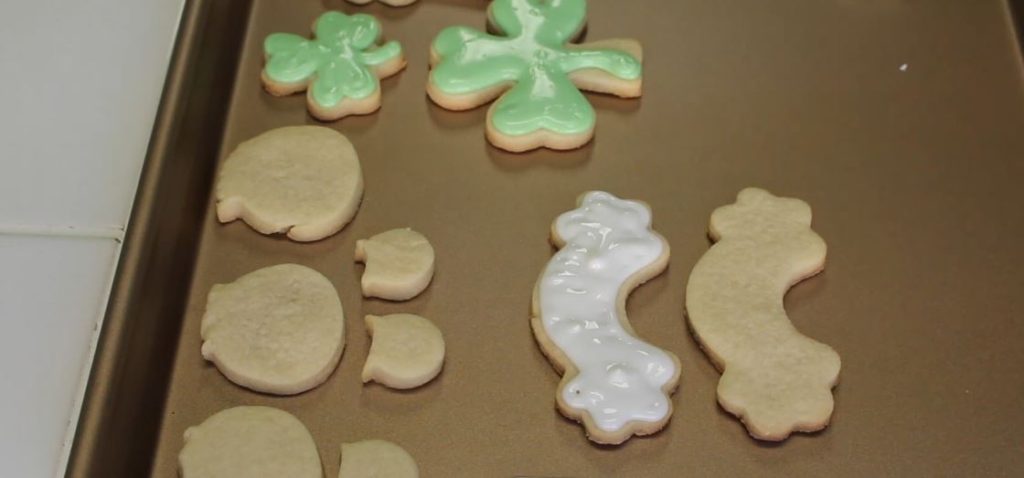
The other major antagonist is water, which frequently causes bakers to make mistakes in more subtle ways. When flooding a cookie, it’s possible to thin icing too aggressively; all it takes is a little too much water added too quickly to turn the entire batch from workable to irreparable. It’s interesting to note that the icing may appear smooth and glossy while it’s being applied before turning tacky and somewhat translucent when it dries. After thinning what she believed to be a halved recipe, one baker discovered that she had inadvertently quartered it, measuring 4 ounces of powdered sugar rather than 8. The icing took an eternity to reach stiff peaks, which was the first indication that something was wrong. The second hint was that when she stirred it, it felt strangely fluffy. Nevertheless, she used it. Usually, this is the case.
Although it frequently goes unnoticed when bakers are going through their list of potential causes, humidity has a quiet role of its own. Drying times can be greatly prolonged in a warm, humid kitchen, and sometimes icing that is firm in the morning will still feel soft in the afternoon. A significant difference can be made by carefully, but not directly, running a dehumidifier or pointing a fan at the cookies. It’s important to keep in mind, though, that a fan placed too close may cause the surface to crust too soon while the layer underneath stays wet, leading to a completely different kind of issue.
Additionally, many novice decorators are taken aback by the sealed container error. The royal icing must breathe. When cookies are placed in an airtight container while the icing is still slightly soft, moisture is trapped, and the finish is prevented from hardening. Oxygen and open air also contribute to the drying process. Contrary to popular belief, patience is what keeps the frosting on cookies intact.
It is important to take seriously the possibility that meringue powder will spoil or arrive in a compromised state. Although most bakers don’t consider it a perishable ingredient, it can lose its binding qualities, especially if the packaging has been stored incorrectly or if a batch was just not up to par. If all other factors have been ruled out, it might be worthwhile to open a new tin from a different supplier, though it’s still unclear if this is frequent enough to be a significant cause of setting failures.
Troubleshooting royal icing is particularly challenging because the issue is rarely immediately apparent. The icing continues to have the proper appearance: it is opaque, shiny, and maintains its shape. The truth doesn’t surface until the following morning, or two days later. A batch that took longer to come together, a consistency that feels heavier than usual, or a texture that seemed a little too thick or fluid during application are just a few examples of how seasoned decorators frequently develop an intuitive sense of when something is a little off. It takes years and many spoiled cookies to develop that instinct. For the time being, the safest practice is to just take your time and pay attention to the subtle indicators that something might be wrong before the icing even gets on a cookie.
FAQs
1. What is the most common reason royal icing won’t set?
Oil contamination — even in trace amounts — prevents royal icing from hardening properly.
2. Can oil-based extracts stop royal icing from drying?
Yes, oil-based extracts like certain almond extracts will stop royal icing from setting entirely.
3. Does humidity affect how royal icing dries?
High humidity significantly extends drying time and can leave icing permanently soft and tacky.
4. Is it safe to store decorated cookies in an airtight container overnight?
No — royal icing needs open-air exposure to dry and harden correctly.
5. Can meringue powder go bad and cause setting failures?
Yes, old or poorly stored meringue powder can lose its binding properties completely.
