

There is a certain type of kitchen dispute that is never truly settled; it’s the kind in which both parties are technically correct but ultimately become more adamant about their initial positions. That’s precisely what the Stork vs. Butter controversy in British baking is about. It has been operating in kitchens across the nation for decades, both silently and occasionally noisily. And when someone brings up a Victoria sponge, it flares up more frequently than anywhere else.
In a nutshell, you can definitely use stork in place of butter in a Victoria sponge. However, the longer response is more intriguing, and it completely depends on what you value most when you cut into a cake. Butter is difficult to argue against if flavor is everything—that rich, slightly sweet, distinctly dairy quality that makes a good sponge taste like something. Stork is arguably a better option if you want height, lightness, and a crumb that remains soft for two days after baking. The majority of this argument fails because these are not the same thing.
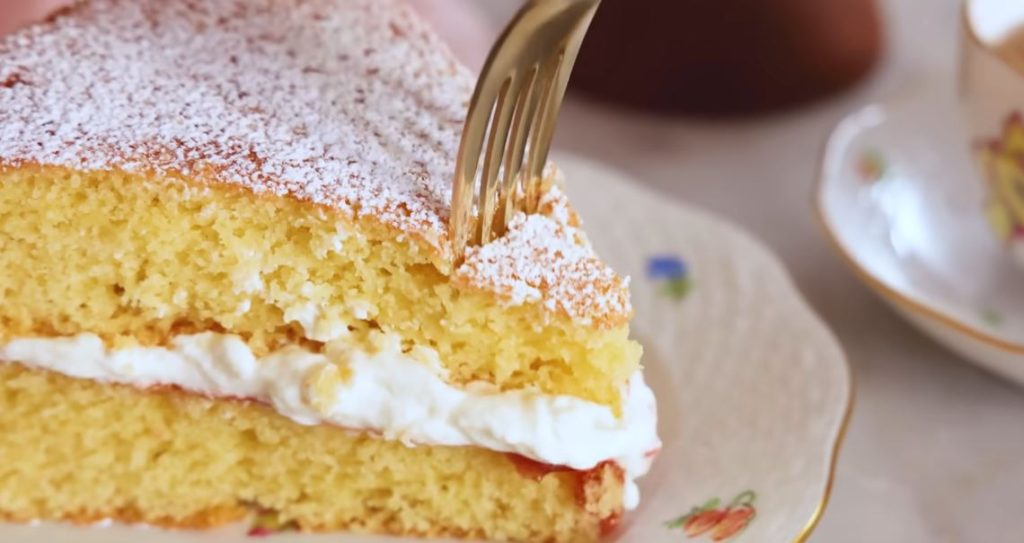
In Britain, Stork has been around since 1920, so many generations of home bakers have grown up using it as a standard ingredient. It’s a vegetable-based margarine that has always had an economic advantage because it costs about half as much as butter. However, the baking dispute is what kept it afloat. Stork’s fat composition, which is lighter and contains more water than butter, tends to result in a cake that rises more uniformly and retains moisture longer. The significance of that is evident to anyone who has baked a Victoria sponge on a warm afternoon and observed the butter version gradually firm up and dry at the edges.
This was put to the test in a blind taste test conducted by the food website Lovefood, which pitted Stork against butter and a dairy-free spread in front of eight tasters. The tasters noted the butter’s creaminess, slightly darker color, and the sweet crust that forms on top, which came out on top with 78%. Stork finished second with 74%, so close that it would be unfair to call it a definite defeat. Although it lacked that rich buttery flavor, tasters appreciated its fluffy texture and consistency. It was a narrow gap. The outcome might have been different on a different day and with a different set of tasters.
The two don’t have to be rivals, as professional bakers occasionally acknowledge in private but seldom loudly in public. Many seasoned home bakers have settled on a 50/50 split of butter and stork, frequently after years of trial and error. The idea is simple: the butter takes care of the flavor, and the stork takes care of the lift and light crumb. Whether that sounds like a reasonable balance or a betrayal of both ingredients probably reveals something about your baking style.
The pragmatic aspect must also be taken into account. Before butter can be properly creamed, it must be taken out of the refrigerator. On a Sunday morning, when you’re already an hour behind schedule and have to deal with either lumpy batter or a warming session that could cause the fat at the edges to melt, forget to do that. Since storks are naturally softer, they go straight from the cupboard into the bowl. It’s a tiny thing, but it adds up over dozens of bakes, which explains why busy households frequently keep a tub of it on hand all the time.
Some bakers are adamant about the question of whether Stork is somehow inferior—more prevalent, more manufactured, less deserving of a proper Victoria sponge. In that camp, using margarine is perceived as a compromise not only in ingredients but also in values. However, when you consider the actual outcomes, it becomes more difficult to defend that position. Paul Hollywood, who is not one to compromise, has admitted that Stork does a good job baking. That doesn’t resolve the dispute, but it does imply that the snobbery surrounding it has been exaggerated a little.
It’s important to be clear that Stork is unable to mimic the flavor of quality butter. It tastes different, and this difference is apparent in a cake as basic as a Victoria sponge, which has very few ingredients to conceal. A good buttercream and sharp raspberry jam can do a lot for the filling. However, a butter sponge and a stork sponge taste the same in a plain, empty slice. Neither is harmful. They simply differ from one another.
So, is it possible to substitute stork for butter in a Victoria sponge? Indeed. Will the outcome be catastrophic? Not at all. A lighter, fluffier cake with a slightly simpler flavor and a longer shelf life is what you’ll get; depending on the occasion and the people you’re baking for, this may be just what you need. The argument will continue, as it always has. Each side will continue to prevail in their own dispute. Meanwhile, the cakes will continue to be consumed.
FAQs
Q1: Can I use Stork instead of butter in a Victoria sponge?
Yes, Stork works well and produces a lighter, fluffier sponge.
Q2: Does Stork taste the same as butter in a sponge cake?
No, butter delivers a richer, creamier flavour that Stork cannot replicate.
Q3: Which makes a better Victoria sponge — Stork or butter?
Butter wins on flavour; Stork wins on texture and freshness.
Q4: Can I mix Stork and butter in a Victoria sponge?
Yes, a 50/50 blend balances lightness from Stork with butter’s flavour.
Q5: Is Stork more convenient to bake with than butter?
Yes, Stork is softer and requires no time out of the fridge.
